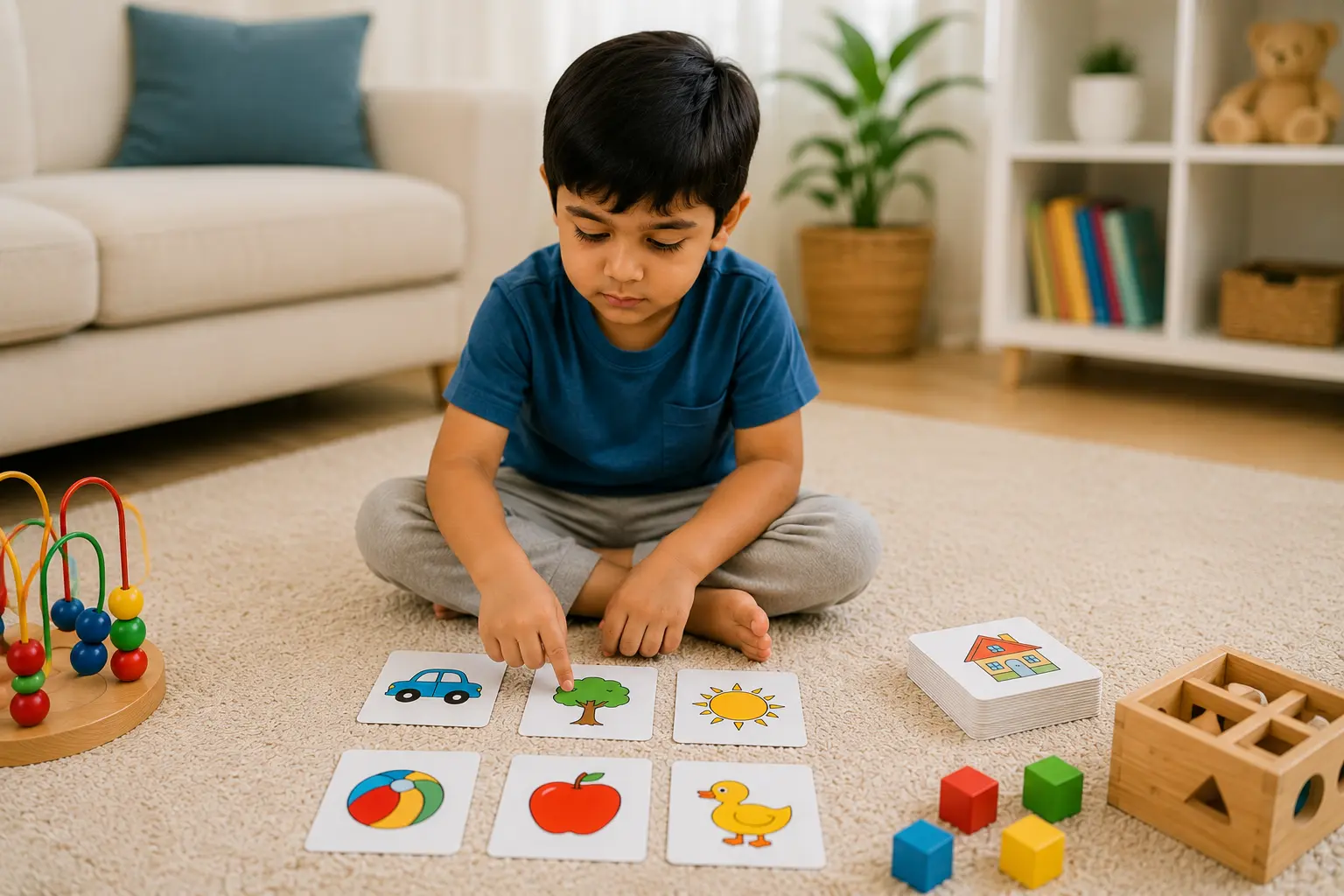
Is Humming a Sign of Autism? A Quick Guide
Humming can be easy to overlook. Some children hum while playing, some adults hum when concentrating and many people hum when they feel calm or happy. Still, many parents ask, is humming a sign of autism, especially when it happens often during play or moments of stress.
The short answer is that humming can be connected to autism, but it is not enough on its own to diagnose autism. What matters is the full pattern around the humming: communication, social interaction, sensory needs, play skills and daily behavior.
Is humming a sign of autism?
Is humming a sign of autism? Sometimes, but not always. Humming may be a type of repetitive vocal behavior, also called vocal stimming. Stimming means self-stimulatory behavior, which can include sounds, movements or repeated actions that help a person regulate their body or emotions.
Autistic kids and adults may hum because the sound feels soothing, blocks out overwhelming noise or helps them stay focused. Some may hum when they are excited. Others may hum when they feel anxious, tired or unsure how to communicate.
So, is humming a sign of autism by itself? No. Many children and adults hum for reasons unrelated to autism. A child who hums but responds to their name, uses gestures, enjoys social games and communicates well may simply be showing a normal habit or sensory preference.
The concern increases when humming appears together with other autism symptoms, such as limited eye contact, delayed speech, repetitive play, strong sensory reactions or difficulty with social back and forth.
What is autism and why might humming happen?
If you are asking what autism is, it helps to think of it as a neurodevelopmental difference that affects social communication, behavior and sensory processing. The Centers for Disease Control and Prevention describes autism spectrum disorder as a developmental disability that can involve differences in social communication, interaction and restricted or repetitive behaviors.
Autism is called a spectrum because each person has a different profile. Some autistic kids speak early but struggle with conversation. Others have delayed speech, limited words or difficulty using language for everyday needs. Some children have strong sensory sensitivities while others seek extra movement, pressure or sound.
Humming may happen because it gives predictable sensory input. The sound is familiar, controlled and repeatable. For a child who finds the world noisy or confusing, humming can create a sense of order. For an adult with autism, it may support concentration or reduce stress in a busy environment.
This is why the better question is not only is humming a sign of autism, but also what the humming does for the person. Does it help them calm down? Does it happen when they are avoiding interaction? Does it replace words? Does it become more intense in crowded places?
When humming may point to autism symptoms
Parents often notice humming before they understand the reason behind it. Use the table below as a guide, not as a diagnosis.
| Humming pattern | What it may suggest | What to observe |
| Frequent humming in noisy places | Sensory overload or self-soothing | Covers ears, avoids busy spaces or calms after leaving |
| Humming while spinning or lining up toys | Repetitive play pattern | Repeats the same play action and resists changes |
| Humming instead of words | Communication difficulty | Limited words, fewer gestures and frustration |
| Humming when excited or relaxed | Typical self-expression or sensory enjoyment | Responds to name, shares smiles and joins play |
| Sudden new humming in adults | Stress, neurological change or habit | Changes in speech, memory, mood or swallowing |
If humming appears with communication delays, a speech and language evaluation may help identify whether the child needs support. Families can learn more about professional Speech Therapy options for children and adults in Dubai.
Signs of autism to watch alongside humming
Humming becomes more meaningful when it appears with other signs of autism. Parents should look at the child’s overall development rather than one behavior in isolation.
Common autism symptoms may include limited response to name, reduced eye contact, delayed speech, repeated movements, intense interests, sensory sensitivity and difficulty joining social play. Some autistic kids may prefer playing alone or may use toys in repetitive ways rather than pretend to play.
You may also notice these early signs of autism:
- Limited babbling or gestures by the end of the first year
- Not pointing to show interest
- Less interest in shared games like peekaboo
- Delayed first words or loss of words already learned
- Strong distress with changes in routine
- Unusual reactions to sounds, textures, lights or movement
Not every child with these traits has autism. Still, if several signs of autism appear together, it is sensible to seek a developmental assessment. Bridges Speech Center has a helpful guide on when parents should seek an autism assessment if you are unsure about the next step.

Other reasons a child or adult may hum
When parents ask if humming is a sign of autism, they are often looking for clarity. The answer depends on context because humming can also come from many other causes.
Some children hum because they are learning sound patterns, experimenting with their voice or enjoying rhythm. Others hum when they are bored, anxious or trying to focus. Children with language delays may use humming because they do not yet have the words to express what they want.
Humming can also be linked to sensory processing differences without autism. A child may seek sound input because it feels organizing. In those cases, support through Sensory Integration Therapy in Dubai may help families understand sensory triggers and build healthier regulation strategies.
In adults, repetitive humming may relate to stress, neurological conditions, hearing changes, cognitive changes or speech motor difficulties. If humming is sudden, paired with confusion or linked with changes in speech and swallowing, it is wise to speak with a doctor.
What should parents do if humming is frequent?
First, observe without judgment. Humming is often serving a purpose. Stopping it harshly can increase stress, especially for autistic kids who use it to regulate sensory overload.
Track when it happens. Notice the time of day, location, noise level, emotional state and what happened before the humming began. This can reveal patterns, such as humming during transitions, meals, busy rooms or difficult communication moments.
Next, look at communication. Can your child request help? Do they use words, gestures or pictures? Do they respond when you call their name? If humming is replacing speech or social interaction, an experienced therapist can assess speech, language and social communication skills.
If behavior challenges are also present, such as meltdowns, aggression, severe rigidity or difficulty following routines, ABA Therapy may support behavior understanding, communication and daily skill building when delivered ethically and individually.
How therapy can help
Therapy does not aim to erase every hum. The goal is to understand why the humming happens and help the person communicate, regulate and participate more comfortably.
Speech therapy can support children who hum because of delayed language, articulation difficulties, stuttering or limited social communication. Occupational therapy and sensory integration can help children manage sound sensitivity, movement needs and body awareness. Psychology or behavior therapy may help when humming is connected to anxiety, frustration or emotional regulation.
Parent involvement matters. Families can learn simple strategies to use during daily routines, such as naming feelings, offering sensory breaks, using visual supports and encouraging functional communication. For practical home ideas, this guide on how to practice speech therapy for autism at home may be useful.
Conclusion
So, is humming a sign of autism? It can be, especially when it appears with communication delays, sensory sensitivities, repetitive play or other early signs of autism. But humming alone does not confirm autism. Many children and adults hum for comfort, focus or enjoyment.
The main message is to look at the whole picture. If humming affects learning, communication, feeding, behavior or daily routines, professional support can help you understand what is happening and what to do next.
For families in Dubai, Bridges care offers individualized support across speech therapy, occupational therapy, sensory integration, ABA, physiotherapy and psychological care. If you are concerned about your child’s development or an adult’s communication changes, reaching out early can make support clearer and more effective.
Frequently Asked Questions
- Is humming a sign of autism in toddlers?
Humming can be one of many possible autism symptoms in toddlers, but it is not diagnostic by itself. It becomes more concerning when it appears with delayed speech, reduced eye contact, limited gestures, repetitive play or strong sensory reactions. - What is autism in simple terms?
Autism is a developmental difference that affects how a person communicates, interacts, learns and processes sensory information. The signs can vary widely from one person to another. - When should I worry about humming?
You should seek advice if humming is frequent, hard to interrupt, replaces communication or appears with other signs of autism. Sudden new humming in adults should also be discussed with a healthcare professional if speech, memory or behavior changes are present. - Can speech therapy help autistic kids who hum?
Yes, speech therapy may help autistic kids build functional communication, request needs, understand language and use social communication more confidently. The goal is not to punish humming, but to support communication and regulation.