
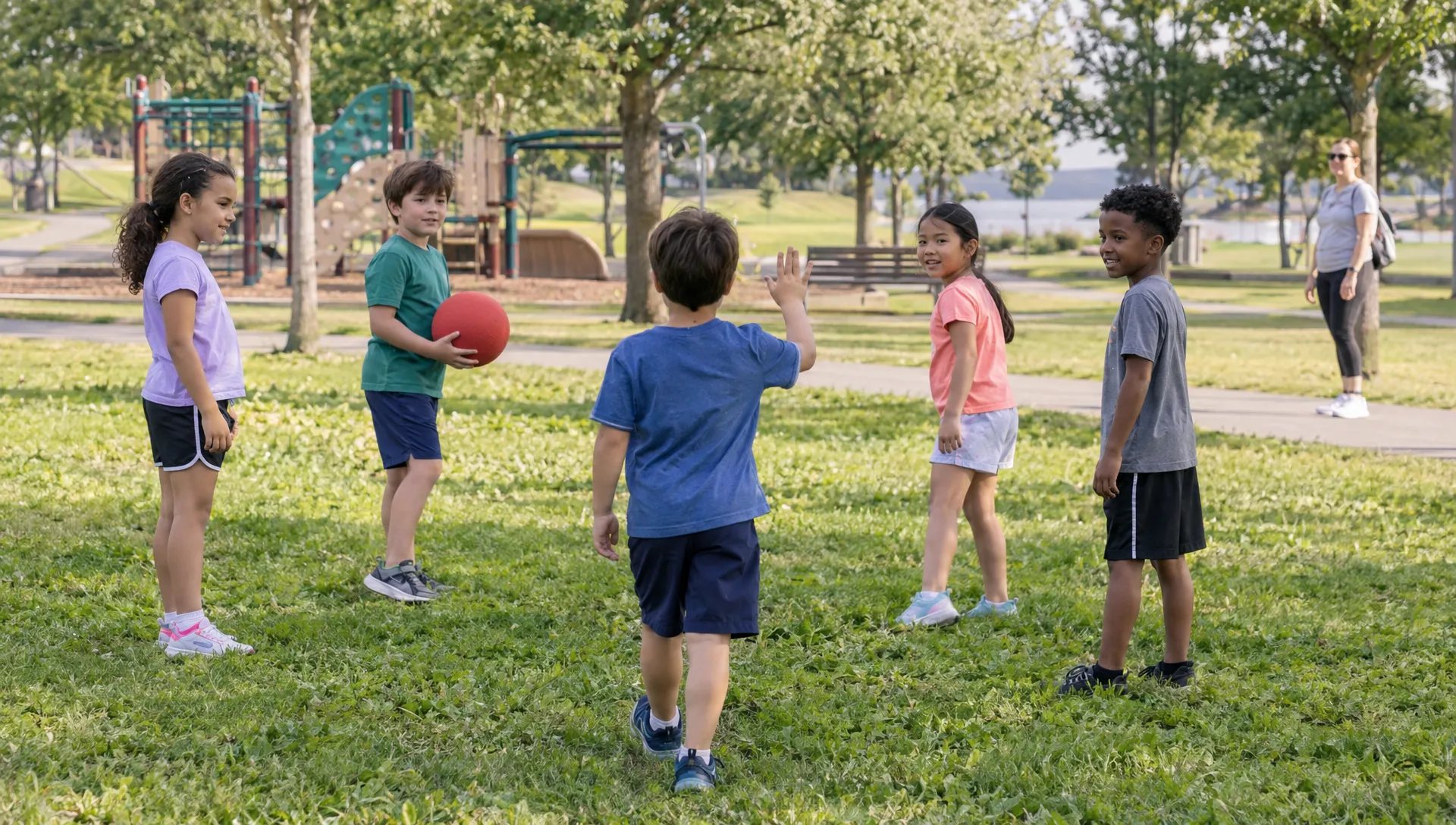
Building self-confidence in children often means giving them supported opportunities to try, make mistakes and experience success. Group therapy can provide those opportunities through guided interaction with other children. Depending on the group’s goals, children may practice joining conversations, expressing feelings, asking for help or handling disagreements with a therapist’s support.
The aim is not to turn a quiet child into an outgoing one. It is to help each child feel more capable, connected and comfortable being themselves. Here is how therapeutic groups can support confidence, what sessions may involve and how to decide whether this approach fits your child.
What Is Group Therapy for Children?
Group therapy brings children together with a qualified professional to work toward defined therapeutic goals. It differs from an ordinary playdate because activities, support and feedback are planned around the children’s needs.
Not all groups offer the same treatment. A psychologist-led group may focus on anxiety or emotional regulation. In social skills group therapy, children may work on starting interactions, understanding social situations and navigating disagreements. A speech-language therapist may lead a group focused on communication. Ask which professional leads the group and what it is designed to address.
A group may be worth discussing if your child wants friendships but struggles to join in, avoids activities because they fear mistakes or needs help expressing needs around peers. Shyness alone is not a disorder, and enjoying time alone does not automatically mean a child needs therapy.
Building Self-Confidence in Children Through Peer Connection
Building self-confidence in children involves more than praise: children need experiences that help them recognize what they can do. A well-matched group provides opportunities to practice with support rather than pressure.
Learning by Watching Other Children
Peer modeling allows a child to observe someone attempting a skill before trying it themselves. They might watch another child ask to join a game, request a break or recover after giving an incorrect answer.
The therapist can make the useful strategy visible: “You asked for help when the instructions were confusing.” This shows children that confidence includes seeking support, not knowing every answer.
Children also learn that peers have difficulties. The emphasis on connection and shared support in Engage Therapy’s overview of children’s group therapy reflects an important purpose of group work: helping children feel less alone in their experiences.
Practicing Communication Without Demanding Perfection
A group creates opportunities to negotiate roles, explain ideas and repair misunderstandings. A therapist might help a child rehearse “Can I have a turn when you finish?” before using it during a game.
For building self-confidence in children, practice should offer achievable challenges rather than repeated experiences of failure. Support might include pictures, extra processing time, gestures or an augmentative and alternative communication system (AAC).
Clear speech, frequent talking and eye contact should not be treated as the only signs of engagement. A child who communicates a boundary using a gesture has demonstrated a meaningful skill.
Developing Emotional Awareness and Empathy
The benefits of group therapy for children can include opportunities to name feelings, recognize different perspectives and respond to frustration with support. Children can discover that two people may feel differently about the same event.
For example, one child may enjoy a noisy game while another feels overwhelmed. A therapist can help them discuss a workable adjustment without labeling either response as wrong.
Positive reinforcement works best when feedback is specific and respectful: “You told us you needed more space.” Encouragement should recognize effort, self-advocacy and problem-solving, not simply reward quietness or compliance.
What to Expect Before and During Sessions
An Initial Discussion About Your Child
Before recommending a group, the clinician should explore your child’s strengths, communication, interests and support needs. They may ask about friendships, school participation, sensory preferences and previous therapy experiences.
Building self-confidence in children starts with choosing goals that matter to the child and family. “Feel more confident” becomes more useful when translated into an observable goal, such as asking a peer to play or requesting help during a shared task.
Children should also receive an age-appropriate explanation of the group. Knowing who will be there, what activities may happen and how to ask for a break can make an unfamiliar setting more manageable.
A Predictable but Flexible Session
Sessions may begin with a greeting or feelings check-in, followed by an activity linked to the group’s goals. Children then have opportunities to practice while the therapist models language, adjusts demands and helps resolve difficulties.
A closing reflection might invite children to identify something they tried or a strategy they want to use again. Reflection does not have to involve speaking in front of everyone; pointing to a picture or sharing privately may be more appropriate.
Some children initially observe more than they participate. The therapist should distinguish a useful settling-in period from ongoing distress or a mismatch between the group and the child’s needs.
Group Size, Duration and Safety
There is no single group size or session length that suits every child. These depend on age, goals, communication needs, staffing and the amount of individual support required. Ask the provider for the actual arrangements rather than relying on general estimates.
A group designed for building self-confidence in children should explain how it handles teasing, conflict, overwhelm and requests to pause. Families should also understand privacy expectations and safeguarding limits. A clinician cannot guarantee that other children will keep everything discussed confidential.
When considering group therapy for children in Dubai, ask how the clinician accounts for your child’s languages and cultural context. Learning English as an additional language should not automatically be interpreted as low confidence or a communication disorder.
Common Group Therapy Activities for Children
Activities should connect to therapeutic goals, rather than simply keep children occupied. The therapist adjusts the complexity, pace and communication demands to suit participants.
- Role-play: Rehearsing how to join a game, disagree respectfully or ask an adult for help gives children a supported opportunity to try useful language.
- Storytelling: Discussing a character’s challenge can help children explore feelings and possible solutions without immediately sharing personal experiences.
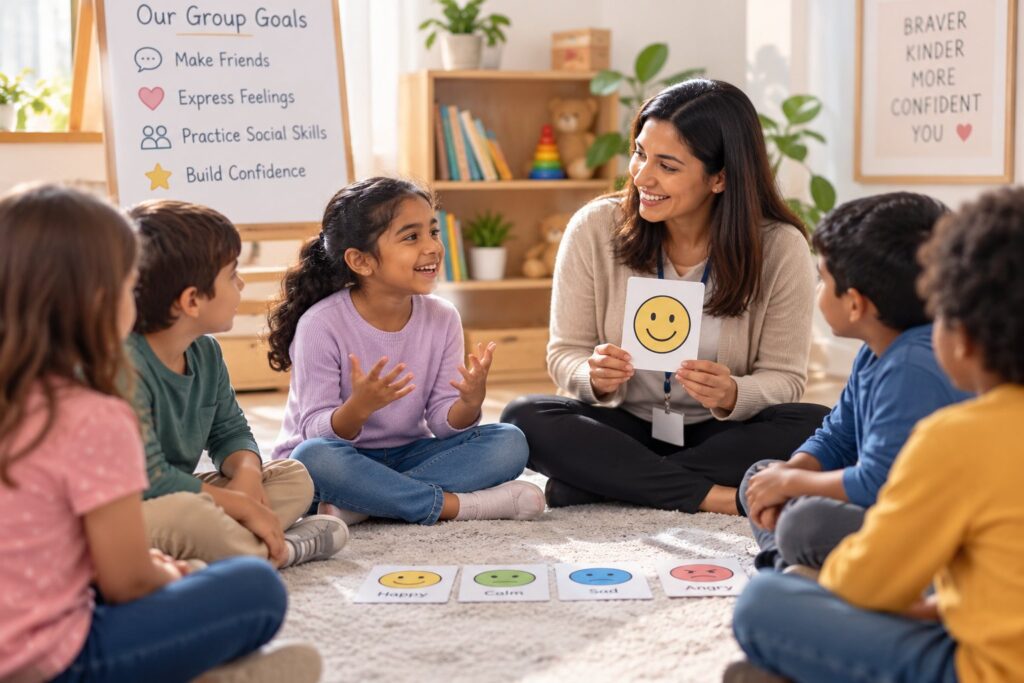
- Emotion-based activities: Feelings cards, drawings and body-awareness exercises can support recognizing emotions and choosing a coping response.
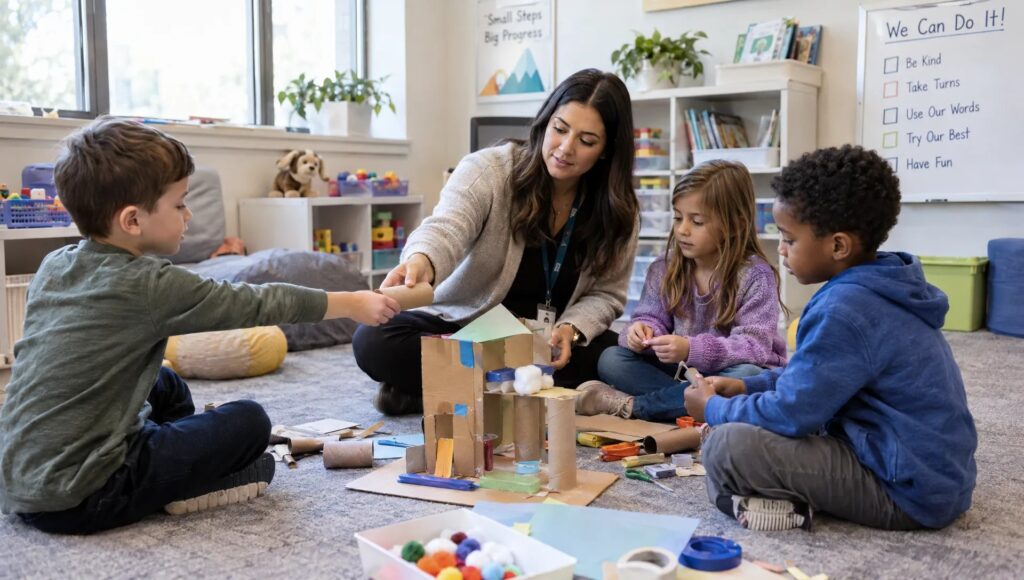
- Cooperative creative tasks: Building a shared model or making a group picture creates opportunities to share materials, contribute ideas and negotiate different preferences.
The activity itself is only part of the process. Building self-confidence in children also requires thoughtful feedback and chances to try again when something does not work.
For example, if a shared construction falls over, the therapist might help children acknowledge disappointment, exchange ideas and rebuild. The goal is not to prevent frustration but to make it manageable enough for learning.
For families interested in how play supports emotional expression, Play Therapy: A Fun Path to Emotional and Behavioural Growth explains the broader approach. Play therapy and a therapeutic skills group are not interchangeable, so ask which model a proposed program uses.
How Parents Can Support Progress Outside the Group
Children need opportunities to use skills in everyday settings, but home should not become a constant therapy session. Ask the clinician for one manageable strategy that fits your child’s current goal.
You might rehearse asking for help before a playdate, offer a choice of ways to greet someone or make space to discuss a difficult interaction after your child has settled. Avoid requiring an immediate performance to prove that therapy is working.
Building self-confidence in children at home means noticing specific efforts without comparing them with siblings or peers. “You explained that you wanted a different game” is more informative than “You were the best in the group.”
Ask what your child is comfortable sharing with teachers or other caregivers. Where coordination would help, discuss consent and privacy with the therapist.
If communication difficulties are affecting participation, Speech Therapy for Kids: Helping Kids Reach Full Potential explains areas that may warrant a speech-language assessment. Encouragement alone cannot resolve an underlying language difficulty.
Is Group Therapy Better Than Individual Therapy?
Neither format is automatically better. The choice depends on the child’s goals, readiness and support needs.
| Format | What it can offer | What to consider |
|---|---|---|
| Individual therapy | Focused assessment, tailored support and practice at the child’s pace | Peer interaction may need to be practiced elsewhere |
| Group therapy | Live opportunities for peer learning, shared problem-solving and communication | The group’s demands and membership must suit the child |
| A combination | Individual preparation alongside supported peer practice | Goals and approaches should be coordinated between clinicians |
A child experiencing significant distress, difficulty communicating basic needs or frequent overwhelm may need individual preparation or additional support before joining a group. These needs do not automatically rule out future participation.
How to Recognize Meaningful Progress
Building self-confidence in children is easier to evaluate when progress is linked to everyday participation rather than a broad label such as “more outgoing.” Agree on a starting point and review a few observable changes with the clinician.
Useful signs might include your child asking for help with less prompting, returning to an activity after a mistake or expressing a preference instead of withdrawing. Confidence can also look like saying “no” appropriately or recognizing when a break is needed.
Progress may differ between the therapy room, home and school. Ask whether a skill is emerging independently or still depends on adult support. There is no guaranteed number of sessions or universal timeline for improvement.
If your child repeatedly dreads attending, becomes increasingly distressed or reports feeling unsafe, discuss this promptly. The clinician may need to adjust the group, offer more support or recommend another approach.
Finding the Right Support for Your Child
A suitable group offers more than social exposure. It combines clear goals, accessible activities and professional support so children can practice participation without being pushed to become someone else.
For families building self-confidence in children, the next step is understanding what is making participation difficult. Bridges Care Dubai offers speech therapy, occupational therapy and psychological support. Contact the team to discuss your child’s needs and ask whether an appropriate group or individual approach is currently available.
Frequently Asked Questions
1. What Is the 3-3-3 Rule for Children?
The 3-3-3 rule commonly refers to a grounding exercise: notice three things you can see, identify three sounds and gently move three body parts. It may help some children redirect attention to the present when anxious. Adapt it to sensory and developmental needs; it is not a treatment or a guaranteed way to stop anxiety.
2. What Are the 5 C’s of Confidence?
There is no universally accepted clinical framework called the “5 C’s of confidence.” An established positive youth development framework uses competence, confidence, connection, character and caring. These describe related developmental strengths, not a diagnostic checklist or a specific therapy protocol.
3. How to Increase Self-Confidence in Children?
Building self-confidence in children involves achievable challenges, specific encouragement, supportive relationships and opportunities to make choices. Help your child practice meaningful skills without comparison or pressure to perform. If anxiety, communication difficulties or emotional distress interfere with daily life, seek an individualized professional assessment.
4. What Are the 5 Stages of Group Therapy?
A commonly used group-development model describes forming, storming, norming, performing and adjourning. These refer to getting acquainted, navigating differences, establishing expectations, working together and preparing to finish. They are not a fixed clinical sequence; children’s groups may revisit stages or develop differently.