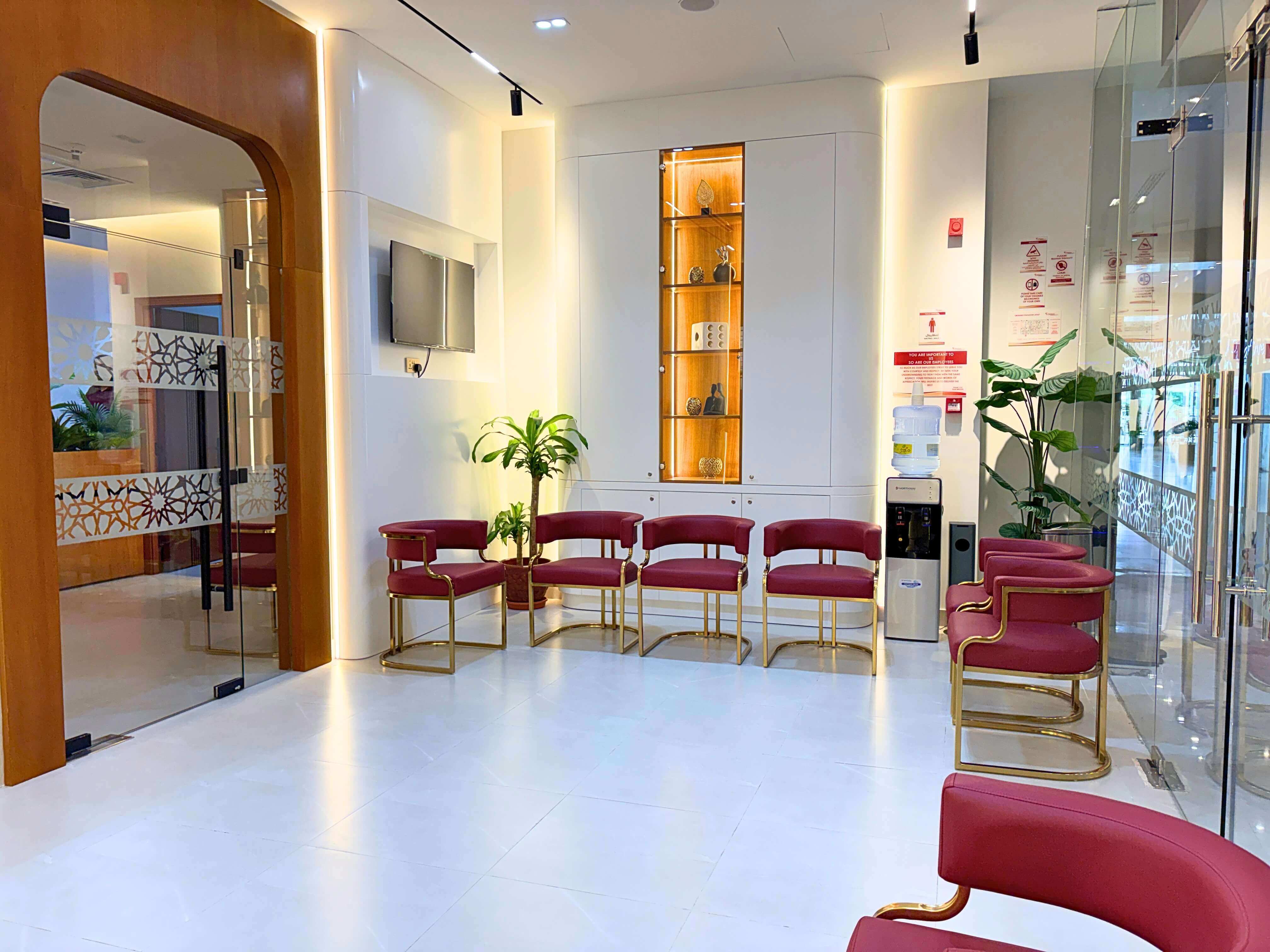
The therapy sessions are guided by clinical expertise and run through a peer-driven approach in order to help children build their social, communication, and life skills within a collaborative and motivating environment.
Communication never takes place by itself, as it develops through interaction with others. At the Bridges Care Speech Therapy Centre, our Group Therapy Dubai programmes bring children together in carefully structured peer activities, helping them practise real-world interactions under the guidance of qualified clinicians.
The programmes are intended to supplement individual therapy and thus enable the participants to generalise the skills that they have acquired, develop real social confidence, and experience the natural motivation that results from learning with others who have similar aims.
Find the Right GroupEach programme is directed by a licensed therapist and follows specific clinical objectives. Groups are organised according to children's ages, abilities, and therapeutic goals to encourage meaningful peer interactions. Group speech therapy helps children improve their speech, language, and communication skills through structured activities and guided interaction with other children.
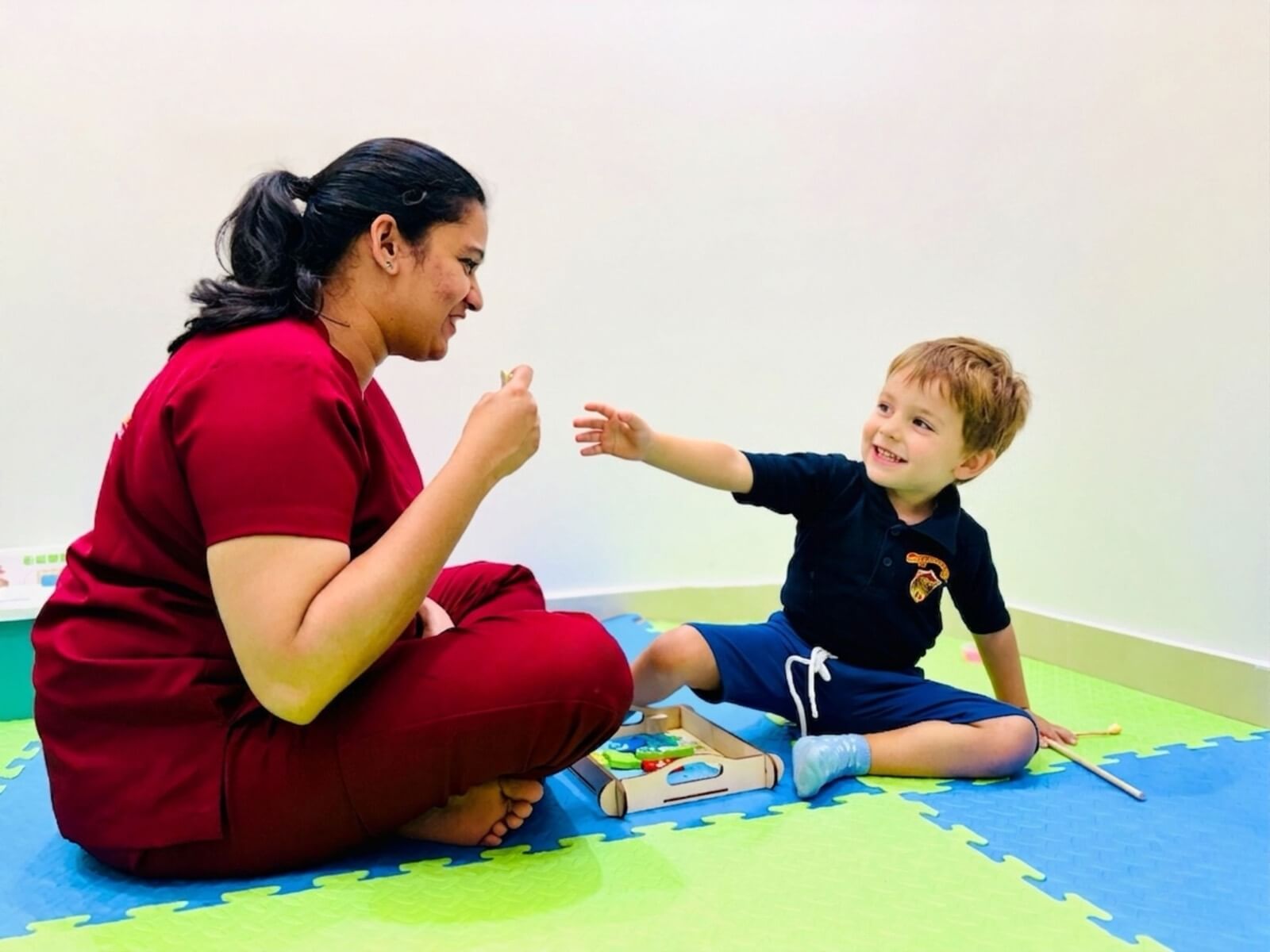
Children having trouble with friendships, taking turns when talking, or reading social cues find great benefit from supervised interaction with their peers. The social skills groups provide an environment which is both organised and natural, allowing the participants to practise greetings, sharing, engaging in joint play and resolving conflicts with other children at a similar stage of development.
Learn More
These small-group sessions, which are designed for children who have a delayed vocabulary or difficulties with expressive language, speed up word learning by means of storytelling, guided discussion, and themed activities. The sessions are carefully selected to enable the participants to hear, practise and reinforce new language structures through collaborative and engaging tasks.
Learn More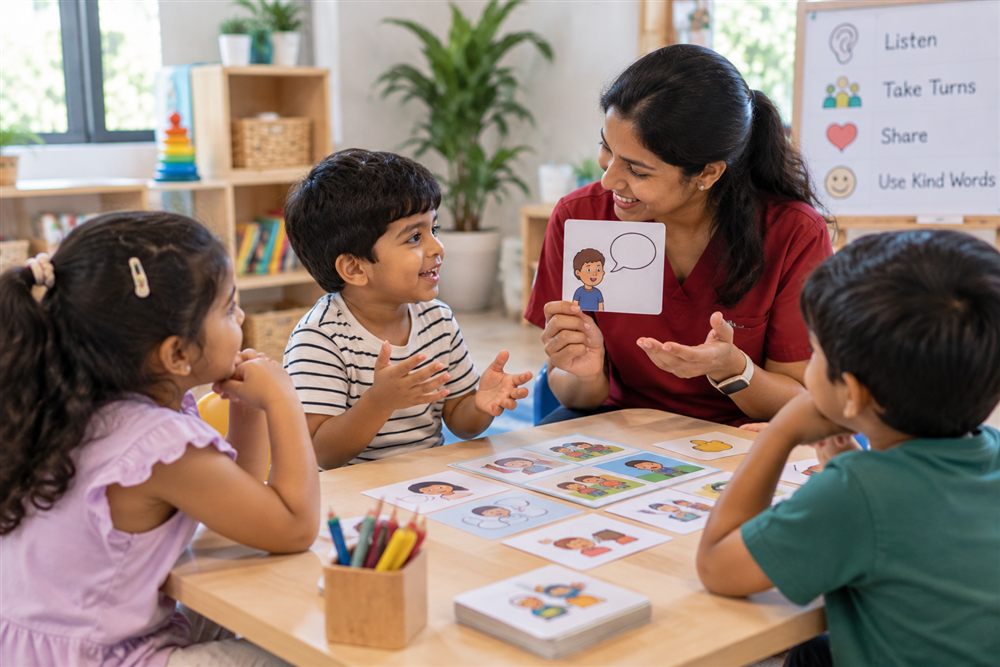
The difficulty lies not only in knowing what to say but also in knowing when and how to say it. The groups achieve this by using role-play situations, cooperative games, and real-world simulations to focus on conversational turn-taking, topic maintenance, perspective-taking, and non-verbal communication.
Learn More
Children and adolescents who stutter usually avoid group situations. The fluency workshops offer a supportive and judgement-free environment in which the participants can practise speech-flow techniques, gain confidence when giving presentations, and exchange experiences with other people who have similar problems, thus turning their anxiety into self-assurance.
Learn More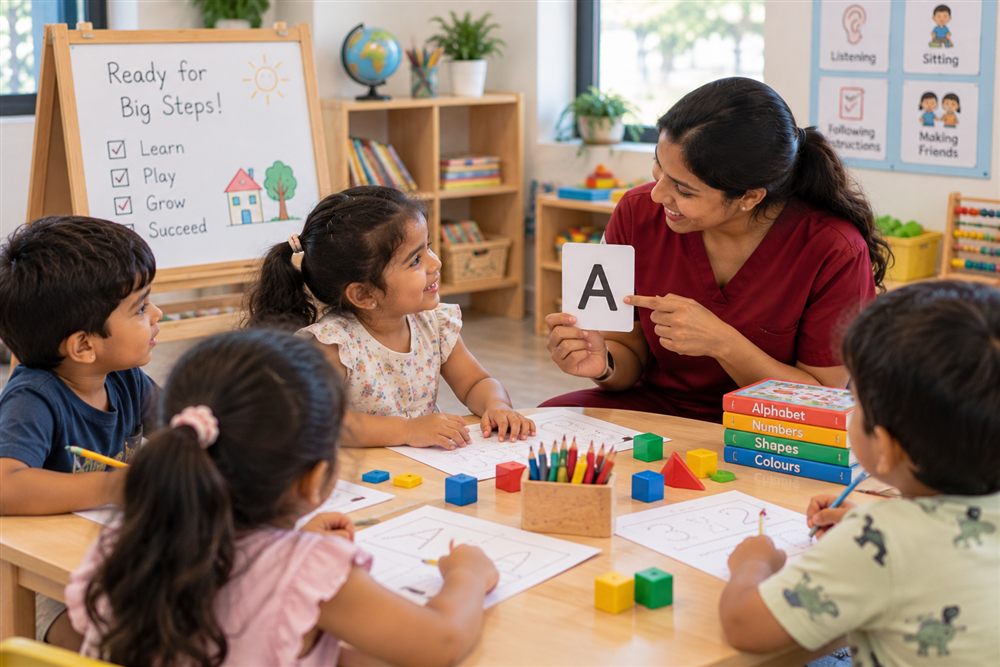
Children need a good grasp of listening, carrying out instructions that involve several steps, and communicating in the classroom in order to make the shift to formal schooling. The school readiness groups copy the academic setting, with circle time, question-and-answer routines, and collaborative projects, so that the children are ready to take part and learn from the start.
Learn More
If a number of children have similar aims regarding the production of sounds, then working together increases their motivation and makes the learning process feel more normal. The groups combine structured drills for speaking with interactive games, examples from their peers, and friendly competition, thus helping the participants to achieve better pronunciation while also enjoying the social aspect of therapy.
Learn More
Children who have picky eating habits or who avoid food on sensory grounds respond positively to peer modelling. By taking part in our feeding groups, they are exposed to new textures, tastes, and ways of presenting food in a relaxed, social environment where they can see one another and encourage each other, thus gradually increasing the variety of their diets without causing any pressure or distress.
Learn More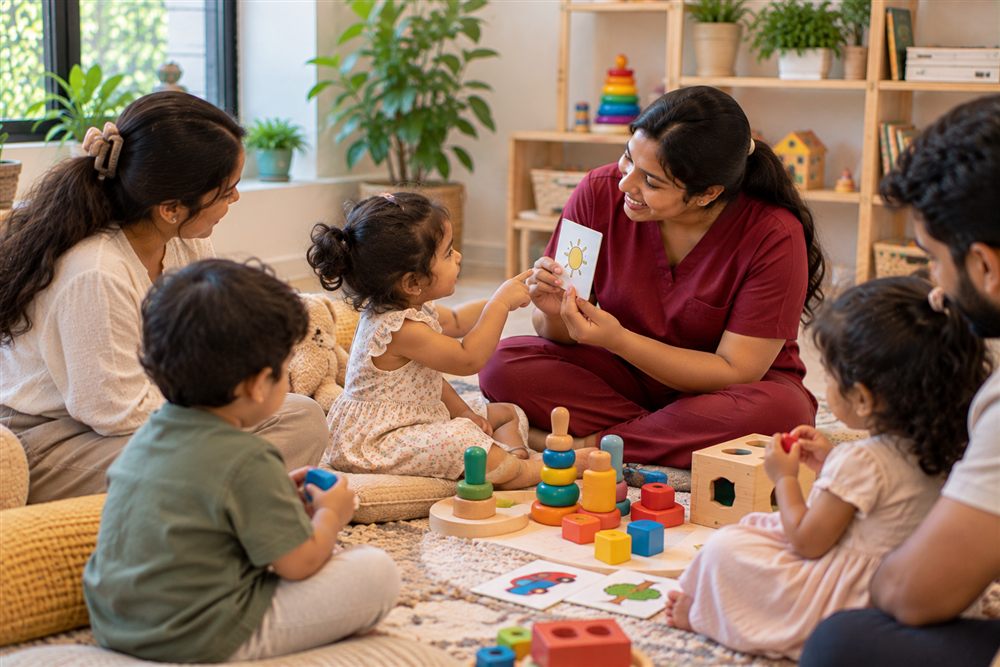
Caregivers are the most influential of a child's communication partners. These groups work with parents and children together, showing them responsive interaction strategies, methods of promoting language through play, and positive reinforcement techniques which families can then apply to their everyday routines at home and in the community.
Learn More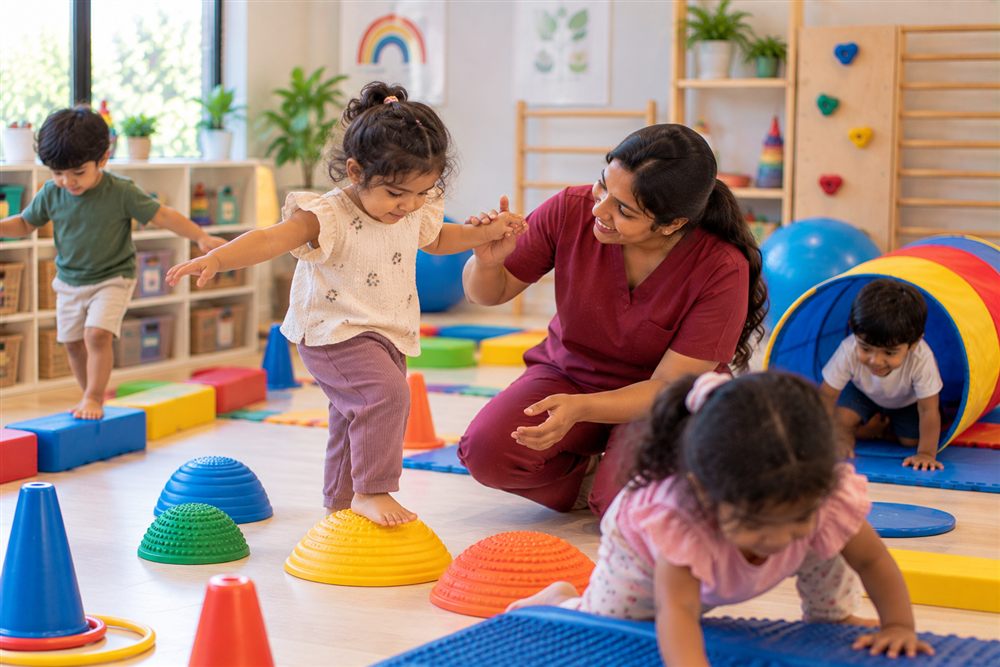
For children who have communication difficulties combined with problems in sensory processing or motor coordination, these interdisciplinary groups integrate the principles of occupational therapy with speech and language objectives. The activities are designed to address body awareness, self-regulation, and communication all at the same time within a lively and movement-filled environment.
Learn MoreNot sure which group is right for your child?
Get a Free Phone ConsultationPeer interaction is one of the strongest factors in promoting the development of communication skills. Our group programmes direct that energy towards structured and goal-oriented therapy which children actually enjoy.
In addition to our main programmes, we have seasonal intensive camps and specific workshops which give concentrated assistance during the school holidays and at important stages of development.
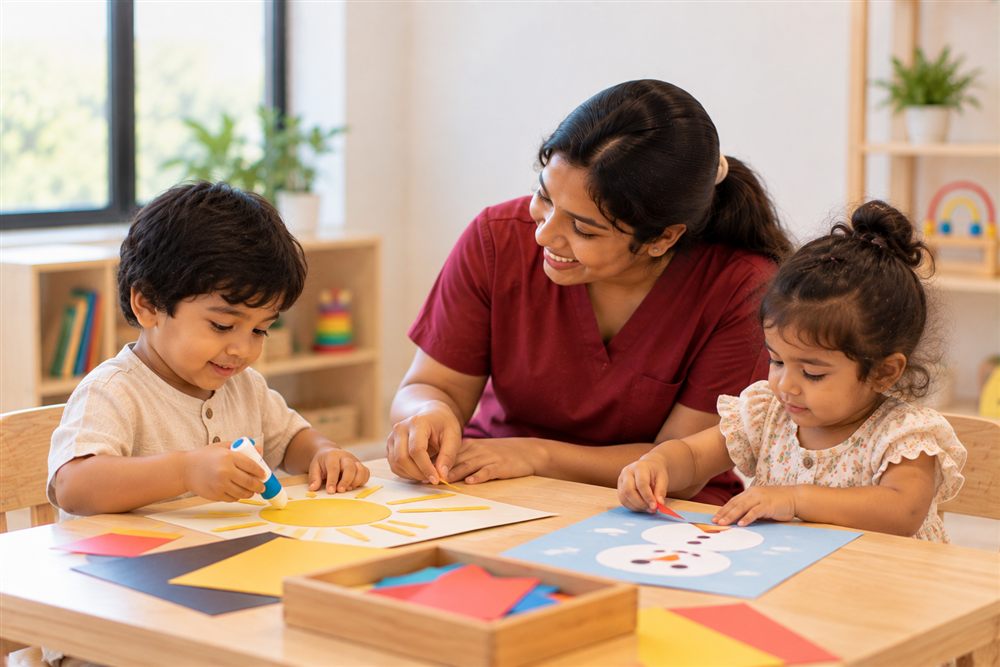
While school is not in session, our intensive group camps achieve rapid progress by holding daily themed sessions which integrate speech, language, social skills and creative activities in a structured half-day format.
Learn More
Brothers and sisters of children who are receiving therapy usually have questions and emotions of their own, and our sibling workshops provide a safe environment in which to gain an understanding, build connections, and receive age-appropriate information about communication differences.
Learn More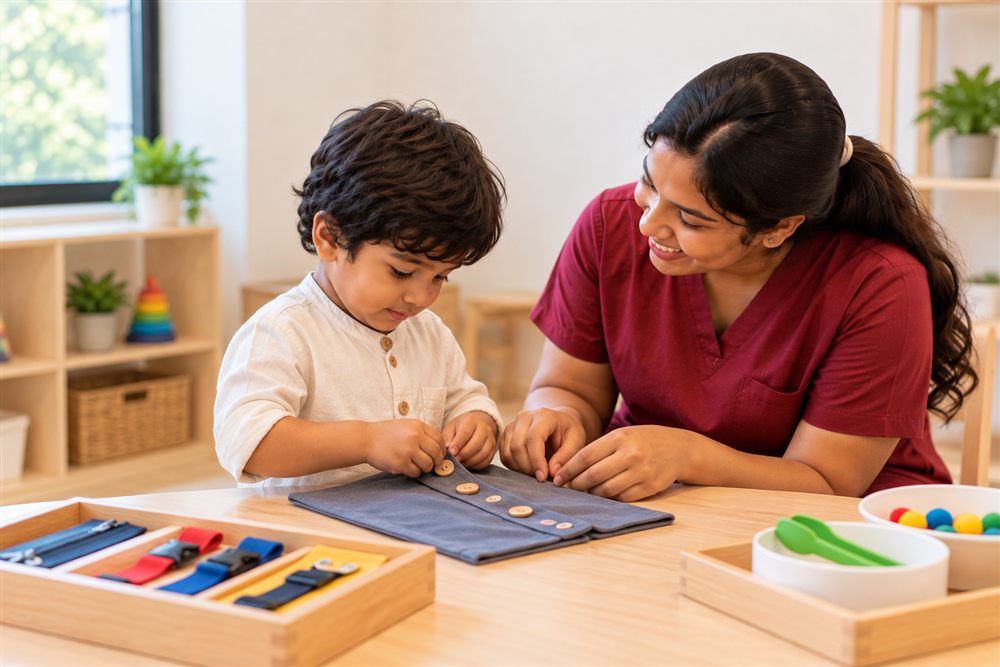
Teenagers who are preparing for secondary school or for early adulthood can gain advantages from having structured practice in the areas of self-advocacy, interview skills, navigating the community, and independent communication, all provided in a supportive environment among their peers. Teen group therapy at Bridges Care helps teenagers develop essential life skills through structured activities, peer interaction, and guided support.
Learn MoreFrom the very first enquiry through to seeing tangible progress, here's what you can expect when your child takes part in a group programme at Bridges Care. Families considering Group Therapy Dubai programmes can begin with an initial consultation to discuss their child's needs and find a suitable group.
The process starts with a short telephone consultation to find out what your child's needs are, after which there is an in-clinic screening to evaluate the child's communication level, social readiness, and therapeutic goals. This in turn ensures accurate group placement.
On the basis of the screening results, we pair your child with other children who are of a similar age and at a comparable stage of development. Within the group setting, individual objectives are set so that each participant can work on personal milestones.
The sessions take place once or twice a week and last between 45 and 60 minutes. They are based on a set plan which includes warm-up exercises, practice focused on specific skills, tasks that involve interaction between peers, and a cool-down review, all of which are carried out by a licensed therapist.
Following each session, parents are given a short summary of the activities and the child's progress, and we include suggestions for home practice so that the skills acquired in the group can be carried over into everyday family routines and playdates.
After each programme cycle, we hold a formal review of progress. Families are given a detailed report which sets out the achievements, the areas in which further growth is needed, and recommendations that might involve another group cycle, a change to a different programme, or a transition to independent practice.
The coverage for group therapy differs from one insurance provider to another in the UAE. Although direct billing is not available in all cases, a number of insurers have paid for our group sessions in previous instances. We prepare all the required documentation, including stamped claim forms, official receipts, and clinical reports, so that you will not have any trouble making a reimbursement claim.
Some insurance policies provide for therapy services through a Guarantee of Payment agreement. In such cases, our administrative staff will handle the entire documentation process – this includes filling out the forms with the required stamps, providing payment receipts, and preparing the assessment reports – in order to ensure that approval is obtained quickly.
The Sanad Card, which is offered by Dubai's Community Development Authority (CDA), provides advantages to people who have disabilities. Bridges Care co-ordinates its group therapy services with the aims of the Sanad Card by providing individualised rehabilitation, early intervention, family coaching, and the tracking of measurable progress for each participant.
Tip: If you are looking for Group Therapy Dubai services, you should ask your insurance company or broker whether your policy covers these sessions. Our administration team will be happy to guide you through the claims process and provide any necessary documentation.
Children have a natural tendency to learn through observing, copying, and interacting with their peers. Group therapy makes use of this instinct in order to speed up progress.
Group situations reproduce typical everyday social scenarios, so that the skills acquired can be directly applied to classrooms, playgrounds, and family life.
Working towards the same objectives as other children lessens feelings of isolation and helps to build the confidence needed to speak without hesitation.
Because group sessions provide high-quality therapeutic input at a lower cost per session, they make it possible for families to access continuous therapy.
Each group is directed by a qualified therapist who has clearly defined aims, keeps track of progress, and gives individual attention within the group setting.
Parents are given session summaries and home practice guides, and also receive periodic coaching, so that the benefits achieved in group sessions continue to develop.
Our son used to avoid taking part in group activities at school completely, but after going through two cycles of the Social Skills Group at Bridges Care, he began starting conversations with his classmates, joined in with the games on the playground and even offered to give a presentation in front of his class. The extent of this improvement is remarkable, and it all began in a room with three other children and a really talented therapist.- Fatima A., a parent of a participant in a Social Skills Group
Our groups typically serve children from 2 to 16 years of age, though we also run select programmes for adolescents and young adults. In each group, members are carefully selected according to age and stage of development so that all the participants are working with well-matched peers.
Groups usually consist of 3 to 6 participants, depending on the programme type and the needs of each child. Smaller groups ensure that every participant receives meaningful individual attention from the therapist while still benefiting from peer interaction.
Yes. We do a short screening or a full evaluation to learn about your child's current skills, their goals and how ready they are to be around others. This helps us place each child in the right group and set personal goals within the group programme.
Group therapy and individual therapy have different roles and often work together. Some children do well with both: individual sessions to focus on specific skills and group sessions to practise social skills. Your therapist will suggest the best way to go.
Most of our group programmes run in cycles of six to twelve weeks, with sessions once or twice each week. When each cycle ends, we look at how things are going, and families get details about what has happened along with advice on what to do next.
Our therapists are experienced in helping children ease into group participation. We use gradual introduction strategies, familiar activities, and supportive pairing to ensure every child feels safe. If a child needs more time, we may recommend a transition period with individual sessions first.
Do you have a question that's not on this list?
Talk to Our TeamOur licensed therapists are ready to match your child with the right peers and the right programme. Reach out today - we typically respond within 24 hours.
Interested in enrolling your child? Fill in the form or contact us directly - our team will guide you through the screening process and help identify the ideal group placement.
R03, Ground Floor, European Business Center, near DIP Metro Station, Dubai Investment Park 1, Dubai, UAE
We respond within 24 hours. For urgent enquiries, call us directly.