
A child concentration problem can make homework, dressing or classroom activities frustrating for the whole family. Difficulty focusing does not automatically mean ADHD or poor behavior. Sleep, sensory demands, language skills and task difficulty can all affect attention. Understanding the cause helps you choose useful activities to improve attention and concentration rather than repeatedly asking your child to “try harder.”
What does an attention problem in a child look like?
Children’s attention changes with age, interest and surroundings. A child who leaves a worksheet unfinished may spend much longer building something they enjoy. That difference alone does not establish a disorder.
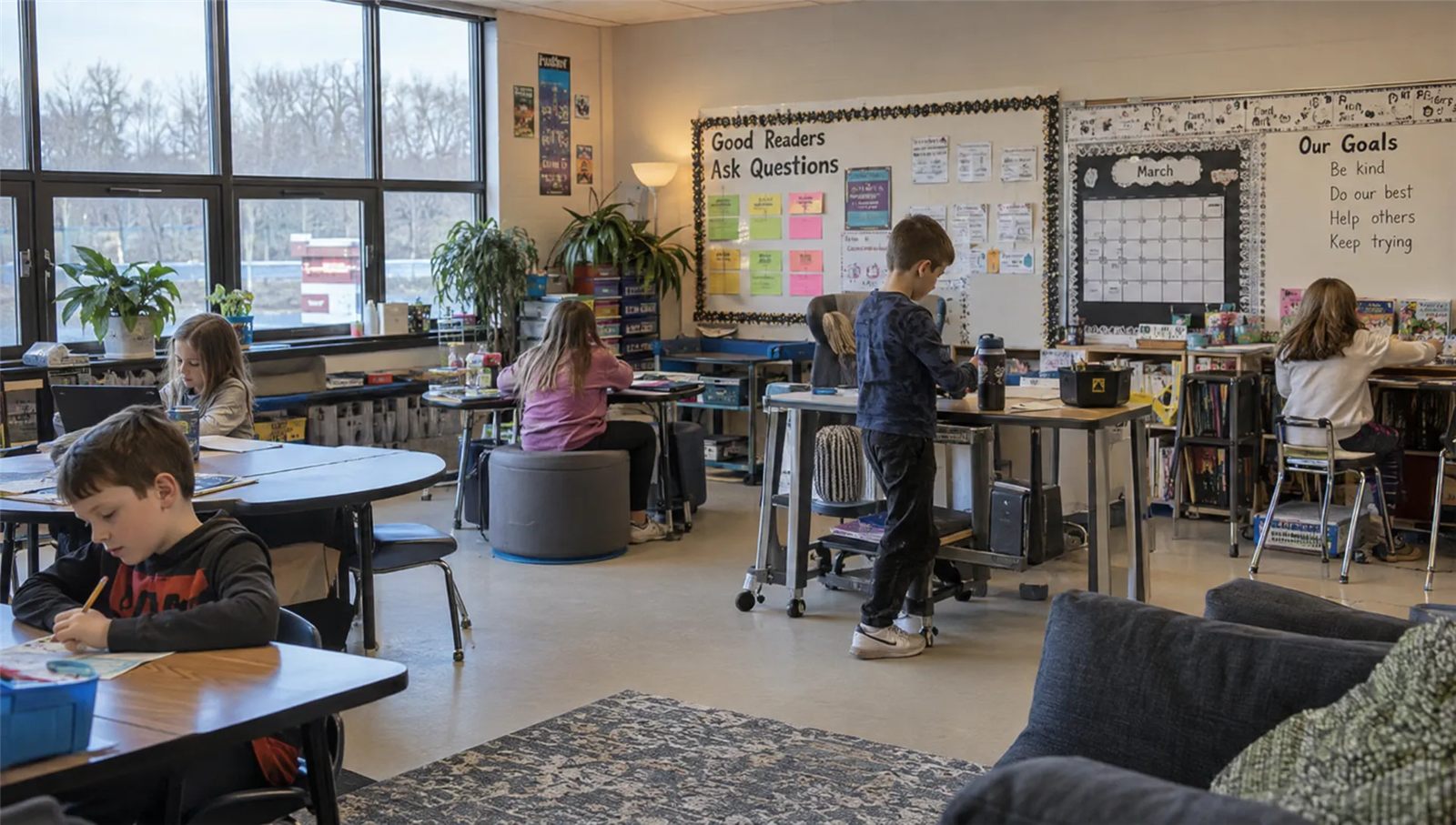
Look at participation rather than stillness. Does your child lose track of instructions, need frequent reminders or struggle to finish familiar routines? Can they return to an activity with support? Movement is not automatically a distraction; some children participate better when allowed to stand or change position.
Why a child concentration problem happens
Several factors can make sustained attention harder:
- Sleep and physical discomfort: Insufficient sleep, hunger, pain or illness can reduce engagement.
- Sensory demands: Background noise, bright lighting or uncomfortable clothing may compete with the task.
- Task difficulty: Unclear instructions, challenging handwriting or unfamiliar language can look like inattention.
- Emotional stress: Worry, transitions or pressure to perform may interrupt concentration.
For children with sensory difficulties, understanding sensory integration and when assessment may help can guide a more appropriate response. Sensory strategies should address an identified need, not be prescribed automatically for every distracted child.
Does poor concentration always mean ADHD?
No. ADHD is one possible explanation, but an attention problem in a child needs a broader assessment. The CDC’s ADHD diagnosis guidance explains that there is no single diagnostic test and that other conditions can produce similar symptoms.
A pediatrician may consider sleep, hearing, vision, learning and emotional concerns. Understanding these barriers helps parents decide how to improve child focus and concentration without assuming that every difficulty has the same cause.
How occupational therapy for children can help
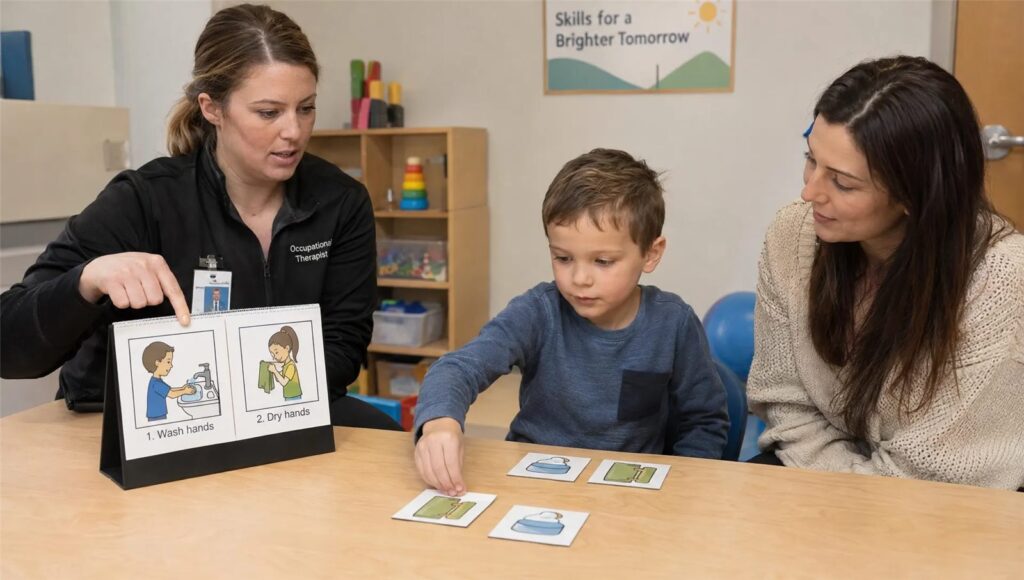
Occupational therapists examine how a child’s abilities, surroundings and task demands affect everyday participation. Assessment may include observation of play, self-care, classroom tasks and responses to sensory input alongside information from parents and teachers.
For a child concentration problem, the aim is not simply to increase sitting time. Useful goals might include completing a dressing routine with fewer prompts or joining a classroom activity more independently.
Families considering Bridges Care Dubai can explore its occupational therapy services and discuss which everyday difficulties need assessment. Support should be individualized rather than based on a standard concentration programme.
What might an individualized plan include?
A therapist may simplify task steps, introduce visual reminders, adjust seating or trial movement breaks. Where relevant, intervention may also address motor skills, sensory regulation and planning.
These changes should be reviewed against functional goals. A strategy is useful if it helps the child participate, not merely appear quieter. Understanding the different roles of physiotherapy and occupational therapy can also clarify which professional should address movement, posture or daily-task difficulties.
How to improve child focus and concentration at home
Start with one routine that regularly causes difficulty. For a child concentration problem during homework, reduce unnecessary materials, give one clear instruction and check understanding before adding another step.
Choose a manageable starting task and agree on a brief break. Increase demands gradually when your child succeeds. Occupational therapy for children can help families adapt these routines to the child’s abilities and environment.
Notice whether understanding is the barrier. A child who misses spoken instructions may need shorter language, demonstration or assessment rather than more reminders. When communication difficulties are suspected, speech and language therapy may be relevant alongside other support.
Offer specific feedback such as “You checked the picture and found the next step.” Avoid comparing siblings or making stillness the measure of success.
Activities to improve attention and concentration
Choose enjoyable activities that are slightly challenging but achievable. Adapt the materials to your child’s developmental level and supervise movement games. Stop or simplify the activity if frustration rises.
| Activity | Skill practised | Simple adaptation |
|---|---|---|
| Matching picture pairs | Looking carefully and remembering information | Begin with a few pairs and add more gradually |
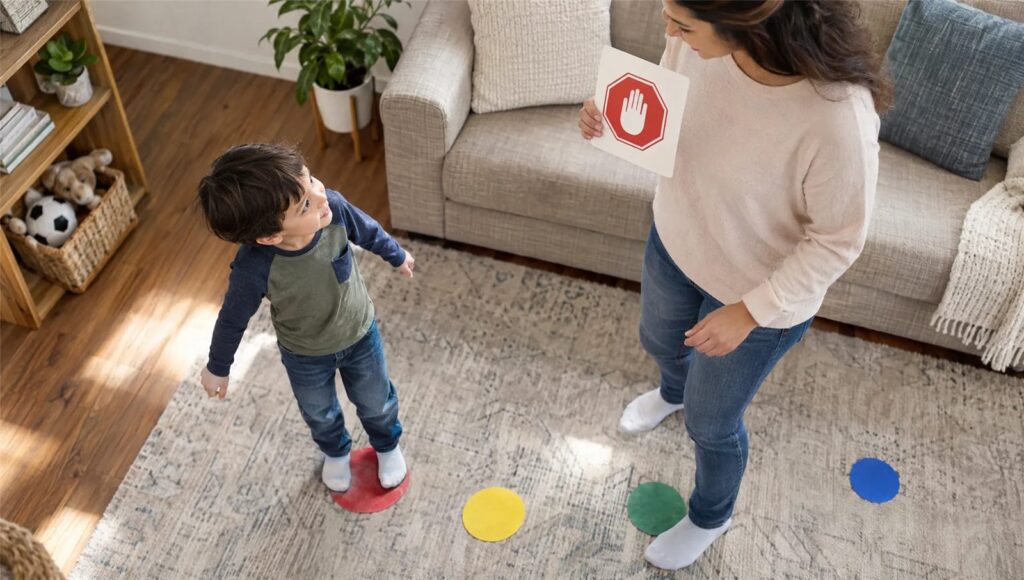
| Stop-and-go movement game | Listening and responding to cues | Use clear verbal cues with a matching gesture |
| Building from a model | Planning and following a sequence | Start with a small model and show one step at a time |
| Sorting familiar objects | Following a rule and staying with a task | Sort by one feature before changing the rule |
These games provide opportunities to practise skills; they are not diagnostic tests or guaranteed treatments. Record what helps, including the setting, level of support and signs of fatigue. Success in a game does not necessarily transfer automatically to schoolwork, so practise relevant everyday tasks too.
When should you seek professional support?
Seek an assessment when a child concentration problem repeatedly interferes with learning, play, friendships or self-care despite reasonable adjustments. Bring examples from home and school, including when difficulties occur and what helps.
If high activity levels occur alongside communication difficulties, this explanation of hyperactivity and speech-delay overlaps offers useful context. Those features alone do not establish a diagnosis.
Persistent worry, distress or significant behavioral changes may warrant clinical psychology support. A pediatrician can help coordinate assessment when several concerns overlap. Sudden confusion or new weakness requires urgent medical assessment rather than waiting for a routine therapy appointment.
Conclusion: Match support to the underlying difficulty
A child concentration problem is a reason to investigate barriers, not label a child as lazy. Clear instructions, suitable task demands and supportive routines can improve participation. Occupational therapy can help identify adaptations and develop practical goals, with other professionals involved when needed.
Bridges Care Dubai offers occupational therapy alongside speech therapy and psychological support. Contact Bridges Care Speech Therapy Center to discuss your child’s everyday challenges and whether an assessment is appropriate. Bring a few specific examples so the conversation focuses on meaningful needs.
Frequently asked questions
1. Is a child’s concentration problem always ADHD? No. Sleep difficulties, stress, sensory demands, language challenges and learning needs can also affect attention. Diagnosis requires an appropriate clinical assessment.
2. How does occupational therapy for children support attention? It examines everyday tasks and environments, then develops individualized strategies such as clearer task steps, visual prompts or suitable breaks. Goals focus on participation and independence.
3. How can parents learn how to improve child focus and concentration? Observe when difficulties arise, adjust one routine at a time and track what helps. Seek professional advice when difficulties persist or substantially affect daily life.
4. Which activities to improve attention and concentration should we try first? Start with enjoyable matching, building or stop-and-go games at a manageable level. Adapt the challenge and practise the everyday task your child finds difficult too.
5. Can Bridges Care Dubai help with an attention problem in a child? The center offers occupational therapy, speech therapy and psychological support. Discuss your concerns with the team to identify an appropriate assessment pathway.