
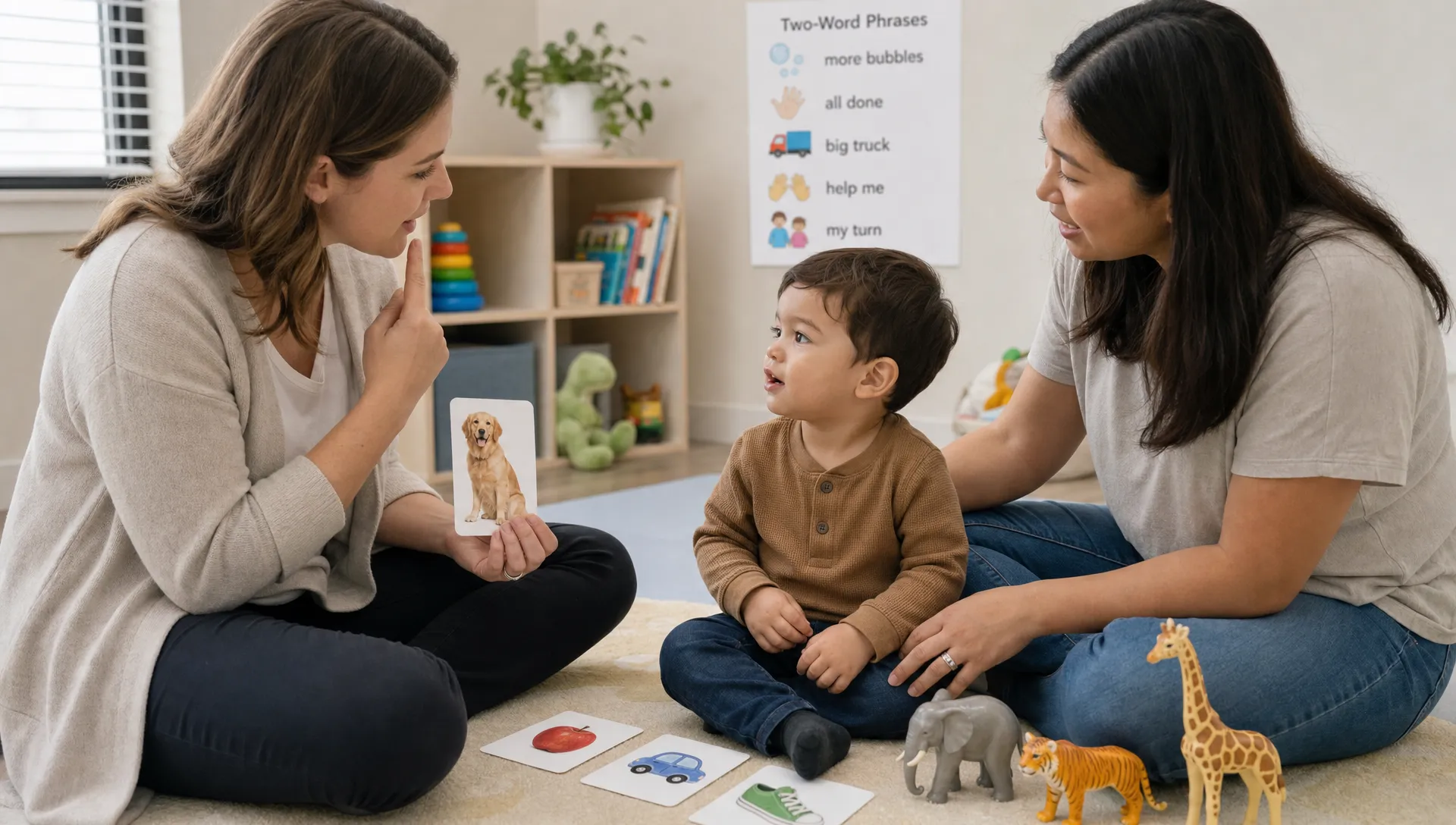
At age 2, many children are busy naming people, copying sounds and asking for favorite things with words. Others understand a lot but say very little. If your toddler has few clear words or no two-word phrases, you may wonder whether they are a late talker. The short answer is yes, a 2-year-old can fall into this category when expressive speech is behind age expectations, but it does not automatically mean something serious is wrong.
What is a late talker?
A late talker is usually a toddler who has delayed spoken language even though other areas of development may look typical. Many children in this group understand familiar routines, recognize family members, follow simple instructions and use gestures to communicate.
The key difficulty is expressive language, meaning the child is not yet using enough words to share needs, ideas and feelings. The American Speech-Language-Hearing Association describes late language emergence as delayed language onset without another diagnosed disability in early childhood.
Parents often ask what is a late talker because they see a child who seems bright, playful and socially interested but is not speaking like peers. That contrast can be confusing, especially when relatives say every child talks in their own time.
Is a 2-year-old considered a late talker?
A 2-year-old may be considered a late talker if they are around 24 months old and use fewer than about 50 words or are not putting two words together, such as more milk or go car. This 50-word guideline is not a perfect rule, but it is widely used by speech-language professionals as a practical signal for assessment.
The CDC milestone guidance for age 2 includes using at least two words together, pointing to body parts when asked and using more gestures than only waving or pointing. If you want a broader age-by-age overview, Bridges Speech Center has a helpful parent guide to language development milestones.
| Age | Communication skill many children show | When to seek advice |
| 18 months | Says several meaningful words and points to request | No clear words or limited response to sound |
| 24 months | Uses about 50 or more words and starts two-word phrases | Very few words or no word combinations |
| 30 months | Uses short phrases and follows simple daily directions | Speech is very hard to understand or progress is slow |
A milestone delay is not a diagnosis. It is a sign that a closer look may help.
Can a late talker baby catch up?
Some parents use the phrase late talker baby for a toddler who is not yet talking much. Some children do catch up, especially when understanding, play skills, hearing and social interaction are strong. Others continue to need support for vocabulary, grammar, pronunciation or early learning.
Waiting without guidance can create frustration for the child and stress for the family. A short screening with a speech-language therapist can clarify whether monitoring is enough or whether early speech therapy would be useful.
Late talkers when to worry: signs to take seriously
The phrase late talkers when to worry is common because parents want to know the difference between patience and delay. You do not need to panic, but you should seek professional advice if your child shows any of these signs:
- Uses no meaningful words by 18 months
- Has fewer than about 50 words at 24 months and is not using two-word phrases
- Does not respond to name or everyday sounds
- Loses words or social skills they once had
- Rarely points, waves, imitates or shares attention
- Has feeding, chewing or swallowing difficulties
- Becomes very frustrated because communication is hard
Not every late talker has an underlying disorder. Still, these signs justify a hearing check and a speech and language assessment. If you are unsure whether the issue is speech clarity or language development, this guide on speech delay and language delay explains the difference in parent-friendly terms.
Speech delay, language delay or autism: why assessment matters
Late talking can have many causes, including hearing loss, recurrent ear infections, oral motor difficulties, limited interaction, bilingual language distribution, developmental language disorder or broader developmental differences.
Autism is one possible reason for delayed communication, but it is not the only reason. Social communication signs matter. A child who seeks attention, enjoys back-and-forth play, points to show interest and responds warmly to people may have a different profile from a child who has limited social response or repetitive behaviors.
For a deeper comparison, read the Bridges Speech Center guide on Late Talker vs Autism. If autism features are already present or suspected, families may also benefit from structured support such as speech therapy for autism at home, especially when daily routines are part of the therapy plan.
What parents can do at home to support talking
Home routines are powerful because toddlers learn words through repetition in meaningful moments. During meals, bath time, dressing and play, use short phrases your child can copy. If your child says car, you can expand it to red car or car go.
Try to pause before giving a wanted item so your child has a reason to communicate. Accept words, sounds, signs or gestures at first, then model the next step. Reduce background screen time during interaction because toddlers need faces, voices and turn-taking to learn communication.
Reading simple books, singing action songs and naming real objects during play can build vocabulary. Families who need more structure can explore speech therapy at home, especially if travel is difficult or the child communicates best in a familiar setting. Parents searching for speech therapy at home Dubai often prefer this approach because coaching can happen inside real daily routines.
How a therapist in Dubai assesses a 2-year-old
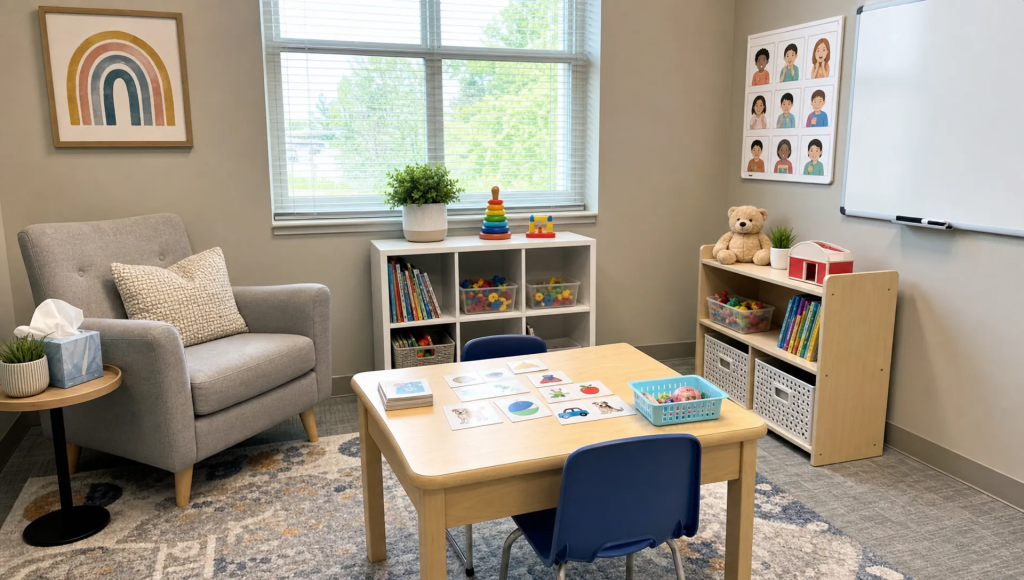
A qualified therapist in Dubai will not only count words. A good assessment looks at understanding, gesture use, play, attention, imitation, mouth movements, feeding history, hearing concerns and family goals. The therapist may observe how your toddler requests help, shares interest, follows directions and responds when communication breaks down.
Speech therapy for toddlers is usually play-based. Sessions may focus on first words, word combinations, turn-taking, listening skills, speech sounds and parent coaching. The goal is not to pressure a child to perform. The goal is to make communication easier, more frequent and more rewarding.
At Bridges Care Speech Therapy Center, families can access individualized support for children and adults in a safe clinical setting. If your child mainly needs communication support, the center’s speech therapy services can help you understand the next step. When a child has sensory, feeding, behavior, motor or emotional needs, related services may also be recommended as part of a holistic plan.
Conclusion
A 2-year-old can be considered a late talker when spoken vocabulary and two-word phrases are clearly behind expected milestones. Some toddlers catch up, but early guidance helps families avoid months of uncertainty.
If your child is not using enough words, has lost skills or struggles to communicate, book an assessment rather than waiting and worrying. Bridges Care Speech Therapy Center can guide families in Dubai with professional evaluation, speech therapy and parent-focused support.
Frequently Asked Questions
1. Is every 2-year-old with few words a late talker?
Not always. Some children have temporary delays, hearing issues or speech sound difficulties. A speech-language assessment helps identify the reason and the right support.
2. Can a late talker baby catch up without therapy?
Some children do catch up, especially when comprehension and social interaction are strong. Therapy is recommended when progress is slow, frustration is high or red flags are present.
3. How long does speech therapy take for toddlers?
It depends on the child’s profile, attendance, home practice and any underlying needs. Many families notice better communication routines before speech becomes fully age-appropriate.
4. How do I choose a therapist in Dubai?
Look for a qualified speech-language therapist who assesses the whole child, involves parents and gives practical strategies for home routines.
5. Should I wait until age 3 before booking an assessment?
No. If you are concerned at age 2, an early screening is reasonable. Early advice can confirm whether monitoring is enough or whether support should begin now.