

If you have been referred for physiotherapy but found a clinic advertising physical therapy, you are not alone. Many parents, adults and caregivers in Dubai ask whether these terms mean different services, different qualifications or different treatment goals. In most day-to-day healthcare settings, they refer to the same core profession: helping people reduce pain, improve movement, restore function and participate more confidently in daily life.
Physiotherapy vs physical therapy: the short answer
Yes, in most cases, physiotherapy and physical therapy describe the same healthcare field. The wording changes depending on the country, clinic tradition and professional association. World Physiotherapy uses the term physiotherapy for the global profession, while the United States commonly uses physical therapy.
The phrase physiotherapy vs physical therapy can sound like a technical debate, but for patients the practical question is simpler: will the therapist assess movement, identify limitations and create a safe rehabilitation plan? If the answer is yes, you are likely looking at the same type of service.
In Dubai, many clinics use physiotherapy because it is widely recognized in the UAE, the UK, Australia, India and other regions. People searching for physiotherapy Dubai or a therapy center in Dubai may still find the same rehabilitation approach that Americans often call physical therapy.
Why the names differ by country
The difference is mostly linguistic rather than clinical. In the United States, physical therapy is the preferred professional term. In the UK, Canada, Australia, New Zealand, the UAE and much of Asia, physiotherapy is more common.
That does not mean every clinic works in exactly the same way. Treatment style depends on the therapist’s training, the patient’s condition, the clinic’s equipment and the goals of care. One physiotherapist may focus heavily on manual therapy and exercise. Another may specialize in neurological rehabilitation, pediatric development, sports injuries or pain management.
| Question | Physiotherapy | Physical therapy |
| Main meaning | Healthcare profession focused on movement, function and rehabilitation | Same core profession, especially in US wording |
| Common regions | UAE, UK, Australia, Canada, India and many other countries | United States and some international clinics |
| Typical users | Children, adults, athletes, elderly patients and people recovering from illness or injury | Same patient groups |
| Common goals | Pain relief, mobility, balance, strength, posture and daily function | Same goals |
| What matters most | Therapist qualification, assessment quality and care plan | Therapist qualification, assessment quality and care plan |
What physiotherapy treatments usually include
A physical therapy plan may include several types of care depending on the person’s age, diagnosis and recovery goals. The therapist usually begins with an assessment of posture, strength, flexibility, balance, walking pattern, pain level and functional ability.
Common physiotherapy treatments may include:
- Therapeutic exercises for strength, flexibility and endurance
- Manual therapy for joints, muscles and soft tissue restrictions
- Balance and coordination training
- Gait training for safer walking
- Posture correction and ergonomic education
- Pain management techniques
- Neurological rehabilitation after stroke or nerve injury
- Pediatric movement support for developmental needs
- Sports rehabilitation after injury
These physiotherapy treatments are not chosen randomly. A good plan connects each technique to a clear functional goal, such as climbing stairs, sitting comfortably at work, returning to sport or helping a child move with better control. If you want to explore service options in more detail, Bridges Care provides dedicated physiotherapy services in Dubai for different rehabilitation needs.
When children may need physiotherapy
For children, physical therapy often supports motor development, balance, coordination and participation in play or school routines. Parents may seek help when a child is late to roll, sit, crawl or walk. Support may also be useful for children with cerebral palsy, torticollis, low muscle tone, developmental delay, toe walking or recovery after injury.
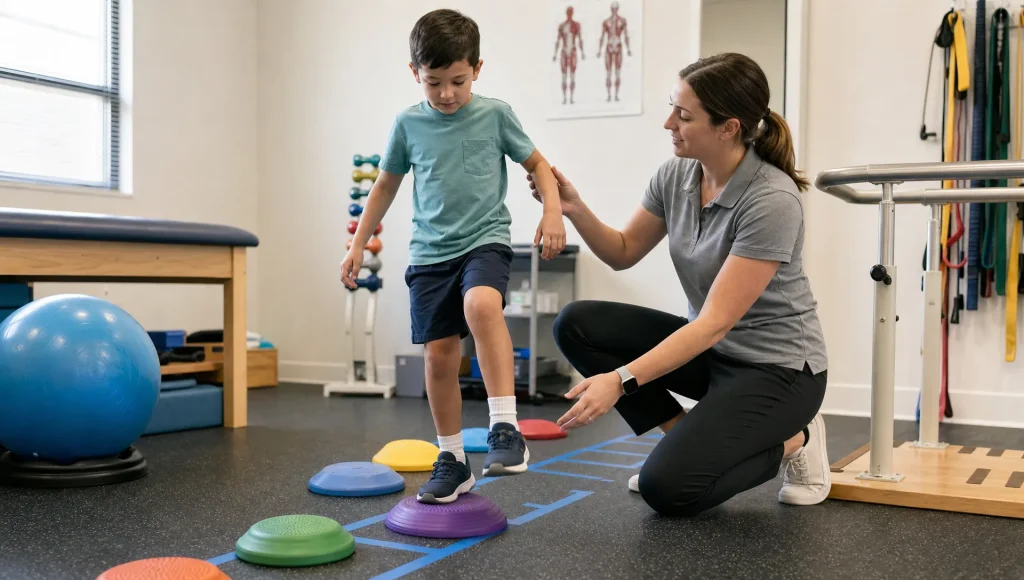
Pediatric care is usually more play-based than adult rehabilitation. The therapist may use games, obstacle activities, balance tools and parent coaching so practice continues at home. The goal is not only to improve movement but also to build confidence, independence and safe participation in daily activities.
Parents who want more condition-specific guidance can read about common pediatric physiotherapy conditions that may benefit from early assessment and support.
When adults benefit from rehabilitation
For adults, physical therapy is commonly used for back pain, neck pain, shoulder problems, knee pain, sports injuries, posture issues, post-surgical recovery and neurological rehabilitation. It can also support older adults who are dealing with weakness, falls, arthritis or reduced mobility.
The plan may include strengthening, stretching, hands-on treatment, balance training and education on safer movement habits. In neurological cases, therapy may focus on relearning movement patterns and improving independence in everyday tasks.
If you are unsure whether your concern fits, this overview of what physiotherapy can help with explains how rehabilitation supports movement, pain relief and daily function across age groups.
Clinic care, home care and online support
Choosing the right setting matters. Some people do best in a clinic because they need equipment, close supervision or a multidisciplinary team. Others prefer home sessions because travel is difficult, pain is severe or the person feels more comfortable practicing in a familiar environment.
A therapy center in Dubai may offer both options depending on the case. For example, home sessions can be useful for elderly patients, people recovering after surgery or individuals with neurological conditions who need safe mobility training in their own space. Bridges Care also provides home care therapy for families who need support outside the clinic.
Telehealth can also help in selected cases, especially for exercise follow-up, caregiver training and progress review. Still, some physiotherapy treatments need in-person assessment or hands-on care, so the therapist should guide you on the safest format.
How physiotherapy differs from occupational therapy
Physiotherapy and occupational therapy can overlap, especially for children with developmental needs or adults recovering from injury. The difference is mainly in focus.
Physical therapy focuses on movement, strength, mobility, posture, pain and physical function. Occupational therapy focuses on everyday skills such as dressing, handwriting, feeding, sensory regulation, school readiness, work tasks and independence at home.
Many people benefit from both. A child with autism may need physiotherapy for balance and gross motor coordination, occupational therapy for sensory integration and speech therapy for communication. An adult after a stroke may need movement rehabilitation, daily living skill training and language support if communication is affected.
If you are deciding between the two, this guide on physiotherapy and occupational therapy explains which service may fit different goals.

Is treatment supposed to hurt?
Rehabilitation should not feel like punishment. Some exercises or stretches may create mild effort, pressure or temporary soreness as the body adapts. Sharp pain, worsening symptoms or fear during treatment should be discussed with the therapist immediately.
A good clinician adjusts the plan based on your pain level, movement quality and recovery stage. The aim is controlled progress, not forcing the body beyond what is safe. If this is your main concern, you may find this article on what to expect during treatment helpful before your first session.
How to choose a therapy center in Dubai
When comparing options for physiotherapy Dubai, look beyond the name used on the website. The quality of care depends on assessment, communication and whether the therapist creates an individualized plan.
A reliable therapy center in Dubai should explain your goals clearly, review progress over time and involve family members when needed. For children, parent training is especially important because daily practice often shapes long-term results. For adults, education about posture, pacing, exercise technique and injury prevention can make recovery more sustainable.
Bridges Care Speech Therapy Center brings together rehabilitation and developmental support services for children and adults, including speech therapy, occupational therapy, physiotherapy, psychology, ABA, feeding therapy and home care options. This multidisciplinary approach can be useful when a person needs more than one type of support.
Conclusion
Physiotherapy and physical therapy generally mean the same thing. The term changes by region, but the purpose remains consistent: improving movement, reducing pain, restoring function and helping people participate more fully in daily life.
The more important question is not which name is used, but whether the therapist understands your needs and provides a safe, personalized plan. If you or your child needs guidance, Bridges Care Speech Therapy Center can help you explore suitable therapy options and take the next step with confidence.
Frequently Asked Questions
1. Is physiotherapy the same as physical therapy?
Yes. In most healthcare settings, the two terms refer to the same rehabilitation profession. The wording mainly depends on the country or clinic.
2. Which term is used more in Dubai?
Physiotherapy is more commonly used in Dubai and across the UAE, although some international clinics may also use the American term.
3. What conditions can physiotherapy help with?
It may help with back pain, neck pain, sports injuries, post-surgical recovery, balance problems, arthritis, neurological conditions and pediatric motor delays.
4. Do children and adults receive the same type of sessions?
No. The goals may be similar, but children usually receive more play-based support while adults often follow exercise, pain management and functional rehabilitation plans.
5. How do I know if I need physiotherapy or occupational therapy?
Choose physiotherapy when the main concern is movement, pain, strength, balance or mobility. Choose occupational therapy when the main concern is daily living skills, sensory needs, handwriting, feeding or independence.