
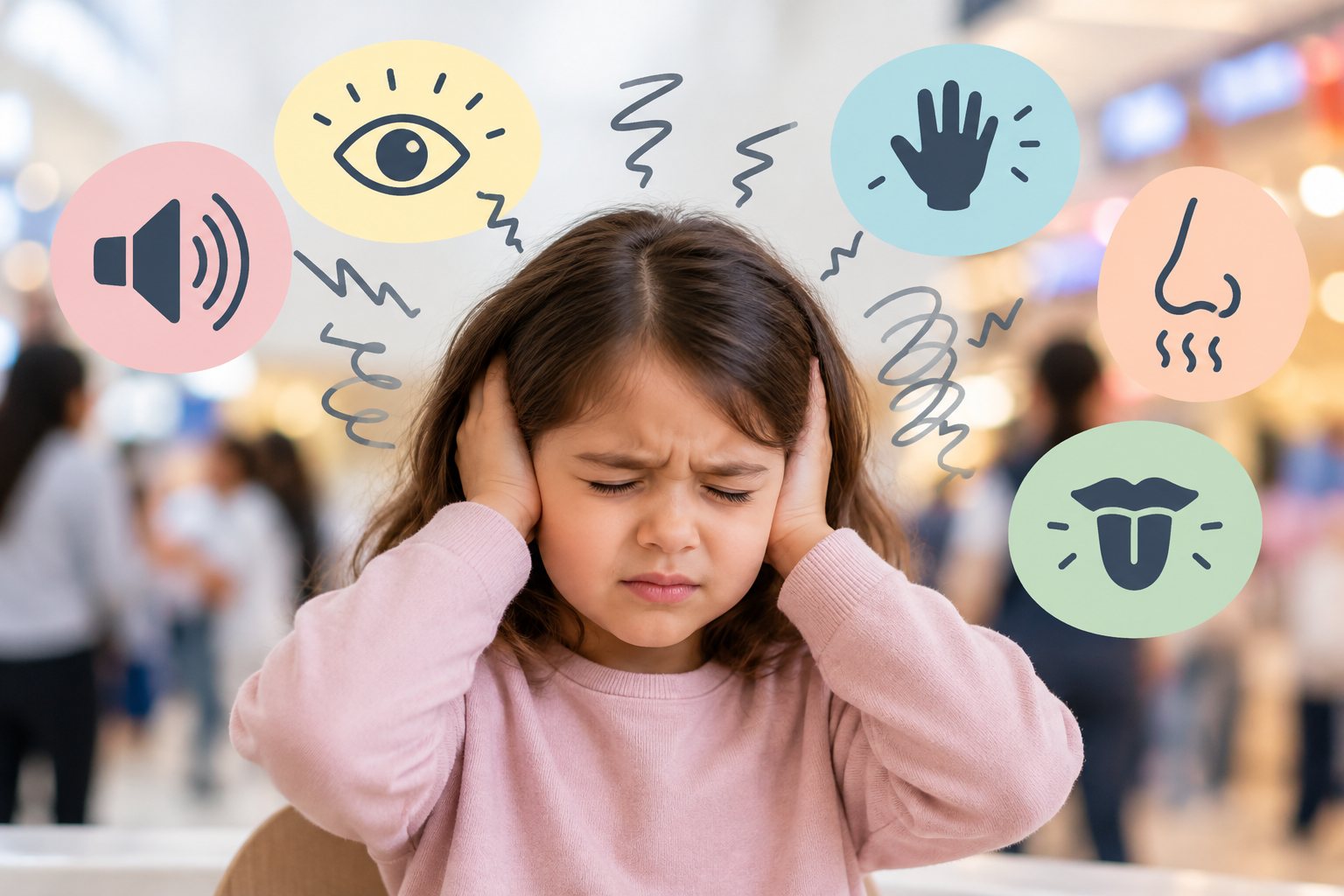
Sensory overload happens when a child’s brain receives more sensory input from sight, sound, touch, smell, taste, or movement than it can process at one time. The child may feel trapped, panicked, or desperate to escape, and the signs can look like sudden irritability, covering ears or eyes, crying, shutting down, or even aggression. For families in Dubai, where busy malls, bright indoor play areas, and loud school cafeterias are part of daily life, recognising these signs early makes a meaningful difference. Organisations such as bridgescare dubai work with families to build practical coping strategies around each child’s specific triggers.
What Sensory Overload Looks Like in the Real World
The brain works like a filtering system. When competing sensory information arrives too fast, the filter jams. A child in a crowded restaurant may hear multiple conversations, smell strong food, feel a scratchy uniform tag, and see flickering fluorescent lights all at once. The result is not bad behaviour; it is a nervous system under pressure.
Common signs in children include covering ears or eyes, sudden crying or screaming, trying to run away, pushing people away, becoming unusually quiet, or complaining about clothing tags and seams. Some children become hyperactive or “wound up,” while others shut down completely. Physical signs can include sweating, a racing heart, muscle tension, or fatigue after the episode. These reactions are not a choice, and punishing them usually makes things worse.
Signs of Sensory Overload in Children vs Adults
Children often cannot explain what is happening. Adults may say they feel overwhelmed or anxious, but a child shows it through behaviour.
| Sign | Children | Adults |
|---|---|---|
| Auditory response | Covers ears, cries, hums loudly | Irritability, difficulty focusing |
| Visual response | Shields eyes, refuses to enter bright rooms | Restlessness, urge to leave |
| Tactile response | Removes clothing, fights dressing | Avoids certain fabrics or touch |
| Emotional response | Meltdown, aggression, clinging | Anxiety, panic, feeling frantic |
| Recovery | May need sleep or quiet play | Fatigue, headache, reduced tolerance |
The table shows why sensory issues in children are sometimes mistaken for tantrums. The trigger is sensory, not emotional, although the child may look very emotional by the time they react.
Causes of Sensory Overload in Children
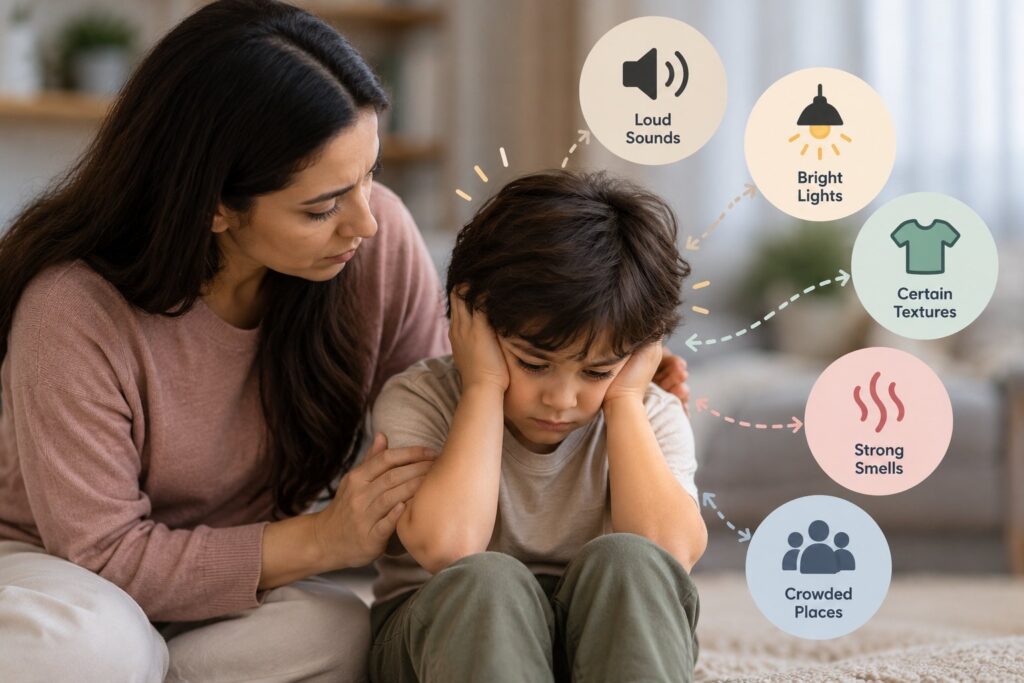
Triggers vary by sense. Auditory triggers include multiple people talking at once, sirens, loud music, or school cafeterias. Visual triggers include bright or flashing lights, crowded places, and busy patterns. Tactile triggers include scratchy clothes, unexpected touch, tight fabrics, or clothing tags. Olfactory triggers include strong perfumes, smoke, and intense food smells. Movement and balance matter too: long car rides, escalators, or busy playgrounds can overwhelm the vestibular system.
In Dubai, common overload settings include mall food courts, indoor soft-play areas with loud music, school buses, and air-conditioned spaces where background hum combines with perfume and bright lighting. Heat and humidity can lower a child’s tolerance further, especially when moving between hot outdoor air and cold indoor spaces.
Conditions Linked to Sensory Overload
Sensory overload frequently appears alongside autism, ADHD, PTSD, anxiety, fibromyalgia, and sensory processing disorder. Autistic children often experience sensory differences as a core part of how they process the world, not as an occasional episode. ADHD-related overload tends to build when attention demands and environmental noise compete. PTSD-related overload often follows specific reminders of trauma. Sensory processing disorder can occur on its own, without another diagnosis.
The distinction matters because the support differs. A child with autism may benefit from a structured sensory diet and predictable routines. A child with ADHD may need quieter workspaces and movement breaks. A child with PTSD may need trauma-informed care alongside sensory accommodations.
How to Calm a Child with Sensory Overload
Act quickly but calmly. Reduce input one sense at a time. Move the child to a quieter, dimmer space. Offer noise-reducing headphones or ear defenders. Loosen tight clothing or remove the offending fabric. Use a calm, low voice and avoid asking questions until the child settles.
Deep pressure often helps. A weighted blanket, a firm hug if the child accepts touch, or compression clothing can calm the nervous system. Slow rocking or swinging can regulate the vestibular system. Some children respond to a quiet, repetitive activity like stacking blocks or squeezing putty.
Do not try to reason with a child mid-overload. The thinking brain is offline. Wait for the body to settle first. Afterward, the child may feel tired, irritable, or embarrassed. This is sometimes called a sensory hangover, and it can last for hours or even a day. Plan a low-stimulation recovery period with water, rest, and reduced demands.
Prevention Through a Sensory Diet
A sensory diet is a planned schedule of sensory activities that helps a child stay regulated throughout the day. It is not about food. An occupational therapist can design one based on the child’s specific needs. Examples include ten minutes of swinging before school, five minutes of deep pressure input after lunch, scheduled noise breaks, and heavy work activities like carrying books or pushing a cart.
Occupational therapy for children often includes sensory integration therapy, which helps the brain process sensory information more effectively. Speech therapy for children can also play a role when communication difficulties make overload harder to express. In Dubai, families can access these services through clinics and specialist centres, though availability varies by provider and insurance coverage.
School and Work Accommodations
For children, school accommodations may include noise-reducing headphones during assemblies, a quiet corner in the classroom, permission to eat lunch in a smaller room, or scheduled movement breaks. Parents can request these through an IEP or 504 plan where applicable, or through direct conversation with teachers in schools that do not use those frameworks.
A sensory-trigger audit helps. List each setting: home, school, public spaces. Then list triggers by sense: auditory, visual, tactile, olfactory, movement, and internal body signals like hunger or a racing heart. This audit makes patterns visible and helps adults anticipate problems before they escalate.

When to Seek Professional Help
Occasional overload after a busy day is common. Frequent episodes that disrupt daily life, school attendance, or family routines warrant assessment. Red flags include self-harm, aggressive outbursts, social withdrawal, or avoidance of ordinary activities like eating in a cafeteria or riding a bus. A developmental paediatrician, occupational therapist, or clinical psychologist can assess the child and recommend a plan.
FAQ
1. What are symptoms of sensory overload?
Symptoms include irritability, anxiety, panic, difficulty focusing, covering ears or eyes, restlessness, muscle tension, sweating, fatigue, and a sudden urge to leave the space. Children may cry, scream, run away, or shut down.
2. How to tell if you’re overstimulated?
You may feel trapped, frantic, or desperate to escape. Physical signs include a racing heart, dizziness, or muscle tightness. You may notice that sounds feel louder than usual, lights feel sharper, and even small demands feel impossible.
3. How to calm sensory overload?
Move to a quieter, dimmer space. Reduce input one sense at a time. Use noise-reducing headphones, dim lights, and deep pressure through a weighted blanket or firm touch. Wait for the body to settle before talking or problem-solving.
4. Is sensory overwhelm ADHD or autism?
It can be either. Autistic people often experience sensory differences as a consistent trait. People with ADHD may experience overload when attention demands and environmental noise compete. Both can occur together, and the same person may have different triggers at different times.
Sensory overload is manageable once triggers are known and supports are in place. Start with one small change: identify the child’s most common trigger, reduce it, and watch what happens. Book Consultation if you need help building a sensory plan that fits your child’s specific needs.