Is Delayed Speech a Sign of Autism? Is Delayed Speech a Sign of Autism? It can be, but delayed speech alone does not mean a child is autistic. Some children talk later than expected and catch up with support, while others show broader differences in social communication, play, behavior or sensory processing that may point toward autism. For parents, the hardest part is uncertainty. You may notice your child is not using words like other children their age, does not respond consistently when called or prefers to play alone. These signs can feel worrying, especially when family members offer mixed advice such as “wait and see” or “boys talk late.” A balanced approach is best. Observe your child’s communication as a whole, look beyond words and seek professional guidance early if concerns continue. Early support can make a meaningful difference, whether the cause is a simple expressive delay, hearing difficulty, language disorder or a developmental condition. So, Is Delayed Speech a Sign of Autism? The practical answer to Is Delayed Speech a Sign of Autism? is yes, it can be one possible sign, but it is not enough for a diagnosis. Autism affects social communication and behavior patterns. Speech may be delayed, unusual or sometimes advanced in certain areas, but clinicians look at the full developmental picture. A child with a communication delay may understand language, use gestures, make eye contact, point to share interest and enjoy social play. A child with autism may have fewer gestures, limited shared attention, reduced response to name, repetitive play or strong sensory preferences. These patterns matter as much as spoken words. If you are unsure whether your child has a speech delay or a broader language concern, this guide on how speech delay and language delay are different can help you understand the distinction before your assessment. What Delayed Speech Means in Early Childhood A speech delay usually means a child is not producing sounds or words at the expected level for their age. Language delay is broader and may affect understanding, following directions, using words to express needs or forming sentences. The Centers for Disease Control and Prevention provides developmental milestones that parents can use as a general reference. Milestones are not a test, but they can help you notice when your child may need support. Common reasons for late talking include hearing problems, oral motor difficulties, limited language exposure, developmental delay, family history and neurological differences. You can also explore common causes of delayed speech in babies if you want a wider view of possible factors. Age range Communication skills many children begin to show Signs to discuss with a specialist Around 12 months Babbling, responding to name, using gestures like waving No babbling, few gestures or limited response to sounds Around 18 months Using several meaningful words and pointing to request No meaningful words or limited pointing and shared attention Around 24 months Combining two words and following simple instructions No two word phrases, loss of words or difficulty understanding simple requests Around 36 months Using short sentences and joining simple play Speech is very hard to understand, limited social play or repeated unusual behaviors Milestones vary from child to child, but missed skills should not be ignored. Getting advice does not label your child. It gives you clearer information and a plan. Delayed Speech and Autism: Signs That May Overlap When parents ask, Is Delayed Speech a Sign of Autism?, the next question is usually what other signs to watch for. Autism can look different in every child, but certain communication and behavior patterns are commonly seen. A child may not consistently respond to their name, even when hearing seems normal. They may use few gestures, avoid pointing to show something interesting or pull an adult’s hand instead of using words or eye contact. Some children repeat words or phrases without using them for meaningful communication. Play can also offer clues. A child may line up toys, spin wheels, focus on parts of objects or repeat the same play pattern. Some children have intense reactions to sounds, textures, lights or changes in routine. Others may seek movement, pressure or sensory input more than expected. These signs do not confirm autism by themselves. They are reasons to request a developmental evaluation, especially if several signs appear together. For a deeper comparison, Bridges Speech Center has a helpful article on late talker and autism differences that explains what parents can observe at home. Signs That Delayed Speech May Not Be Autism Some children with delayed speech are socially connected and eager to communicate, even without many words. They may smile, imitate actions, bring toys to show you and use pointing or facial expressions to share interest. These children may understand more than they can say. They might follow simple directions, enjoy pretend play and try to copy new words when prompted. Their speech may be late, but their social communication foundation is often strong. This is why a professional assessment is so valuable. A specialist can look at hearing, oral motor skills, play, comprehension, attention, sensory processing and family history. The goal is not to rush into a diagnosis. The goal is to understand what kind of support will help your child communicate better. When Should Parents Seek an Assessment? You do not need to wait until school age. If your child is not meeting communication milestones, has lost words, does not respond to name or shows limited social engagement, it is sensible to speak with a pediatrician, developmental specialist or speech therapist. An assessment may include parent interviews, play-based observation, speech and language testing, hearing checks and screening for developmental conditions. If autism is a concern, a multidisciplinary evaluation may be recommended. Parents in the UAE can learn more about timing through this article on when to seek an autism assessment. Early support is useful even before a formal diagnosis is complete. Children do not need to “fail badly enough” to receive help. If communication is affecting daily life, support is appropriate. How Speech Therapy Can Help Speech therapy supports much more than pronunciation. For young children, it can build attention, turn taking, imitation, understanding, expressive vocabulary, social communication and early play skills. For children with autism, therapy may also focus on functional communication, reducing frustration and helping the child communicate needs in a way others can understand. A qualified clinician may use play-based methods, visual supports, parent coaching, oral motor activities or alternative communication tools when needed. The plan should be individualized because no two children communicate in exactly the same way. If you are looking for a professional speech therapist in Dubai, choose someone who explains the assessment clearly, sets practical goals and involves parents in the therapy process. Parent involvement matters because children learn communication through everyday routines, not only during clinic sessions. A trusted speech therapy center in Dubai can also coordinate with occupational therapy, psychology, ABA therapy or feeding support when a child has wider developmental needs. This team approach is often helpful when delayed speech appears alongside sensory difficulties, attention challenges or behavior concerns. What Parents Can Do at Home Home routines are powerful learning opportunities. You can support communication during meals, bath time, dressing, play and story time. The aim is not to pressure your child to talk. The aim is to create more reasons and chances to communicate. Try these simple strategies: Get face to face during play so your child can see your expressions and mouth movements. Use short phrases such as “more bubbles,” “car go” or “open box.” Pause after offering a choice so your child has time to gesture, vocalize or say a word. Follow your child’s interest before adding language. Celebrate communication attempts, including pointing, sounds, signs and words. If autism is suspected or diagnosed, home practice should still feel natural and supportive. This guide on how to practice speech therapy for autism at home offers parent-friendly ideas that can fit into daily routines. Choosing a Speech Therapy Center in Dubai Families often search for a speech therapy center in Dubai when they need answers quickly. The right center should offer careful evaluation, clear communication with parents and therapy plans based on the child’s strengths and needs. Look for a center that can support more than one area of development if needed. Some children benefit from speech therapy alone, while others need occupational therapy for sensory regulation, ABA support for behavior, physiotherapy for motor development or psychological support for emotional wellbeing. At Bridges care, families can explore therapy support for communication, development and daily life skills. If you are comparing options, choose a team that listens to your concerns, respects your child’s pace and gives you practical steps to use between sessions. Conclusion Is Delayed Speech a Sign of Autism? Sometimes, but not always. Delayed speech may be linked to many causes, including hearing issues, language delay, oral motor difficulties or developmental differences. Autism is considered when speech concerns appear with social communication differences, repetitive behaviors, sensory sensitivities or changes in play and interaction. The main message is simple: do not panic, but do not ignore ongoing concerns. Early assessment and targeted support can help your child communicate with more confidence. If you are looking for a speech therapy center in Dubai, Bridges Speech Center and Bridges care can guide your family with individualized support and parent involvement. If your child is not talking as expected, schedule a professional evaluation and start with clear next steps. The earlier your child receives the right support, the more opportunities they have to build communication skills in daily life. Frequently Asked Questions Is Delayed Speech a Sign of Autism? It can be one sign, but delayed speech alone does not diagnose autism. Clinicians also look at social interaction, gestures, play, sensory responses and repetitive behaviors. Can a child have delayed speech without autism? Yes. Many children have delayed speech due to hearing issues, expressive language delay, oral motor challenges or other developmental factors without having autism. At what age should I worry if my child is not talking? Speak with a professional if your child is not babbling by around 12 months, has no meaningful words by around 18 months, is not combining words by around 24 months or loses words at any age. How does speech therapy help children with autism? Speech therapy can build functional communication, understanding, social interaction, imitation, play skills and speech clarity. It can also help reduce frustration by giving the child better ways to communicate. Should I wait and see if my child will talk later? If concerns are mild, monitoring may be suggested, but waiting without guidance can delay helpful support. A speech therapist can assess your child and recommend whether therapy, home strategies or further evaluation is needed.

Is Delayed Speech a Sign of Autism?


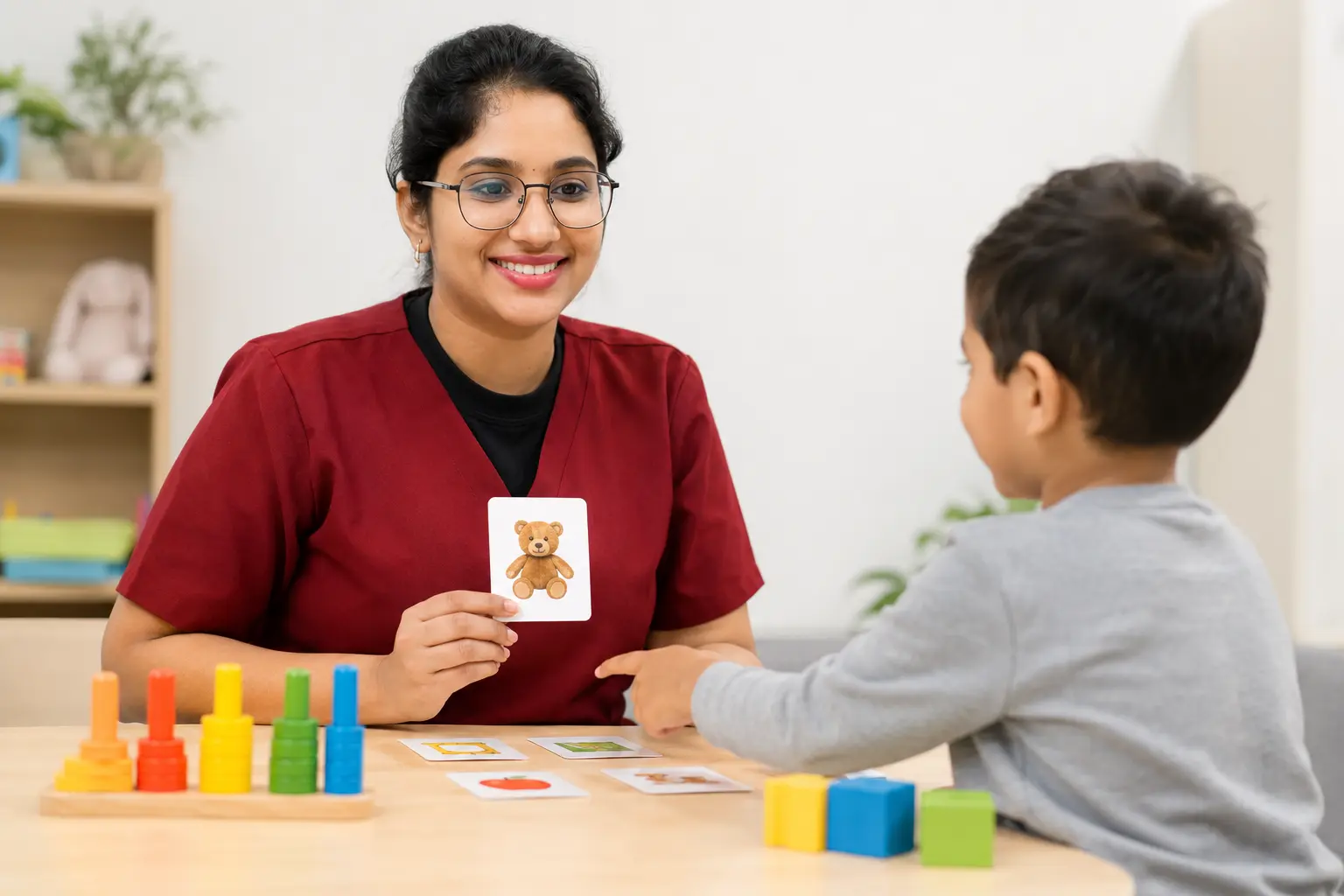
Is Delayed Speech a Sign of Autism? It can be, but delayed speech alone does not mean a child is autistic. Some children talk later than expected and catch up with support, while others show broader differences in social communication, play, behavior or sensory processing that may point toward autism.

For parents, the hardest part is uncertainty. You may notice your child is not using words like other children their age, does not respond consistently when called or prefers to play alone. These signs can feel worrying, especially when family members offer mixed advice such as “wait and see” or “boys talk late.”

A balanced approach is best. Observe your child’s communication as a whole, look beyond words and seek professional guidance early if concerns continue. Early support can make a meaningful difference, whether the cause is a simple expressive delay, hearing difficulty, language disorder or a developmental condition.

So, Is Delayed Speech a Sign of Autism?

The practical answer to Is Delayed Speech a Sign of Autism? is yes, it can be one possible sign, but it is not enough for a diagnosis. Autism affects social communication and behavior patterns. Speech may be delayed, unusual or sometimes advanced in certain areas, but clinicians look at the full developmental picture.

A child with a communication delay may understand language, use gestures, make eye contact, point to share interest and enjoy social play. A child with autism may have fewer gestures, limited shared attention, reduced response to name, repetitive play or strong sensory preferences. These patterns matter as much as spoken words.

If you are unsure whether your child has a speech delay or a broader language concern, this guide on how speech delay and language delay are different can help you understand the distinction before your assessment.

What Delayed Speech Means in Early Childhood

A speech delay usually means a child is not producing sounds or words at the expected level for their age. Language delay is broader and may affect understanding, following directions, using words to express needs or forming sentences.

The Centers for Disease Control and Prevention provides developmental milestones that parents can use as a general reference. Milestones are not a test, but they can help you notice when your child may need support.

Common reasons for late talking include hearing problems, oral motor difficulties, limited language exposure, developmental delay, family history and neurological differences. You can also explore common causes of delayed speech in babies if you want a wider view of possible factors.

Age rangeCommunication skills many children begin to showSigns to discuss with a specialist
Around 12 monthsBabbling, responding to name, using gestures like wavingNo babbling, few gestures or limited response to sounds
Around 18 monthsUsing several meaningful words and pointing to requestNo meaningful words or limited pointing and shared attention
Around 24 monthsCombining two words and following simple instructionsNo two word phrases, loss of words or difficulty understanding simple requests
Around 36 monthsUsing short sentences and joining simple playSpeech is very hard to understand, limited social play or repeated unusual behaviors

Milestones vary from child to child, but missed skills should not be ignored. Getting advice does not label your child. It gives you clearer information and a plan.
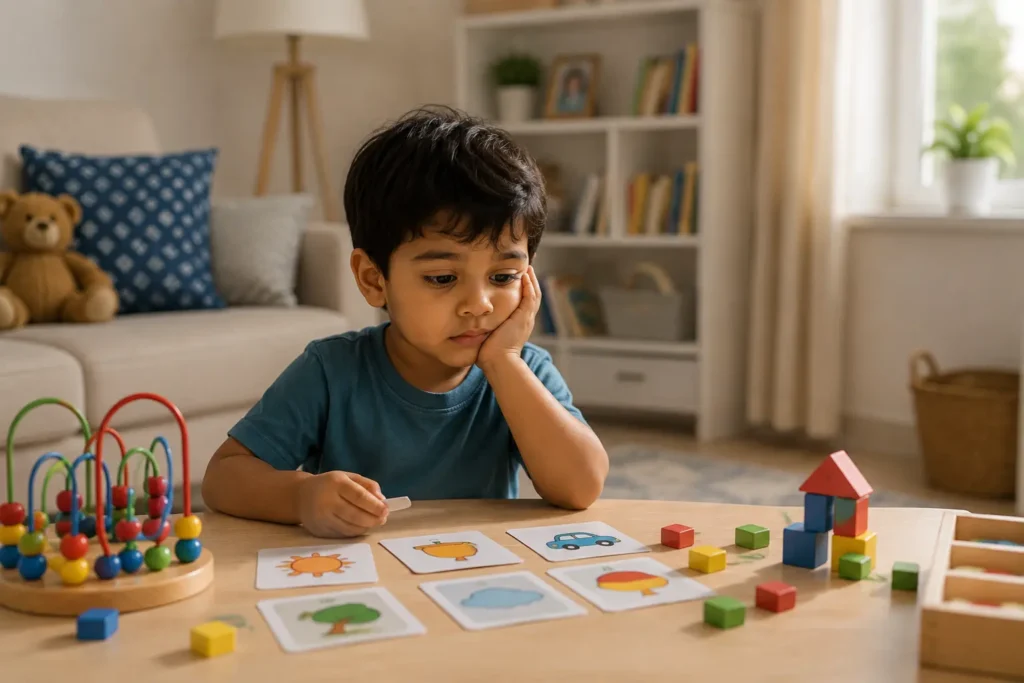
autism struggle

Delayed Speech and Autism: Signs That May Overlap

When parents ask, Is Delayed Speech a Sign of Autism?, the next question is usually what other signs to watch for. Autism can look different in every child, but certain communication and behavior patterns are commonly seen.

A child may not consistently respond to their name, even when hearing seems normal. They may use few gestures, avoid pointing to show something interesting or pull an adult’s hand instead of using words or eye contact. Some children repeat words or phrases without using them for meaningful communication.

Play can also offer clues. A child may line up toys, spin wheels, focus on parts of objects or repeat the same play pattern. Some children have intense reactions to sounds, textures, lights or changes in routine. Others may seek movement, pressure or sensory input more than expected.

These signs do not confirm autism by themselves. They are reasons to request a developmental evaluation, especially if several signs appear together. For a deeper comparison, Bridges Speech Center has a helpful article on late talker and autism differences that explains what parents can observe at home.

Signs That Delayed Speech May Not Be Autism

Some children with delayed speech are socially connected and eager to communicate, even without many words. They may smile, imitate actions, bring toys to show you and use pointing or facial expressions to share interest.

These children may understand more than they can say. They might follow simple directions, enjoy pretend play and try to copy new words when prompted. Their speech may be late, but their social communication foundation is often strong.

This is why a professional assessment is so valuable. A specialist can look at hearing, oral motor skills, play, comprehension, attention, sensory processing and family history. The goal is not to rush into a diagnosis. The goal is to understand what kind of support will help your child communicate better.

When Should Parents Seek an Assessment?

You do not need to wait until school age. If your child is not meeting communication milestones, has lost words, does not respond to name or shows limited social engagement, it is sensible to speak with a pediatrician, developmental specialist or speech therapist.

An assessment may include parent interviews, play-based observation, speech and language testing, hearing checks and screening for developmental conditions. If autism is a concern, a multidisciplinary evaluation may be recommended. Parents in the UAE can learn more about timing through this article on when to seek an autism assessment.

Early support is useful even before a formal diagnosis is complete. Children do not need to “fail badly enough” to receive help. If communication is affecting daily life, support is appropriate.

How Speech Therapy Can Help

Speech therapy supports much more than pronunciation. For young children, it can build attention, turn taking, imitation, understanding, expressive vocabulary, social communication and early play skills. For children with autism, therapy may also focus on functional communication, reducing frustration and helping the child communicate needs in a way others can understand.

A qualified clinician may use play-based methods, visual supports, parent coaching, oral motor activities or alternative communication tools when needed. The plan should be individualized because no two children communicate in exactly the same way.

If you are looking for a professional speech therapist in Dubai, choose someone who explains the assessment clearly, sets practical goals and involves parents in the therapy process. Parent involvement matters because children learn communication through everyday routines, not only during clinic sessions.

A trusted speech therapy center in Dubai can also coordinate with occupational therapy, psychology, ABA therapy or feeding support when a child has wider developmental needs. This team approach is often helpful when delayed speech appears alongside sensory difficulties, attention challenges or behavior concerns.

What Parents Can Do at Home

Home routines are powerful learning opportunities. You can support communication during meals, bath time, dressing, play and story time. The aim is not to pressure your child to talk. The aim is to create more reasons and chances to communicate.

Try these simple strategies:

  • Get face to face during play so your child can see your expressions and mouth movements.
  • Use short phrases such as “more bubbles,” “car go” or “open box.”
  • Pause after offering a choice so your child has time to gesture, vocalize or say a word.
  • Follow your child’s interest before adding language.
  • Celebrate communication attempts, including pointing, sounds, signs and words.

If autism is suspected or diagnosed, home practice should still feel natural and supportive. This guide on how to practice speech therapy for autism at home offers parent-friendly ideas that can fit into daily routines.
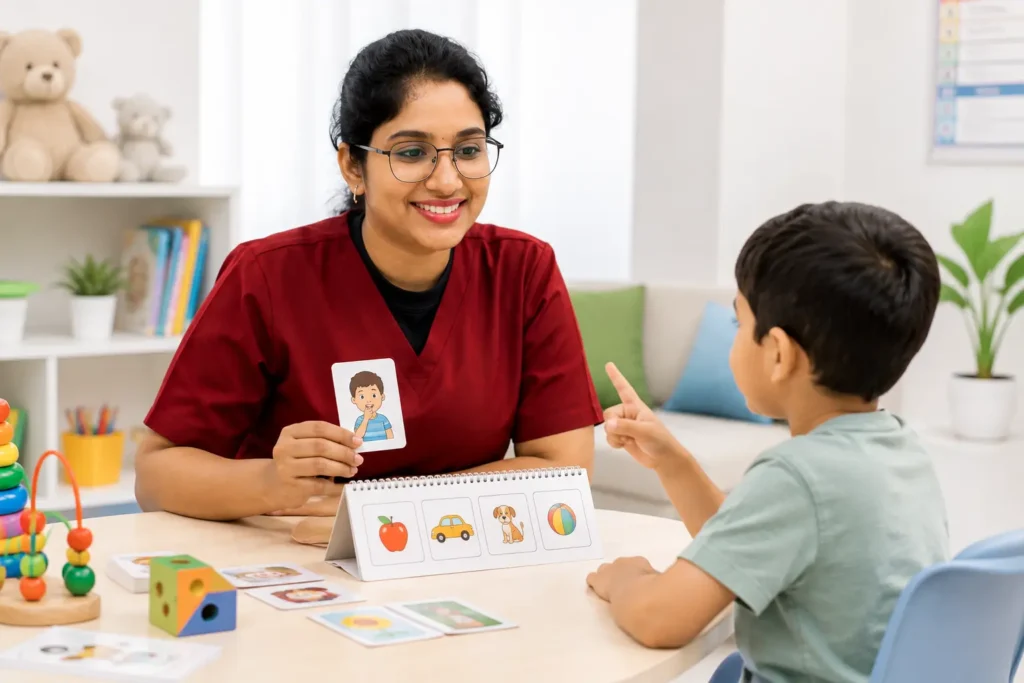
autism in kids

Choosing a Speech Therapy Center in Dubai

Families often search for a speech therapy center in Dubai when they need answers quickly. The right center should offer careful evaluation, clear communication with parents and therapy plans based on the child’s strengths and needs.

Look for a center that can support more than one area of development if needed. Some children benefit from speech therapy alone, while others need occupational therapy for sensory regulation, ABA support for behavior, physiotherapy for motor development or psychological support for emotional wellbeing.

At Bridges care, families can explore therapy support for communication, development and daily life skills. If you are comparing options, choose a team that listens to your concerns, respects your child’s pace and gives you practical steps to use between sessions.

Conclusion

Is Delayed Speech a Sign of Autism? Sometimes, but not always. Delayed speech may be linked to many causes, including hearing issues, language delay, oral motor difficulties or developmental differences. Autism is considered when speech concerns appear with social communication differences, repetitive behaviors, sensory sensitivities or changes in play and interaction.

The main message is simple: do not panic, but do not ignore ongoing concerns. Early assessment and targeted support can help your child communicate with more confidence. If you are looking for a speech therapy center in Dubai, Bridges Speech Center and Bridges care can guide your family with individualized support and parent involvement.

If your child is not talking as expected, schedule a professional evaluation and start with clear next steps. The earlier your child receives the right support, the more opportunities they have to build communication skills in daily life.

Frequently Asked Questions

  1. Is Delayed Speech a Sign of Autism?
    It can be one sign, but delayed speech alone does not diagnose autism. Clinicians also look at social interaction, gestures, play, sensory responses and repetitive behaviors.
  2. Can a child have delayed speech without autism?
    Yes. Many children have delayed speech due to hearing issues, expressive language delay, oral motor challenges or other developmental factors without having autism.
  3. At what age should I worry if my child is not talking?                                     Speak with a professional if your child is not babbling by around 12 months, has no meaningful words by around 18 months, is not combining words by around 24 months or loses words at any age.
  4. How does speech therapy help children with autism?
    Speech therapy can build functional communication, understanding, social interaction, imitation, play skills and speech clarity. It can also help reduce frustration by giving the child better ways to communicate.
  5. Should I wait and see if my child will talk later?
    If concerns are mild, monitoring may be suggested, but waiting without guidance can delay helpful support. A speech therapist can assess your child and recommend whether therapy, home strategies or further evaluation is needed.
Similar Posts

Leave a Reply

Your email address will not be published. Required fields are marked *