Speech Delay vs Language Delay: What’s the Difference?
A speech delay means a child has trouble physically producing the sounds of speech, while a language delay means a child struggles to understand words or put them together into meaningful sentences. The simplest way to tell them apart is this: a child with a speech delay knows what they want to say but cannot say it clearly, whereas a child with a language delay either does not understand what is being said or cannot form the sentences to express their thoughts. This distinction matters because the two conditions require different types of support and intervention, and early identification can dramatically change a child’s developmental path.
The Core Difference in Plain Terms
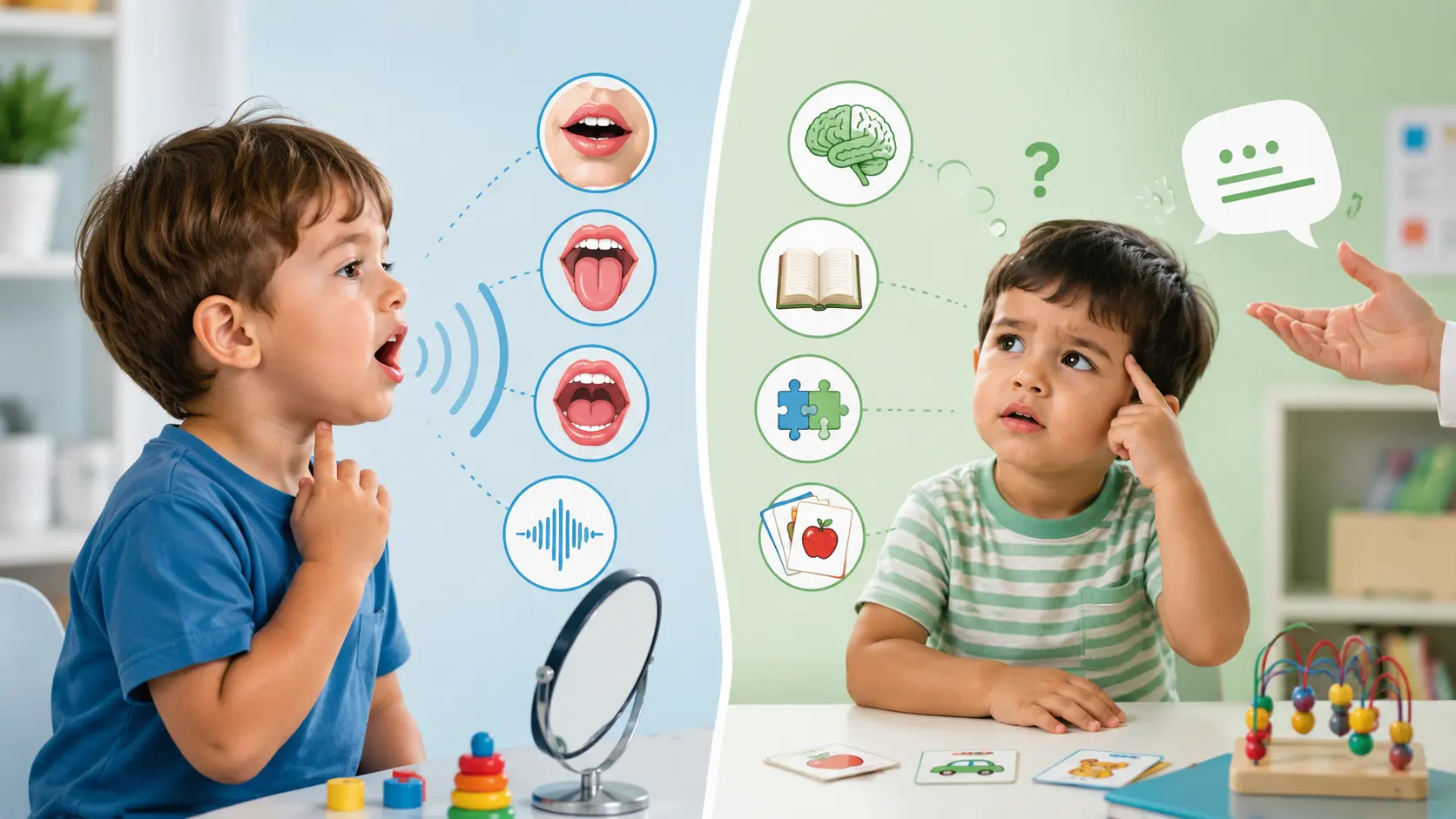
Think of speech as the hardware and language as the software. Speech is the mechanical act of producing sounds using the lips, tongue, jaw, and vocal cords. Language is the cognitive system of understanding and using words, grammar, and meaning. A child can have perfectly clear speech but no real understanding of what words mean, or they can understand everything you say but be unable to pronounce the words clearly. Many children have both issues simultaneously, but treating them effectively means knowing which is primary.
| Feature | Speech Delay | Language Delay |
| What it affects | Sound production, articulation, voice | Comprehension, vocabulary, sentence structure |
| Does the child understand? | Usually yes | Often no, or limited |
| Typical example at age 2 | Says “ba” for “ball” but points to the ball correctly | Cannot point to “ball” when asked, or uses single words only |
| What others notice | Unclear speech, sound substitutions, stuttering | Short sentences, limited vocabulary, trouble following directions |
| Primary cause | Motor planning, oral-motor weakness, hearing issues | Cognitive processing, environmental factors, neurological conditions |
Red Flags by Age: When to Stop Waiting
The most common mistake parents make is waiting too long, hoping their child will “grow out of it.” While some children are late bloomers, the research is clear that early intervention produces better outcomes. Here are the concrete milestones to watch for, separated by whether the concern is speech or language.
Speech Red Flags
By 12 months, a child should be babbling with consonant sounds like “ba,” “da,” and “ma.” By 18 months, speech should be intelligible to familiar listeners about 25% of the time. By 24 months, a stranger should understand roughly half of what the child says. By age 3, a child’s speech should be mostly intelligible to strangers, meaning about 75% or more of what they say can be understood by someone who does not know them.
A child who says “wabbit” for “rabbit” at age 2 is developmentally normal. A child who still says “wabbit” at age 4 and cannot produce the “r” sound at all may need evaluation.
Language Red Flags
Language red flags are often more concerning because they indicate a problem with understanding, not just speaking. By 12 months, a child should respond to their name and use gestures like pointing or waving. By 18 months, they should have at least 10 to 15 words and understand simple commands like “give me the cup.” By 24 months, they should be combining two words spontaneously, such as “more milk” or “daddy go,” and they should follow two-step directions like “get your shoes and bring them here.”
By age 3, a child should use sentences of three to four words, ask simple questions, and be understood by strangers most of the time. A child at this age who cannot follow simple instructions or who uses only single words needs professional evaluation, not more waiting.
Does a Language Delay Mean Autism?
This is one of the most common and most worrying questions parents ask. The direct answer is no. A language delay alone does not mean a child has autism spectrum disorder. Many children have what clinicians call “late language emergence” and catch up fully without any diagnosis of autism.
However, there is an important distinction to understand. A purely expressive language delay affects vocabulary and sentence formation but does not affect social communication. A child with this type of delay may have trouble finding words but will still make eye contact, point to share interest, imitate others, and use gestures naturally. A child with autism, by contrast, typically shows a social communication delay. They may not point to show you something interesting. They may not respond to their name. They may not use eye contact to communicate. They may have repetitive behaviors or intense fixations.
If your child has a language delay but strong social engagement, the cause is unlikely to be autism. If your child has a language delay combined with poor eye contact, lack of pointing, and limited social reciprocity, an autism evaluation should be part of the assessment.

What Causes Speech and Language Delays?
The causes overlap but are not identical. Speech delays often stem from physical factors: hearing loss (the most common cause), oral-motor weakness, or a condition called childhood apraxia of speech where the brain struggles to plan the movements needed for speech. Structural issues like tongue-tie can also contribute.
Language delays are more often rooted in cognitive or environmental factors. A child who does not get enough language input at home may develop slowly. Prematurity, genetic conditions like Down syndrome, and neurological differences can also cause language delays. In many cases, the cause is simply unknown, and the child is what professionals call a “late talker.”
The Late Talker vs. True Delay Distinction
Around 10 to 15 percent of toddlers have late language emergence, meaning they are slow to start talking but eventually catch up. The challenge is that no one can predict with certainty which late talkers will catch up and which will have persistent difficulties. However, some patterns help distinguish them.
A late talker typically has strong receptive language skills. They understand everything you say, follow directions, and play appropriately, but they just do not talk much. A child with a true language delay shows weaknesses in understanding as well as speaking. They may not follow directions, have trouble learning new words, and seem confused by what you say.
The single strongest predictor of which children will catch up is whether they have good comprehension. If a 2-year-old understands language at or near their age level but is not yet speaking, the outlook is generally good. If both understanding and speaking are delayed, professional help is needed sooner.
Treatment: What Actually Works
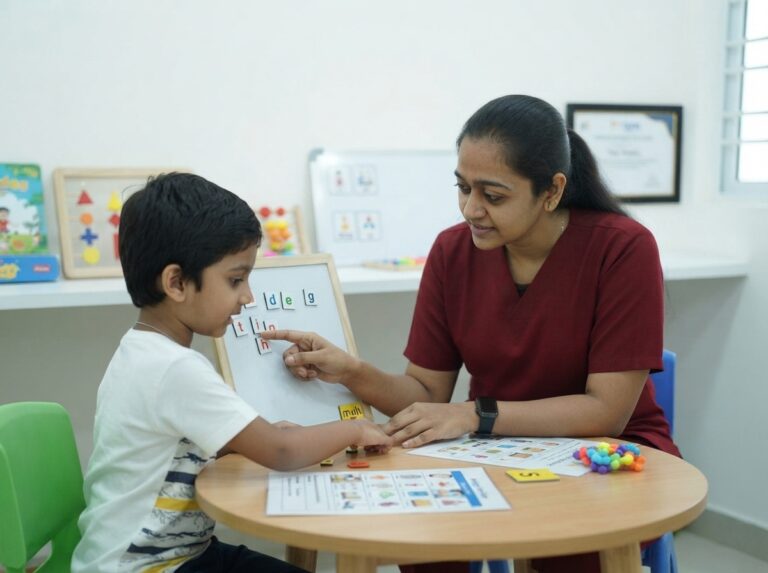
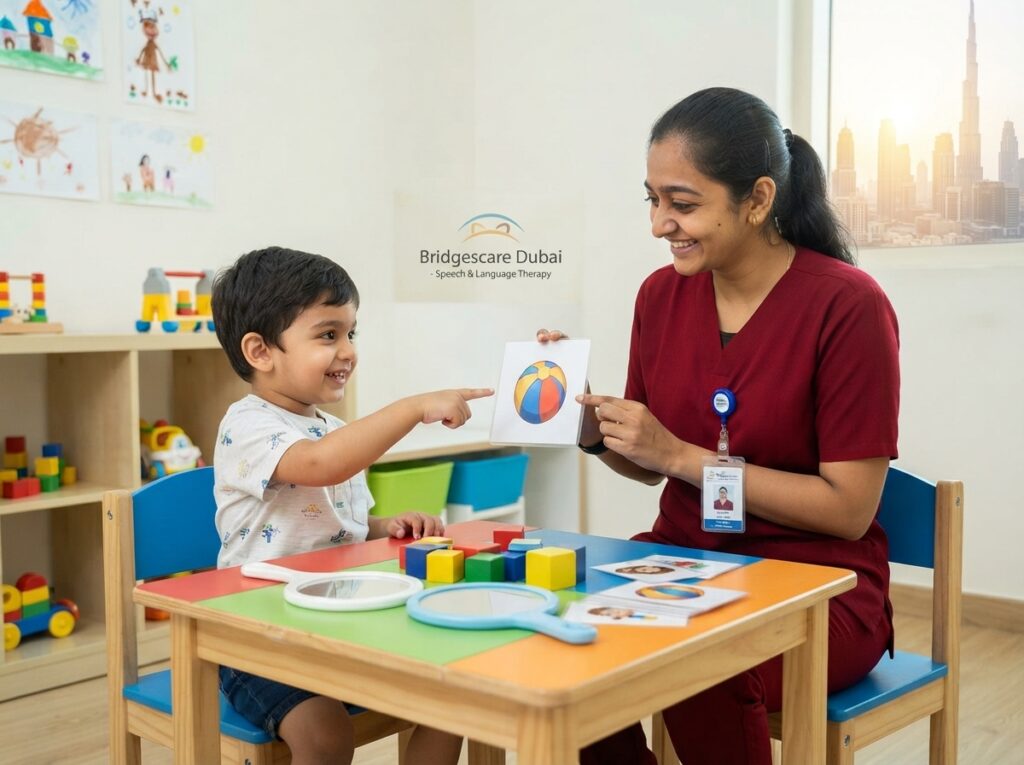
Treatment depends entirely on whether the primary issue is speech or language. For a speech delay, the focus is on motor skills: exercises to strengthen the mouth muscles, practice with specific sounds, and strategies to improve the coordination of the articulators. A speech-language pathologist (SLP) might use mirrors, games, and repetitive practice to help a child learn to produce sounds correctly.
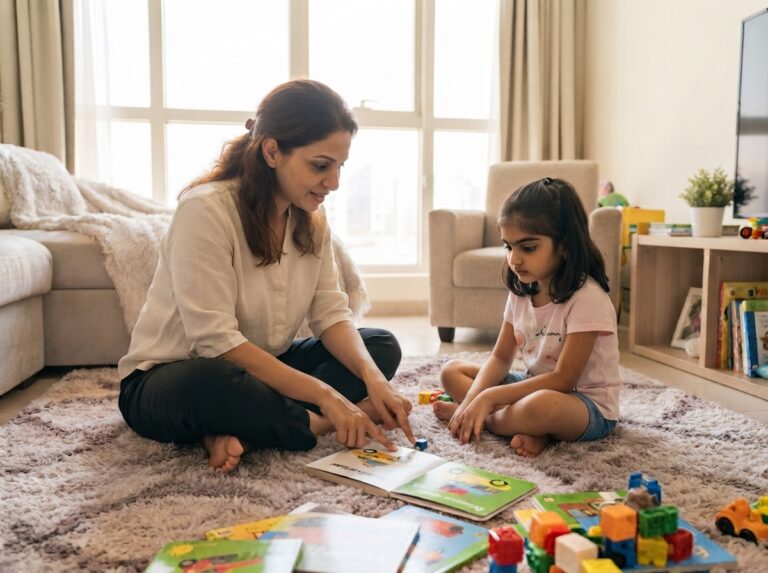
For a language delay, the approach is different. The goal is to build vocabulary, improve sentence structure, and enhance comprehension. This often involves parent coaching, where the therapist teaches parents how to model language, expand on what the child says, and create a language-rich environment at home. Direct therapy with the child focuses on teaching new words, practicing sentence construction, and improving understanding through play-based activities.
Many families seek professional support through speech therapy, which addresses both speech and language issues depending on the child’s needs. For parents in the region, services like speech therapy in dubai offered by clinics such as Bridgescare Dubai provide comprehensive evaluations and individualized treatment plans that target the specific type of delay a child has.
What You Can Do Right Now
If you are worried about your child’s communication, do not wait. Schedule a hearing test first, as hearing loss is the most common and most treatable cause of both speech and language delays. Then seek an evaluation from a speech-language pathologist. The evaluation will determine whether the issue is speech, language, or both, and will guide the treatment plan.
In the meantime, talk to your child constantly. Narrate what you are doing. Read books together every day. Limit screen time and prioritize face-to-face interaction. If your child points to something, name it. If they make a sound, repeat it back correctly. These simple strategies support both speech and language development and cost nothing.
The key takeaway is this: speech delay in toddlers is about the mechanics of talking, while language delay is about the thinking behind talking. They require different approaches, but both respond well to early intervention. The earlier you act, the better the outcome.
Understanding the difference between language delay and social communication issues can help parents determine the right next steps for their child.
FAQ
1. What are the signs of a speech or language delay?
Signs of a speech delay include unclear speech, difficulty making certain sounds, stuttering, and a voice that sounds hoarse or nasal. Signs of a language delay include not understanding simple directions, limited vocabulary for the child’s age, not combining words by age 2, and trouble asking questions or telling simple stories by age 3.
2. Does a language delay mean autism?
No. Many children with language delays do not have autism. The key difference is social communication. Children with autism typically show deficits in eye contact, pointing to share interest, imitating others, and engaging in back-and-forth interaction. A child with a pure language delay usually has strong social skills but struggles with words.
3. What is the red flag for speech delay?
The biggest red flag is a child who cannot be understood by strangers by age 3. Other red flags include no babbling by 12 months, no single words by 18 months, and no two-word combinations by 24 months.
4. At what age is speech delay a concern?
Speech delay becomes a concern when a child misses any of the major milestones: no babbling by 12 months, fewer than 10 words by 18 months, no two-word phrases by 24 months, or speech that is mostly unintelligible to strangers by age 3. If you are worried at any age, it is appropriate to seek an evaluation.