Speech Therapy at Home: Simple Exercises to Improve Communication Skills
Speech therapy at home is not just possible; it’s one of the most effective ways to boost your child’s communication skills. Research from Vanderbilt University confirms that parents can significantly improve their children’s speech-language development through short, consistent daily practice, and another study found that kids’ outcomes improve when families and speech-language pathologists work together.
For parents in Dubai, weaving simple, evidence-based exercises into everyday routines often accelerates progress more than a weekly clinic visit alone.
What 15 Minutes of Daily Practice Actually Looks Like
At-home speech therapy works best in bite-sized sessions of 10 to 15 minutes, woven into moments that already happen, like meal prep, the drive to nursery, or bath time. That small window is enough to make a measurable change when it’s consistent and playful.
The key is to stop before frustration sets in and to follow your child’s lead, not a rigid schedule.
The table below shows typical Dubai-family routines and how to turn them into language-rich practice, no special toys needed.
| Routine moment | Simple exercise | Why it helps |
| Morning dressing | Hold up two shirts and ask, “Red or blue?” | Gives a reason to communicate; choice motivates expressive language. |
| Car ride along Sheikh Zayed Road | Narrate what you see: “Big truck, fast car, red light stop.” | Parallel talk models sentence structure and vocabulary in context. |
| Snack time | Put a favourite biscuit just out of reach and wait. | Expectant waiting prompts requesting or pointing without pressure. |
| Bath time | Name actions: “Pour water, splash, pop bubbles.” Bring a toy near your mouth as you label it. | Helps the child link an object to the mouth movements and sound. |
| Bedtime story | Pause on a familiar page and look at your child expectantly. | Builds confidence to fill in a word or sound in a low-pressure moment. |
Core Techniques That Fit Real Life
- Offer choices to encourage your child to use words and short phrases.
- Use parallel talk by describing what you and your child are doing in real time.
- Practice expectant waiting by pausing and giving your child time to respond.
- Expand your child’s language by adding one or two words to what they say.
- Model words for gestures instead of asking your child to repeat.
- Use simple sign language like “more,” “help,” and “all done” to reduce frustration.
- Turn practice into games such as an articulation treasure hunt for target sounds.
Setting Up a Communication-Friendly Home
- Turn to your child so that they can see your mouth movements clearly.
- Choose a quiet place with little background noise.
- Switch off the TV and avoid avoidable interruptions from screens.
- Hold objects close to your mouth when you name them.
- Keep practice sessions short and stop before frustration sets in.
When Home Practice Isn’t Enough
Home strategies are powerful, but they don’t replace professional input when there’s a genuine delay or disorder. Watch for a few red flags: no babbling by 12 months, no single words by 18 months, very unclear speech at three or four, or a child who seems frustrated and withdrawn because they can’t be understood. A seven-year-old who still struggles with certain sounds can absolutely benefit from support; it’s never too late to see progress, but the approach changes with age.
If you’ve tried consistent home practice for four to six weeks without noticeable improvement, that’s a signal to involve a qualified speech-language pathologist. In-clinic sessions have their place, but home care therapy
visits let the therapist observe real-life interactions, messiness and all, and coach you in the moment. The assessment is functional, the goals are built around your daily routines, and the home program feels doable because it was designed inside your actual life, not a treatment room.
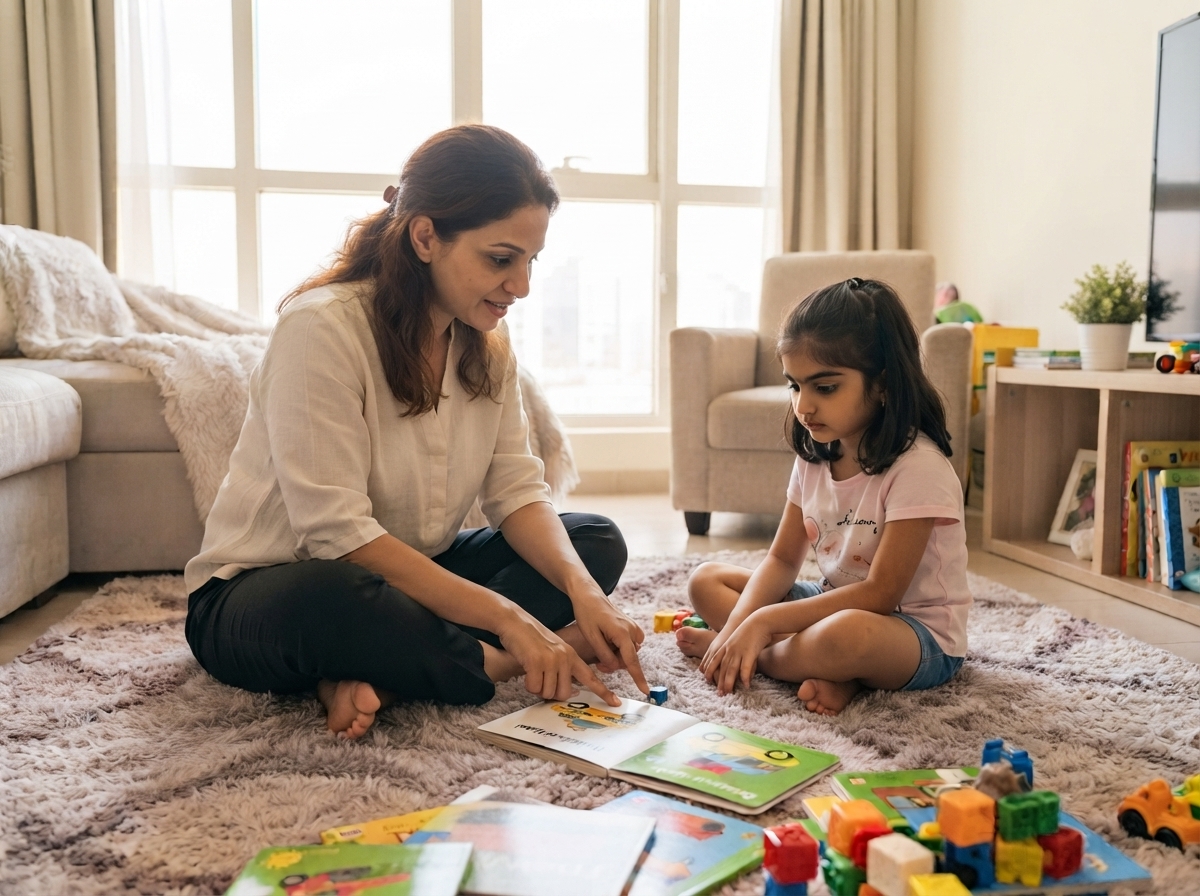
In Dubai, families can access speech therapy expert services in Dubai that bring licensed professionals directly to the home. Bridges Care Dubai provides just that, pairing families with speech-language therapists who work inside your child’s natural environment, from mealtime conversations to playtime on the living room floor.
Whether you need a few coaching sessions to refine your home practice or ongoing direct therapy, the right support is available without leaving the house.
If you’re ready to take the next step, book a consultation to discuss your child’s needs with a specialist who can guide you forward.
FAQ
1.Is it possible to do speech therapy at home?
Yes. Parents can carry out effective speech therapy at home using everyday routines. The key is consistency and knowing when to bring in professional guidance.
2.Is 7 too late for speech therapy?
No. While early intervention is ideal, a seven-year-old with articulation difficulties, stuttering, or language gaps can still benefit greatly.
3.How do I improve my child’s speech at home?
Start with 10 to 15 minutes of playful practice every day. Use parallel talk, give simple choices, pause expectantly .Bring objects near your mouth when you name them, and stop before frustration builds. Consistency and warmth matter more than perfect technique.
4.What foods are good for speech delay?
No food directly treats a speech delay, but a diet that supports overall oral motor development can help. Chewy, crunchy foods like raw carrots, apples, or dried fruit give the jaw and tongue muscles.