What are the reasons for speech delay?
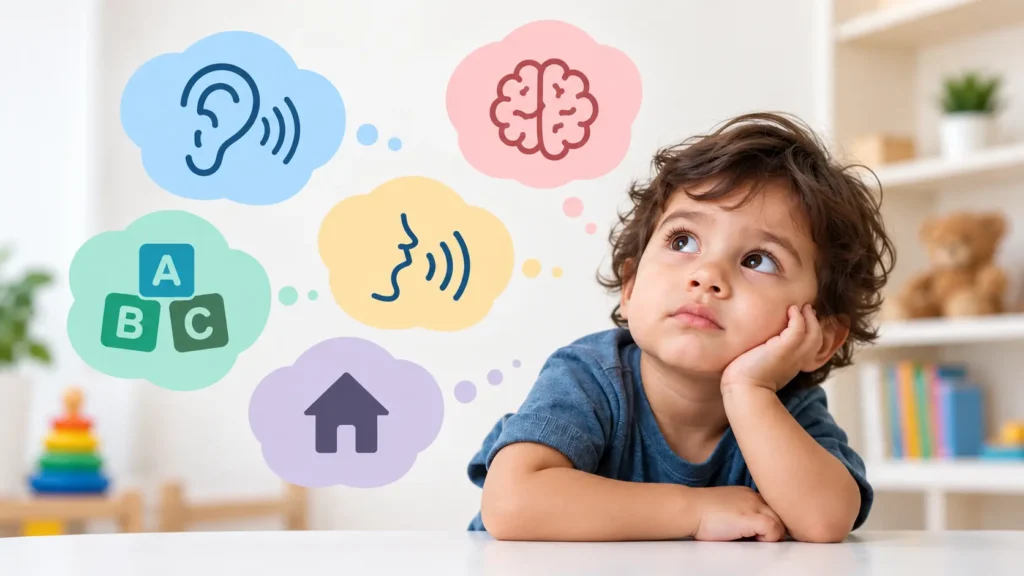
Speech delay happens when a child’s verbal skills develop more slowly than expected for their age. Delayed speech development can have several causes, including hearing problems, oral-motor or structural issues, developmental conditions and environmental factors. The most common reversible cause is hearing loss, which is why a hearing test should always come before any other assessment. Understanding the exact reason matters because it changes what kind of speech therapy a child actually needs.
In Dubai, parents often notice the issue first when nursery teachers compare a child to peers, or when a two-year-old still uses only a handful of words. The good news is that early identification and the right support make a measurable difference, and many children catch up substantially once the underlying cause is addressed.
Common causes grouped by type
The causes below are drawn from current clinical guidance and speech-language pathology practice. They are not mutually exclusive; a child can have more than one contributing factor.
Hearing loss and ear problems
Children learn to speak by listening. Even mild or intermittent hearing loss can muffle speech sounds enough to slow vocabulary growth.
- Chronic middle-ear fluid or repeated ear infections can cause fluctuating hearing loss during the critical language-learning window.
- Permanent sensorineural hearing loss, present from birth or early infancy, may go unnoticed until speech milestones are missed.
- In Dubai, newborn hearing screening is routine in hospitals, but hearing can change later, so a missed early screen does not rule out a later problem.
Oral-motor and structural issues
Some children hear well and understand language, but struggle to coordinate the lips, tongue, and jaw to produce sounds.
- Tongue-tie, also called a short frenulum, can restrict tongue movement, though it is not always severe enough to delay speech.
- Cleft palate or other structural differences in the mouth can make certain sounds physically difficult or impossible to produce clearly.
- Childhood apraxia of speech, a neurological motor-planning difficulty, means the brain struggles to sequence the precise movements needed for speech.
Developmental and neurological conditions
Speech delay is sometimes one part of a broader developmental picture.
- Autism spectrum disorder commonly affects communication, but a speech delay alone is not enough to diagnose it. Many children with autism also show differences in eye contact, gestures, and social responsiveness.
- Global developmental delay or intellectual disability affects both understanding and expression, so speech milestones lag alongside motor and cognitive ones.
- Specific language impairment, now often called developmental language disorder, affects language despite typical development in other areas.
Environmental factors
A child’s daily environment shapes how much language they hear and practice.
- Limited back-and-forth conversation with caregivers reduces the number of words and sentence patterns a child is exposed to.
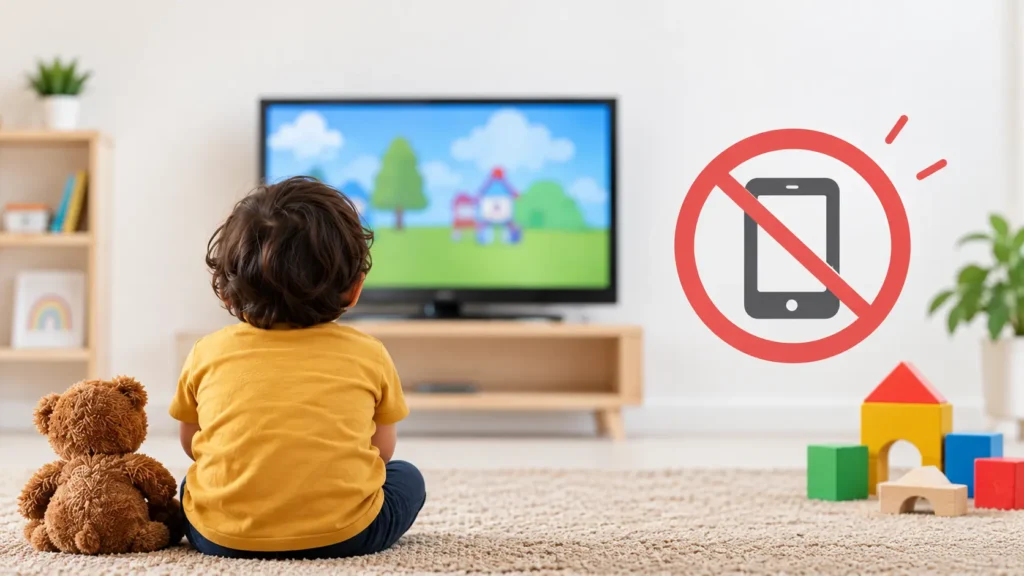
- Excessive unmonitored screen time replaces interactive language with passive listening, which does not build expressive skills the same way.
- Multilingual households do not cause speech delay, a persistent myth worth correcting. Bilingual children may distribute their words across languages, but their total vocabulary typically matches peers.
Is It a Speech Delay or a Language Delay?
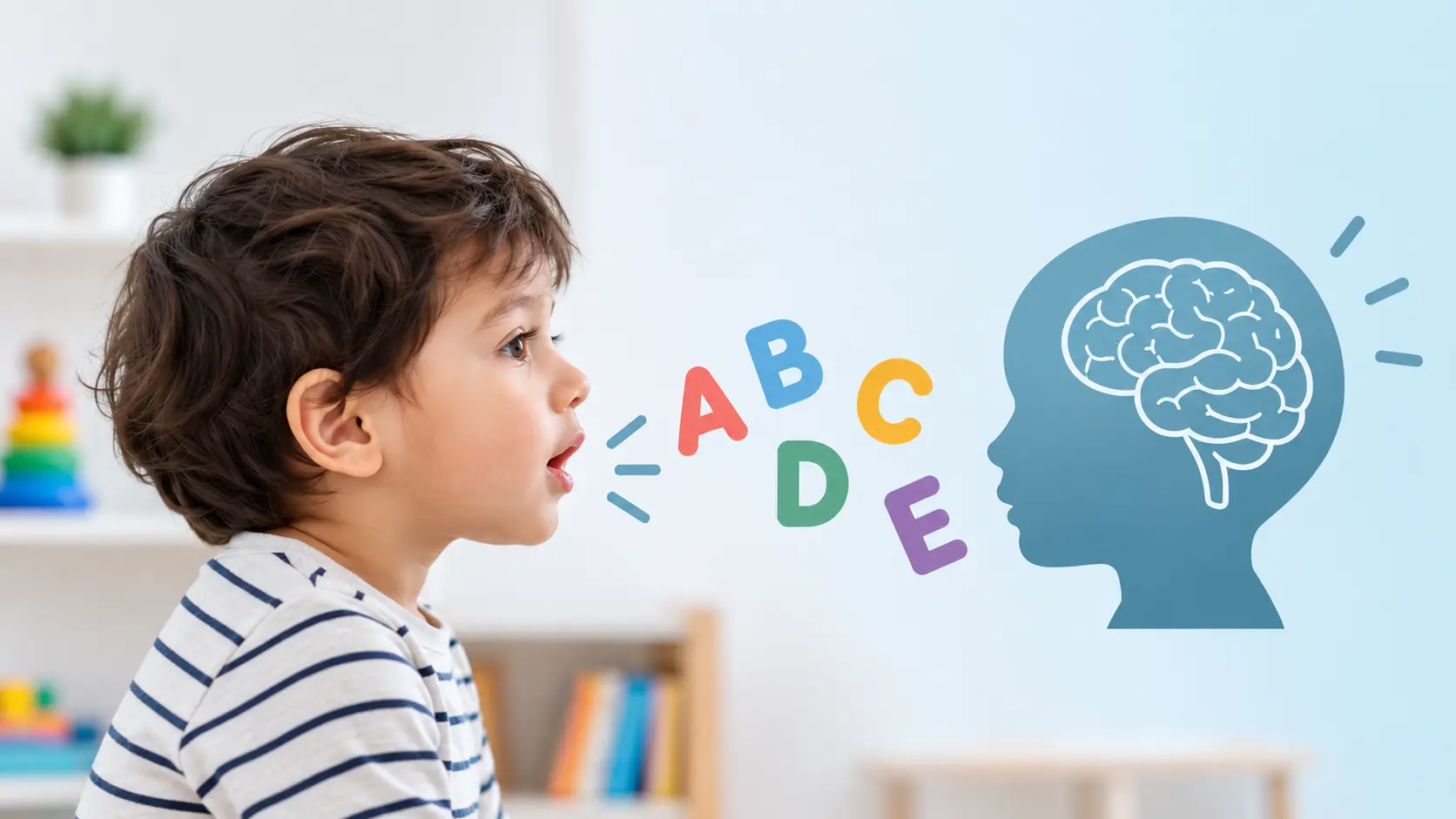
Speech Delay vs Language Delay: What’s the Difference? These terms are often used interchangeably, but clinicians separate them. Speech refers to the physical production of sounds, while language refers to understanding and using words and sentences. A child with a speech delay may understand everything but be hard to understand. A child with a language delay may speak clearly but use few words or struggle to follow instructions. The distinction guides assessment and treatment, which is why a qualified speech therapist evaluates both areas.
When to worry: red flags by age
| Age | Red flags that warrant assessment |
| By 12 months | No babbling, no gestures like pointing or waving |
| By 18 months | Fewer than 5 to 10 single words, not responding to name |
| By 24 months | Fewer than 50 words, no two-word combinations |
| By 36 months | Speech is hard for familiar adults to understand, no simple sentences |
These are general markers, not strict cut-offs. A child who misses one milestone but is otherwise progressing may simply be on the slower end of typical development. A pattern of missed milestones across several areas is more concerning.
What parents in Dubai can do now
The first step is a hearing assessment, ideally with an audiologist. Even if a newborn screen was normal, a current test rules out fluid or later-onset loss. After that, a developmental assessment with a paediatrician can identify whether the delay is isolated or part of a broader pattern.
While waiting for speech delay therapy appointments , parents can make meaningful changes at home. Narrate daily routines, pause and wait for the child to respond, and expand on what the child says rather than correcting it. For example, if a toddler says “car,” respond with “yes, a big red car.” These small interactions build language faster than any app or video. For a fuller breakdown of how speech and language delays differ, see Speech Delay vs Language Delay: What’s the Difference?
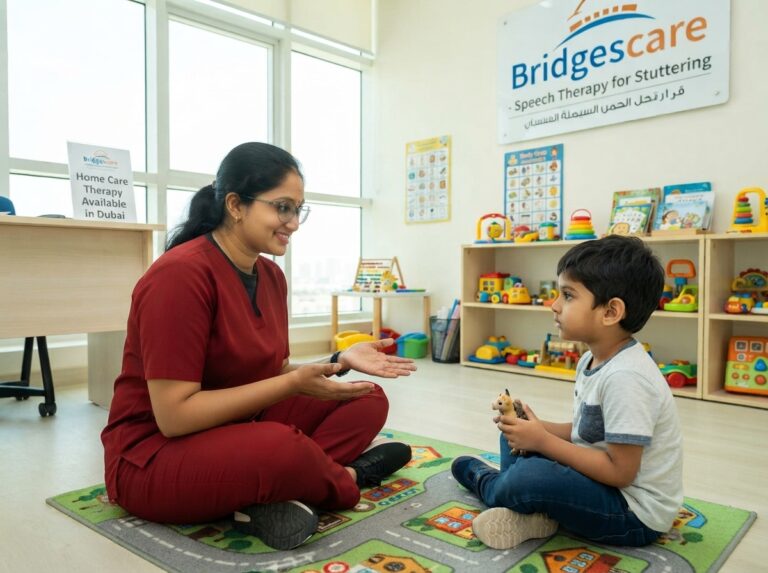
For families seeking structured support, Speech therapy Dubai services such as those at Bridges Care Dubai provide assessment and individualised intervention. A speech therapist can model techniques for parents to use daily, which matters because progress depends far more on what happens at home than on the therapy session alone. Parents who want to reinforce these techniques between appointments can also try Speech Therapy at Home: Simple Exercises to Improve Communication Skills.
Common mistakes to avoid
- Waiting too long because a relative or friend says the child will “grow out of it.” Some children do, but waiting delays access to help if the cause is hearing loss or a developmental condition.
- Assuming a quiet child is just shy. Receptive language problems can hide behind a calm temperament.
- Replacing interaction with educational videos. Screens do not respond to a child’s attempts to communicate, which is the core mechanism of language learning.
- Skipping the hearing test. It is the single most important first investigation and should not be postponed.
FAQ
1. Can a child have speech delay and not be autistic?
Yes. Speech delay has many causes, including hearing loss, oral-motor difficulties, and environmental factors. Autism involves differences in social communication and behaviour, not just delayed speech. A speech delay alone does not indicate autism.
2. What is a speech delay red flag?
A red flag is a milestone that is significantly missed for the child’s age. Examples include no babbling by 12 months, fewer than 50 words by 24 months, or speech that familiar adults cannot understand by age 3. Any of these warrants professional assessment.
3. When to worry about speech delay?
Worry when a child misses multiple milestones, loses previously acquired words, or shows no response to sound or name. Also be concerned if the delay is accompanied by limited gestures, poor eye contact, or difficulty understanding simple instructions.
4. What Are the Delayed Speech in Toddlers Causes?
The main causes are hearing loss, oral-motor or structural problems such as tongue-tie or cleft palate, developmental and neurological conditions including autism and global developmental delay, and environmental factors like limited interactive language exposure. Often more than one factor contributes.