
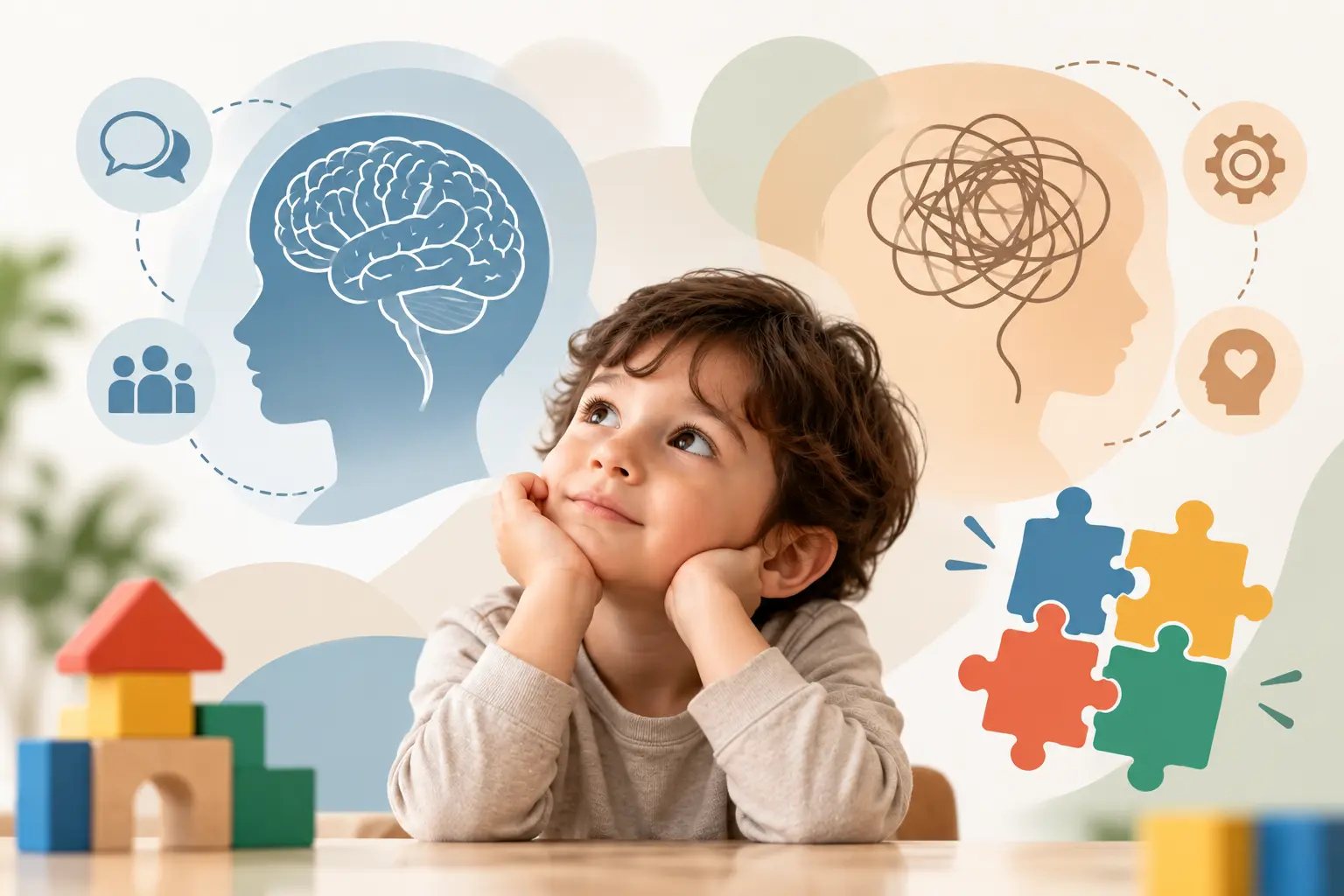
No, autism is not a psychological disorder. It is a neurodevelopmental condition, relating to how the brain develops and processes information from early childhood, rather than a mental illness that emerges later or fluctuates. This distinction shapes how autism is assessed, supported, and understood, including in Dubai.
For families in the UAE, this question often arises during the first conversation with a clinician or when a school requests a formal report. Many assume that because autism affects behaviour and social interaction, it must sit under psychology. Autism Spectrum Disorder (ASD) appears in diagnostic manuals under neurodevelopmental disorders, alongside ADHD and intellectual disability, not under mood, anxiety, or psychotic disorders. Because communication challenges frequently overlap across conditions, parents can also read our guide on Is a Language Disorder Autism? Simple Signs to Know to better understand where language delays and autism intersect.

What the classification actually means
| Feature | Neurodevelopmental condition (autism) | Psychological disorder (for example, depression or anxiety) |
| Onset | Present from early childhood, often visible by age 2 to 3 | Can begin at any age |
| Course | Lifelong, though presentation changes over time | May be episodic, recurrent, or situational |
| Core area | Brain development, sensory processing, social communication | Mood, thought patterns, emotional regulation |
| Treatment focus | Support, skill-building, environmental adaptation | Therapy, sometimes medication, symptom management |
| Identity | Often seen as part of who the person is | Usually seen as something the person experiences or has |
This does not mean autistic people never have psychological disorders. They can. Anxiety and depression are common co-occurring conditions, often driven by sensory overload, social misunderstanding, or years of trying to fit into unsuitable environments. But those are separate from the autism itself.
Is autism a neurological or psychological disorder?
It is neurological and developmental. Research shows differences in brain connectivity, sensory processing, and how autistic people respond to social information. These are not psychological reactions to life events; they are built into the nervous system from the start.
A psychologist may still be involved in assessment and support, which is where confusion begins. In Dubai, autism diagnosis often involves a multidisciplinary team, and clinical Psychology plays a central role in evaluating behaviour, cognition, and daily functioning. But the condition being assessed is neurodevelopmental, not psychological in origin.
Why the distinction matters in Dubai
Getting this wrong has practical consequences. A child whose autism is misunderstood as a behavioural or emotional problem may be referred for the wrong therapy, or a school may apply discipline strategies that worsen sensory overload. Parents may spend months pursuing treatments targeting the wrong thing.
In Dubai, autism diagnosis typically follows international standards, such as the DSM-5 or ICD-11, and may involve developmental paediatricians, psychiatrists, and clinical psychologists. The process usually includes detailed developmental history, observation, and standardised tools like the ADOS-2 or ADI-R. A Therapist may then work with the family on communication, daily living skills, and emotional regulation, but the underlying framework remains neurodevelopmental.
Can a person with autism live a normal life?
The word “normal” is not especially useful here, because autistic people have very different lives, just like anyone else. Some autistic adults in Dubai live independently, hold demanding jobs, and maintain relationships. Others need significant daily support with communication, safety, or self-care. Most sit somewhere in between, and support needs often shift depending on environment, stress, and life stage.
What improves outcomes is not trying to make an autistic person appear non-autistic. It is early identification, the right environmental adjustments, and support that builds on strengths rather than only targeting deficits. ABA Therapy Services are one approach used in Dubai, particularly for younger children, though they are not the only option and are not suitable for every person. Specialized Speech Therapy Services, Occupational Therapy Services, and social skills groups are also common to help individuals navigate daily communication.
Is it true that being autistic is hard?
It can be, but not because autism itself is inherently painful. The difficulty often comes from environments that are too loud, too unpredictable, or too demanding of social performance. Sensory sensitivities are common, and a busy Dubai mall or noisy classroom can be genuinely overwhelming. Social communication differences can make friendships harder to sustain, especially when others misread autistic behaviour as rudeness or disinterest.
At the same time, many autistic people describe strengths that come directly from their neurology: deep focus, honesty, pattern recognition, and intense knowledge in areas they care about. The challenge is not the autism alone; it is the mismatch between the person and the environment.
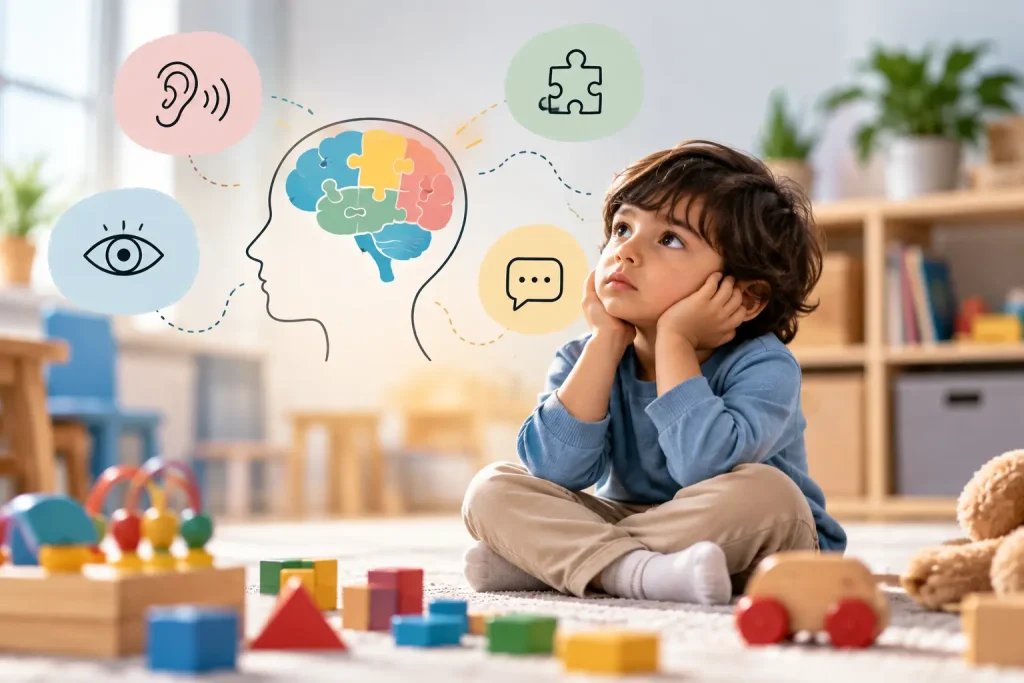
Is autism a psychology disorder?
No. This is the same question phrased differently, and the answer remains the same. Autism is not a psychology disorder in the sense of being caused by psychological factors or classified under mental illness. It is a neurodevelopmental condition. Psychological support can be helpful, but it supports the person, it does not treat the autism itself.
For anyone in Dubai wondering whether to seek an assessment, the practical step is to start with a developmental paediatrician or a clinical psychologist experienced in autism diagnosis. A good assessment will look at the whole picture: early development, sensory profile, communication style, and current functioning. It should also screen for co-occurring conditions like anxiety, because those need their own attention.
Some parents notice small signs earlier and wonder whether they mean anything. For example, questions like Is Humming a Sign of Autism? A Quick Guide comes up often, because repetitive vocalisations can be part of the picture, though they also occur in many non-autistic children. The only way to know is through a proper assessment, not a checklist.
Conclusion
Autism is best understood as a different way of processing the world, present from the start and lifelong. It is not a psychological disorder, but psychological support can still play a valuable role. The key is to match the support to the actual need, and that starts with getting the classification right.
If you are considering an autism assessment or looking for multidisciplinary support, families can connect with Bridges Care Dubai to consult with qualified clinicians who can guide you through the process and recommend the right next steps.
FAQ
1. Is autism a mental illness?
No. Autism is a neurodevelopmental condition, not a mental illness. Mental illnesses such as depression or anxiety can develop at any age and affect mood or thinking. Autism is present from early childhood and reflects how the brain develops.
2. Can autism be cured?
There is no cure for autism, and most autistic adults do not see it as something to be cured. Support focuses on communication, daily living skills, sensory needs, and reducing distress, not on removing the autism itself.
3. Do autistic people have psychological disorders too?
They can. Anxiety and depression are more common among autistic people, often linked to sensory overload, social pressure, or lack of understanding from others. These co-occurring conditions should be assessed and treated separately.
4. What kind of doctor diagnoses autism in Dubai?
Autism is usually diagnosed by a developmental paediatrician, child psychiatrist, or clinical psychologist with experience in neurodevelopmental assessment. A multidisciplinary approach is common and often includes observation and standardised tools.
5. Is autism a learning disability?
Not always. Autism and learning disability can co-occur, but they are separate. Some autistic people have intellectual disability, while others have average or above-average cognitive ability. The term “learning disability” refers specifically to cognitive or academic difficulties, not autism itself.