
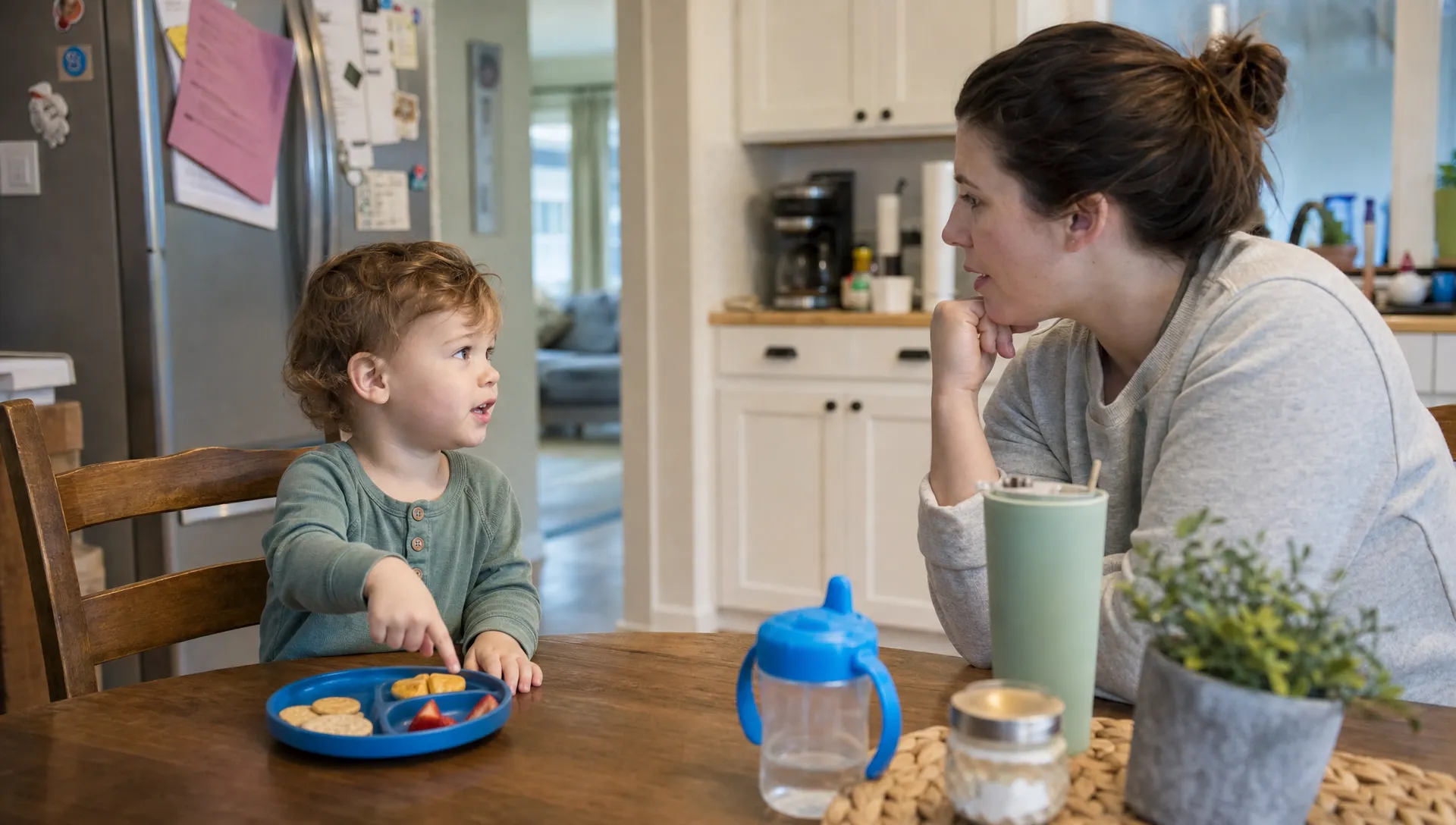
If you are searching for speech delay symptoms in 3 year-old children, you are probably trying to decide whether your child is simply developing at their own pace or needs extra support. Many Dubai parents notice differences in toddler speech around this age because preschool, nursery routines and playdates make communication skills easier to compare.
Age 3 is a useful checkpoint, not a deadline for perfection. Some children are naturally quieter. Others speak a lot but are hard to understand. The goal is not to label your child. It is to spot patterns early so the right support can begin when it is most helpful. If you want a broader overview of early communication concerns, this guide on speech delay in toddlers is a helpful place to start.
Why age 3 matters for toddler speech
By age 3, many children can use short sentences, ask simple questions and talk about daily experiences. They may say things like I want juice, mama go car or where ball. Their grammar will still be developing, but familiar adults usually understand much of what they say.
The CDC developmental milestones for age 3 include back-and-forth conversation, asking who, what and where questions and saying a first name when asked. The American Speech-Language-Hearing Association also describes 3 to 4 years as a period when children combine more words, answer simple questions and tell short stories about familiar events.
Dubai families often raise children in multilingual homes. Exposure to Arabic, English, Hindi, Urdu, Tagalog, French or another language does not cause speech delay by itself. A bilingual child may mix languages or have different words in different languages. What matters is whether communication is growing across the languages the child hears regularly.
If you are comparing your child with siblings or classmates, review reliable age milestones for late talkers rather than relying only on casual comments from relatives.
Speech delay symptoms in 3 year-old: what parents may notice
At age 3, delayed speech usually shows up in daily routines. A child may become frustrated because they cannot express needs clearly. They may point, pull adults by the hand or cry instead of using words. Some children say only a few single words. Others speak in phrases but are difficult for people outside the family to understand.
Common signs include:
- Uses very few words compared with other children the same age
- Rarely combines two or three words together
- Does not answer simple questions such as what is this or where is daddy
- Often repeats words without using them meaningfully
- Has unclear speech most of the time, even for familiar adults
- Does not follow simple two-step directions such as get your shoes and bring them here
- Shows little interest in talking, naming objects or joining simple pretend play
| Skill Area | At age 3 | Often developing as expected | Possible concern to watch |
| Word Use | Vocabulary & naming | Uses many familiar words for people, objects and actions | Uses only a small set of words or mostly gestures |
| Sentences | Phrasing & grammar | Combines words into short phrases | Mostly uses single words or unclear sounds |
| Understanding | Listening & comprehension | Follows simple directions in routines | Often seems confused by simple instructions |
| Social Communication | Interaction & gestures | Looks, points and shares attention with adults | Rarely uses words to interact or request help |
| Speech Clarity | Pronunciation & intelligibility | Familiar adults understand most daily messages | Speech is often hard to understand at home and outside |
A single sign does not always mean a major problem. Concern rises when several signs appear together or when progress has stalled for months. Bridges Care Dubai often encourages parents to look at the full picture: words, understanding, play, attention and social interaction.
Speech delay or language delay: what is the difference?
Speech and language are closely connected, but they are not the same. Speech is how sounds and words are produced. A child with a speech delay may know what they want to say but struggle with pronunciation, fluency or oral movement.
Language is about understanding and using words to communicate ideas. A child with a language delay may have trouble following directions, learning words, combining words or answering questions. Some children have both speech delay and language delay.
This distinction matters because the therapy plan may be different. A child who cannot pronounce sounds clearly may need articulation practice. A child who does not understand instructions may need language therapy focused on vocabulary, concepts and sentence building. Parents can learn more from this simple comparison of speech delay vs language delay.
Possible causes Dubai parents should consider
Speech delay can have many causes, and sometimes more than one factor is involved. Common possibilities include hearing difficulty, frequent ear infections, oral-motor challenges, limited opportunities for back-and-forth interaction, developmental delay or neurodevelopmental conditions.
A hearing check is often recommended because children may appear inattentive when they are actually missing parts of speech. Feeding difficulties, drooling or trouble moving the tongue and lips can also affect speech sound development. In some children, toddler speech concerns appear alongside sensory needs, high activity levels or difficulty with social communication.
In bilingual homes, speech delay symptoms in 3 year-old children should be considered across all languages. If a child has very limited communication in every language they hear, that deserves assessment. If they know words in one language but not another, the issue may be exposure rather than delay.
For a deeper review, this article on reasons for speech delay explains common root causes and when to seek professional input. A qualified speech pathologist can help identify whether the concern is pronunciation, language delay, fluency, voice, attention or another developmental area.
When should you seek a speech assessment in Dubai?
Parents do not need to wait until school age. If speech delay symptoms in 3 year-old children continue for more than a few months, early assessment is a practical step. It does not mean your child will need long-term therapy. Sometimes parents simply need reassurance, home strategies and monitoring.
You should consider a professional assessment if your child is not using short phrases, cannot follow simple instructions, loses words they previously used or becomes very frustrated when communicating. It is also wise to seek help if nursery staff mention concerns or if your child avoids interaction with peers.
Some children with delayed speech also show signs that may overlap with autism, such as limited eye contact, repetitive play, reduced response to name or difficulty with shared attention. Delayed speech alone does not confirm autism, but a developmental evaluation can clarify what is happening. This guide explains how delayed speech can overlap with autism signs without jumping to conclusions.
Bridges Care Speech Therapy Center in Dubai supports families with individualized assessment and therapy planning. The Bridges Care Dubai team may also guide parents toward occupational therapy, clinical psychology or ABA support when communication concerns are linked with sensory, behavioral or social development needs.

What happens during a speech therapy assessment?
A speech therapy Dubai assessment is usually child-friendly and play based. The therapist may observe how your child requests help, names objects, follows instructions, imitates sounds, plays with toys and interacts with adults. Parents are asked about pregnancy, birth history, hearing, feeding, languages spoken at home, nursery feedback and family concerns.
The therapist may check speech sounds, oral movement, vocabulary, sentence length, understanding and social communication. For some children, feeding therapy or oral-motor evaluation may be relevant. For others, the main focus is language therapy, parent coaching and daily communication routines.
After assessment, parents should receive clear feedback. A good plan explains what your child can do now, what the next goals are and how home practice will fit into daily life. For many families, progress is strongest when therapy sessions and parent involvement work together.
How parents can support speech at home
Home practice does not need to feel like homework. The best activities happen during normal routines such as meals, bath time, dressing, school runs and play. Speak slowly, use short sentences and repeat key words often. If your child says car, you can expand it to big car or car go.
Try these simple strategies:
- Follow your child’s interest during play and describe what they are doing
- Offer choices such as apple or banana to encourage a word or gesture
- Pause after asking a simple question so your child has time to respond
- Read short picture books and name familiar objects
- Reduce screen time during moments when conversation could happen
- Praise attempts to communicate, even when the words are not perfect
Parents searching for speech therapy at home Dubai options often want practical exercises between clinic visits. You can start with these ways to improve speech delay at home and then personalize practice with guidance from a therapist.
Avoid pressuring your child to repeat words again and again. Communication grows best when the child feels successful. If your child becomes frustrated, return to play, gestures and simple words.
Conclusion
Recognizing speech delay symptoms in 3 year-old children can feel worrying, but it also gives parents a chance to act early. Watch for limited words, lack of short phrases, poor understanding, unclear speech and frustration during communication. Compare your child with trusted child milestones, not with every child in the park or nursery.
If concerns continue, a professional assessment can clarify whether your child has a speech delay, language delay or another developmental need. Bridges Care Dubai and Bridges Care Speech Therapy Center offer family-centered support for children who need help building communication, confidence and daily life skills.
If you are looking for speech therapy Dubai guidance, consider booking speech therapy support in Dubai so your child can receive a clear assessment and practical next steps.
Frequently Asked Questions
1. What are the most common signs of speech delay at age 3?
Common signs include using very few words, not combining words, unclear speech, difficulty following simple instructions and frustration when trying to communicate.
2. Can bilingual children show speech delay symptoms without having a delay?
Yes. Bilingual children may mix languages or know different words in different languages. Concern is higher when communication is limited across all languages the child hears regularly.
3. When should I contact a speech therapist in Dubai?
Contact a therapist if your child is not using short phrases, is hard to understand most of the time, does not follow simple instructions or has lost words they once used.
4. Is delayed speech always a sign of autism?
No. Speech delay can happen for many reasons. Autism may be considered if delayed speech appears with reduced eye contact, limited response to name, repetitive behaviors or difficulty with shared attention.
5. Can parents help improve toddler speech at home?
Yes. Daily routines, shared play, picture books, choices, slow speech and repeated words can help. Parent involvement works best when guided by a speech therapist who understands your child’s needs.