How To Practice Speech Therapy For Autism At Home
Speech therapy for autism works best when the techniques used in clinic sessions carry over into everyday life. Home practice gives children more opportunities to use new skills in the moments that matter most, during meals, play, bath time, and family conversations. In Dubai, services like Bridgescare make professional guidance accessible, but the real progress often happens when families turn daily routines into consistent communication practice.
What a Home Program Actually Targets
The table below breaks down key areas a speech therapist focuses on, along with ways to practise each one at home without needing specialised equipment.
| Area of Focus | What It Builds | Simple Home Practice |
| Spontaneous communication | Expressing needs without being prompted | Wait for the child to initiate instead of asking “What do you want?”; place a favourite snack in view but out of reach. |
| Functional vocabulary | Words that have immediate, real-world use | Label actions and objects during daily routines (“open”, “more”, “all done”) rather than drilling flashcards. |
| Social reciprocity | Turn-taking and responding to others | Roll a ball back and forth, or take turns making funny faces; respond excitedly to any intentional sound or gesture. |
| Generalisation | Using skills across people, settings and materials | Practise the same word with different family members, in different rooms, and with real objects instead of one toy. |
Start with Functional, Real-World Words
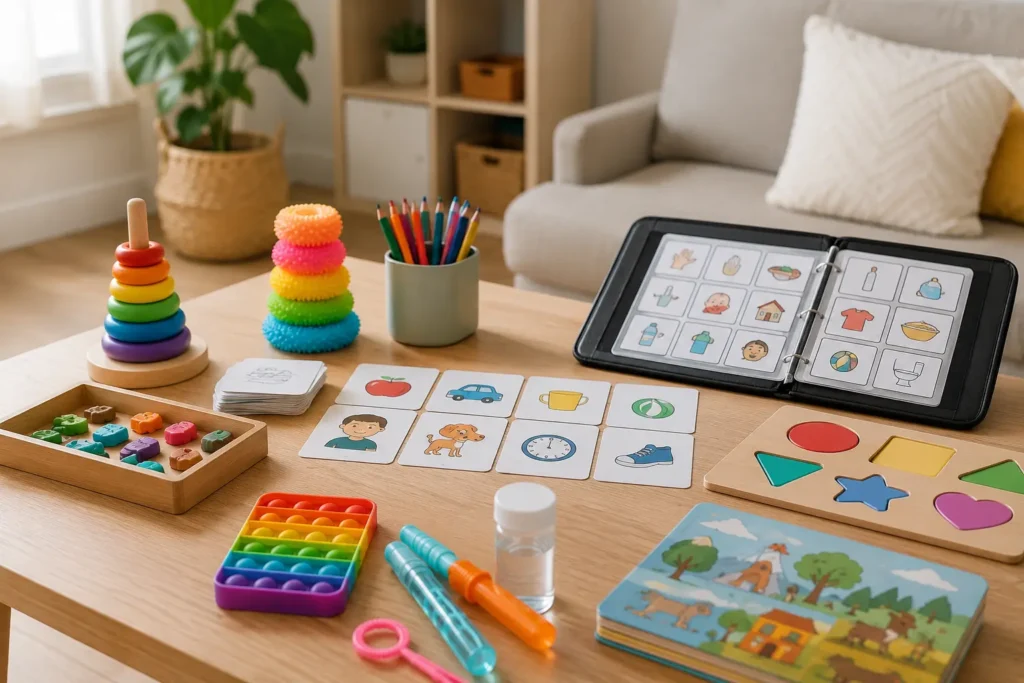
For many autistic children, the most motivating words are the ones that get something done. Instead of teaching colours or numbers first, focus on high-impact words like “help”, “open”, “stop”, and “more”. A Speech Therapy professional will often build a personalised list of these core words, and they become the foundation you reinforce during daily activities. The key is to show the child that communication brings results every single time they try.
Build Opportunities, Not Pressure
One of the biggest mistakes is turning every interaction into a demand to “say the word”. When a child feels pressured, they often withdraw. Instead, set up situations where communication is the natural way to get what they want. Put a favourite toy inside a clear container they cannot open alone. Pause a song they love and wait for any signal to continue. Look at a picture book together and simply comment on what you see, leaving space for them to join in. The goal is to make communication feel safe and rewarding.
Simple Exercises to Improve Communication Skills Without Formal Sessions
You do not need a structured lesson plan. A few embedded habits can turn any activity into an exercise. For parents looking for structured guidance, there are Simple Exercises to Improve Communication Skills that can be done with everyday items.
- During snack time, offer two choices and hold them up while naming each one. Even if the child points or reaches, you can model the word naturally.
- When playing with bubbles or a wind-up toy, keep control of the item and wait. The child’s look, gesture, or sound becomes their turn in the conversation.
- Imitate the child’s own sounds and actions. If they tap the table, tap back. That back-and-forth imitation is the earliest form of conversation and often sparks longer periods of joint attention.
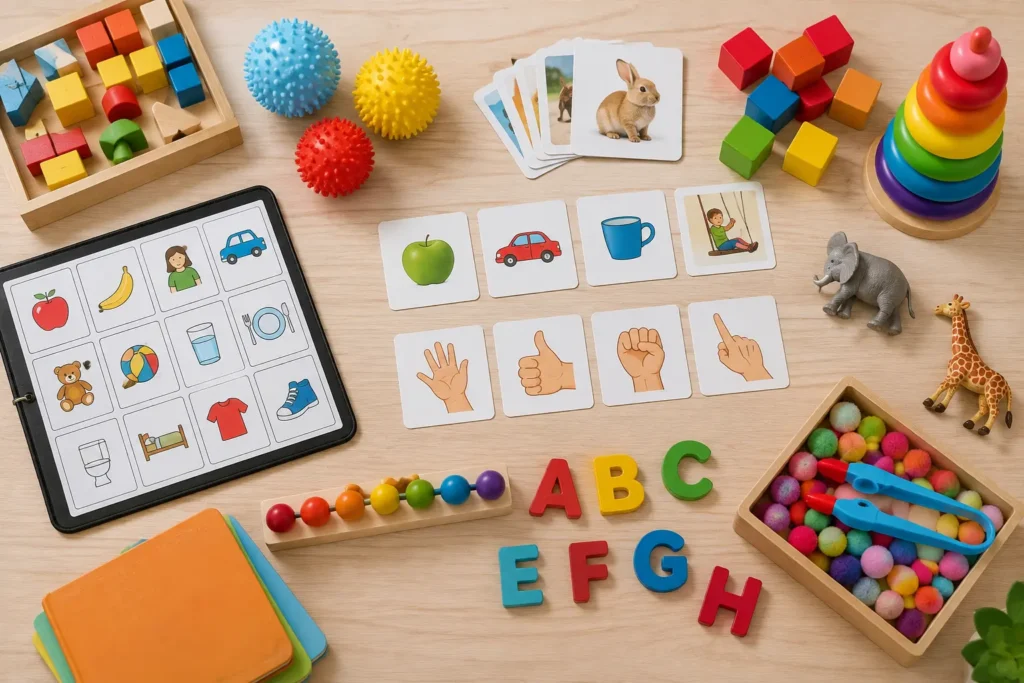
For children who are non-speaking or minimally verbal, visual support plays a central role. A simple picture card or a tablet app can give them a reliable way to express “hungry”, “bathroom”, or “tired”. Using an AAC system at home consistently teaches the child that their message matters, and it often reduces frustration-related behaviours.
Bringing It All Together in Real Life
Generalisation, carrying a skill from one setting to another, does not happen automatically. A child may use a word with the therapist but not at the breakfast table. That is why Speech Therapy at Home matters so much. When the same word is practised during bath time, in the car, and with siblings, it becomes robust. For families in Dubai, combining centre-based speech therapy in Dubai with a strong home component tends to produce the fastest progress, because the child gets high-intensity input across their entire day.
Where Other Therapies Fit
Many autistic children benefit from a combination of supports. Speech therapy and occupational therapy often work hand in hand, especially when sensory sensitivities affect a child’s ability to focus on communication. Occupational therapy can address the underlying regulation issues, while speech therapy builds language skills. Similarly, some families integrate ABA therapy for autism to reinforce communication goals through structured reinforcement. A coordinated team is ideal, but even if you are working with a single provider, the priorities they set can guide your home practice.
When to Step Back and Get Support
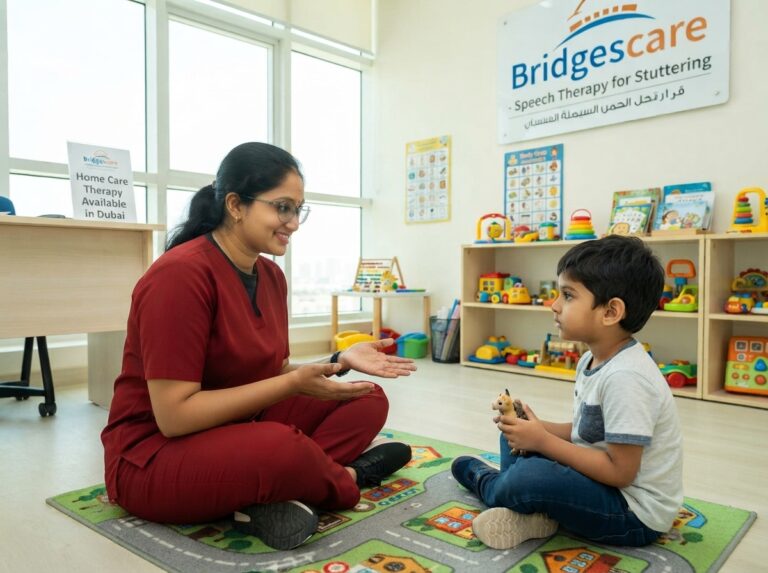
Home practice is powerful, but there are signs that a child needs more direct intervention. If they use only a handful of words by age two, rely almost entirely on echolalia without understanding, or show no consistent way to express basic needs, it is wise to seek a thorough assessment. A qualified Home Care Therapy team can evaluate whether the child’s progress is on track and adjust strategies before frustration becomes a pattern. Bridgescare in Dubai provides exactly this kind of integrated, home-based support for families who want guidance where they need it most.
Frequently Asked Questions
1. How does speech therapy help autism?
It builds the underlying skills for communication: understanding language, using words or alternative systems, taking conversational turns, and reading social cues.
2. What causes speech delay in autism?
Speech delay in autism is often linked to differences in social motivation, joint attention, and processing verbal information.
3. How to fix speech delay?
There is no quick fix, but progress comes from early, consistent intervention that focuses on functional communication. Working with a speech therapist, building a language-rich environment at home, and using visual supports or AAC when needed all contribute.
4. How to start speech therapy at home?
Begin by observing what your child already does to communicate, gestures, sounds, and facial expressions. Respond to these as if they were words. Then pick two or three simple routines each day where you can model a target word without demanding a response. Consistency and a calm, playful approach make home practice effective.
If you would like a clear plan tailored to your child’s current communication stage, consider a Book consultation with a specialist who can walk you through the first steps.