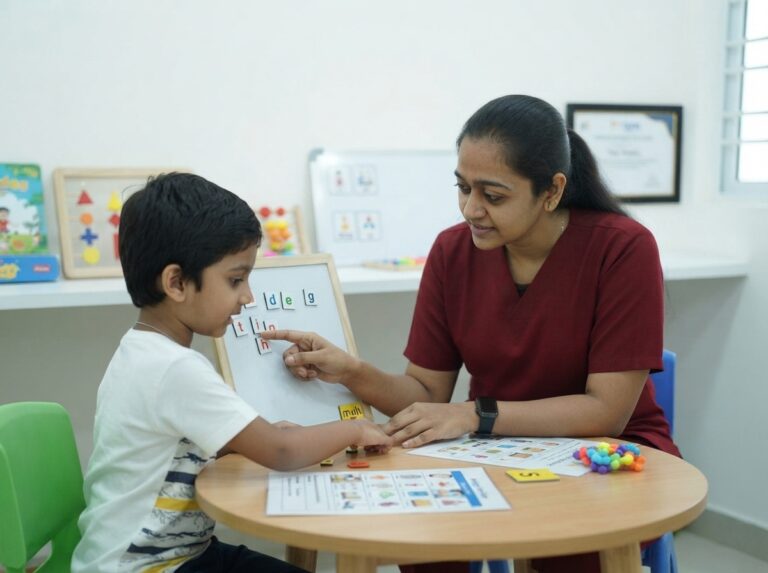
Occupational Therapy Feeding: What Parents Should Know
When a child struggles to eat enough variety or feels distressed at the table, occupational therapy feeding can help parents understand what is really happening. Feeding is not only about appetite. It involves posture, sensory processing, oral motor coordination, hand skills, attention, routines and emotional safety.
For many families in Dubai, mealtimes become stressful because a child avoids textures, gags easily, refuses whole food groups or takes a very long time to finish meals. Some children want only crunchy foods. Others accept milk or purees but resist chewing. An occupational therapy approach looks at the whole child rather than labeling the behavior as stubbornness.
How occupational therapy feeding supports safer, calmer mealtimes
Occupational therapy feeding focuses on the skills and body systems that make eating possible. A child needs stable seating, good head and trunk control, coordinated chewing, sensory tolerance and enough regulation to stay engaged. When one of these areas is difficult, feeding can become exhausting for the child and the parent.
A structured feeding therapy Dubai program may include sensory exploration, oral motor activities, gradual exposure to new foods and parent coaching. The goal is not to force bites. The goal is to help the child feel safe enough to explore food and build the skills needed for age-appropriate eating.
An occupational therapy feeding plan is especially helpful when eating difficulties are connected to sensory sensitivity, delayed fine motor skills, poor posture or difficulty using utensils. The therapist may work on touching, smelling and interacting with foods before expecting the child to chew and swallow them.
When should parents consider feeding therapy?
Occasional picky eating is common in childhood. Many toddlers go through phases where they reject vegetables, prefer familiar foods or eat less during growth changes. Parents should consider professional support when feeding challenges last for weeks or months, affect nutrition or create daily distress.
If your child refuses many foods, coughs during meals or avoids textures, it may help to read more about why picky eating may need feeding therapy. The American Speech-Language-Hearing Association also notes that feeding and swallowing disorders may involve problems with sucking, chewing, swallowing or accepting food textures.
| What parents notice | May be typical when | Ask about feeding therapy when |
| Refuses new foods | It happens briefly during toddler development | The child eats fewer than 20 foods or keeps dropping safe foods |
| Gags at textures | It occurs with a few unfamiliar foods | Gagging happens often with lumps, mixed textures or smell |
| Takes a long time to eat | Meals are slow during tired days | Most meals take longer than 30 to 45 minutes |
| Avoids self-feeding | The child is still learning utensil use | The child resists touching food or cannot manage finger foods |
| Coughs or chokes | It happens rarely and mildly | Coughing, choking or wet voice occurs during meals |
Children with more complex symptoms may need assessment for a pediatric feeding disorder. Bridges Speech Center has a helpful overview of pediatric feeding disorder signs and therapy support for parents who want to understand when picky eating may signal a broader concern.

What happens in an occupational therapy feeding assessment?
During an occupational therapy feeding assessment, the therapist looks at how your child sits, moves, breathes, handles food, responds to sensory input and participates in the meal routine. Parents are usually asked about birth history, medical background, food preferences, allergies, growth, previous choking incidents and family mealtime patterns.
A qualified therapist in Dubai may observe how your child bites, chews, moves food around the mouth and swallows. They may also look at utensil grip, cup drinking, hand-to-mouth coordination and tolerance for messy play. If swallowing safety is a concern, the therapist may recommend medical review or collaboration with a speech-language pathologist or doctor.
If feeding issues appear alongside challenges in dressing, handwriting, sensory regulation or self-care, parents may also benefit from learning about Occupational Therapy. Feeding rarely exists in isolation. It often reflects how the child processes sensation, organizes movement and copes with daily routines.
Therapy goals parents can expect
Occupational therapy feeding goals are individualized. One child may need help learning to chew safely. Another may need gradual exposure to smells and textures. A third may need better posture and trunk control before feeding skills improve.
Common therapy goals include improving oral motor strength, increasing food variety, reducing distress around meals, supporting self-feeding and helping parents use responsive feeding strategies at home. Sessions may look playful, especially with young children. A therapist might use food play, pretend cooking, blowing activities, chewy tools, texture exploration and supported tasting steps.
This does not mean therapy is unstructured. Each activity should connect to a clear clinical goal. For example, playing with yogurt may help a child tolerate wet textures on the hands. Crunchy foods may support jaw grading when clinically appropriate. Cup practice may work on lip closure and coordination.
Parents are a major part of feeding therapy. The therapist should explain what each activity is building and how to continue safely at home without turning every meal into a therapy session.
How parents can support progress at home
Home routines matter because children eat several times a day. A therapist in Dubai can guide you based on your child’s needs, but most families benefit from calm structure and reduced pressure.
Try to keep mealtimes predictable. Seat your child with good foot support when possible. Offer small portions so the plate does not feel overwhelming. Let your child interact with food through looking, touching and smelling before tasting. Avoid force-feeding because it can increase fear and reduce trust.
Helpful home strategies may include:
- Serve one safe food with one learning food during meals.
- Use neutral language such as this is crunchy or this smells sweet.
- Keep meals around 20 to 30 minutes unless your therapist advises otherwise.
- Model eating without demanding that your child copies you.
- Celebrate small steps like touching, licking or smelling a new food.
If you are searching for feeding therapy Dubai options, ask whether parent coaching is part of the plan. Skills improve faster when therapy strategies fit naturally into breakfast, lunch, snacks and family dinners.
Why a multidisciplinary approach may be needed
Some children need more than one type of support. Feeding can be affected by speech and swallowing skills, sensory processing, muscle tone, gastrointestinal discomfort, anxiety, autism, ADHD, developmental delay or motor coordination challenges. A strong occupational therapy feeding program recognizes when collaboration is needed.
For example, a speech-language therapist may support swallowing, communication around food or oral motor planning. A psychologist may help when fear, anxiety or behavior patterns affect mealtimes. A physiotherapist may support posture, tone or motor control. Parents who are unsure which service fits their child can review the differences between physiotherapy and occupational therapy.
At Bridges Care Speech Therapy Center, families can seek guidance for children who need coordinated support across speech therapy, occupational therapy, feeding therapy, physiotherapy and psychology. The right plan depends on the child’s profile, not a one-size-fits-all method.

Choosing the right support in Dubai
When choosing a therapist in Dubai, look for someone who listens carefully to parents, observes the child across skills and explains goals in practical language. A good feeding plan should feel respectful, gradual and safe. It should also consider culture, family meals, school routines and the foods your child is expected to eat in everyday life.
Ask how progress will be tracked. Progress may include fewer stressful meals, better tolerance of textures, improved chewing, safer swallowing, increased food variety or more independence with utensils. For some children, the first sign of progress is simply staying calm at the table for longer.
Parents should also ask what they can do between sessions. Feeding therapy is most effective when caregivers understand the why behind each strategy and can repeat it consistently at home.
Conclusion
Occupational therapy feeding helps parents look beyond picky eating and understand the skills that support safe, confident eating. It can address sensory sensitivity, oral motor challenges, posture, self-feeding, attention and mealtime stress.
If your child struggles with food refusal, gagging, texture avoidance or stressful meals, professional support can make daily routines easier. Bridges Care Speech Therapy Center offers family-centered care in Dubai for children who need feeding support alongside occupational therapy, speech therapy or other developmental services. Reach out to discuss your child’s needs and take the next step toward calmer, healthier mealtimes.
FAQs
1. What is occupational therapy feeding?
Occupational therapy feeding is a therapy approach that helps children build the sensory, motor and daily living skills needed for eating. It may support chewing, posture, food exploration, utensil use and calmer mealtime behavior.
2. How is feeding therapy different from normal picky eating advice?
General picky eating advice may help with mild food preferences. Feeding therapy is more structured and is used when a child has ongoing refusal, gagging, oral motor delays, sensory aversion, poor self-feeding or nutrition concerns.
3. When should I look for feeding therapy Dubai services?
Consider feeding therapy Dubai services if your child eats very few foods, avoids textures, coughs during meals, takes too long to eat or becomes highly distressed around food. Early support can prevent mealtime stress from becoming a long-term pattern.
4. Can occupational therapy help children with autism who struggle with food?
Yes. Occupational therapy can help children with autism who have sensory sensitivities, rigid food preferences, difficulty sitting for meals or challenges with self-feeding. Therapy should be individualized and respectful of the child’s communication and regulation needs.
5. How long does feeding therapy take?
The timeline depends on the child’s medical history, sensory profile, oral motor skills and family routines. Some children make progress in a few months, while others need longer support. Your therapist will review goals and progress regularly.